


Daniel Pfaltzgraf teaches at the University of Toledo and is lead author of the textbook "Contemporary Business," Wiley.
I remember he day clearly.
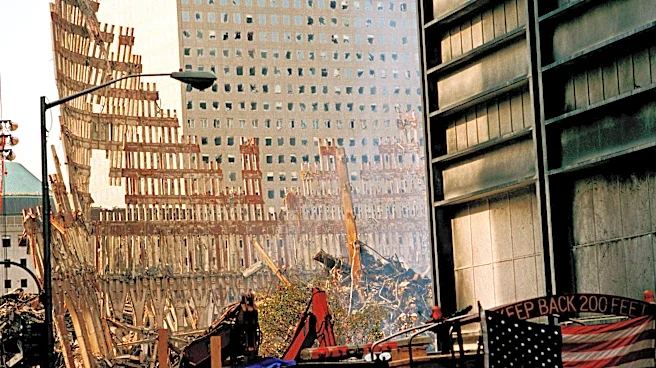
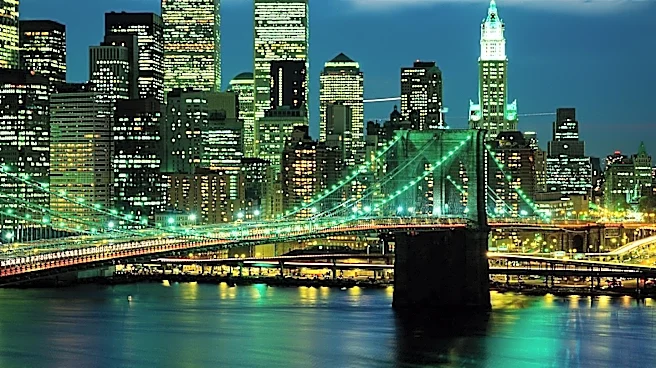
My second grade teacher was showing a movie on the classroom television. When it ended, she ejected the VHS tape and the TV channel landed on a cable news report showing a burning building.
With no context, and no explanation – just a tape sliding out of a now-archaic device – my class of 30 toggled between watching a cartoon abouthistory and watching it live.
Twenty-five years later, I work with and teach people who weren't alive for any of it. For them, Sept. 11, 2001, isn't a memory at all. At best, it’s a history lesson. For the rest of us, it's still amoment frozen in time.
An estimated 100 million
Americans, nearly a third of the country, have been born since that clear September morning. That gap – between those who remember and those who were only told – is growing each day.
Will we still know why the anniversary matters when no one is there to tell?
Should 9/11 be a national holiday?
Sept.11 is at the precipice where memory becomes history. Yet it remains one of the few important dates Americans still pause to commemorate voluntarily, without a day off work.
I used to think it was unfinished congressional business. Beyond its present status as a “National Day of Service and Remembrance,” I thought 9/11 deserved a federal holiday. After all, a holiday forces people to stop and remember.
While one might refute the economic cost of adding a federal holiday, cost avoidance never was a motivating factor to not institutionalize 9/11. In fact, Congress has been willing to move holidays before and hasn't here.
In 2021, for the first time in 38 years, legislators created a new federal holiday: Juneteenth. The feat was accomplished in 112 days under immediate political and societal pressure.
Congress can move fast when something is pushing it to. Nothing ever pushed on cementing 9/11.

Grief, it turns out, doesn't organize and coalesce the way outrage does. There was no protest demanding the day or sustained political coalition insisting on it.
Perhaps leaders assumed the memory would take care of itself; for a while, it did.
Twenty-five years later, I’m less certain a holiday was the right approach after all. I’ve seen what happens to other holidays that were, at one point, treated with more solemnity.
Presidents' Day comes with a day off for many people and little contemplation of presidents. Memorial Day comes with parades, and for many, “the unofficial start of summer.” Columbus Day is a federal holiday, and today, its meaning is hotly contested.
The “day off,” over time, shifts to the point. The reason for the holiday to exist fades into the background noise of a long weekend.
There is a paradox in society worth sitting with: the holidays we institutionalize are often the ones we stop noticing.
Will we never forget?
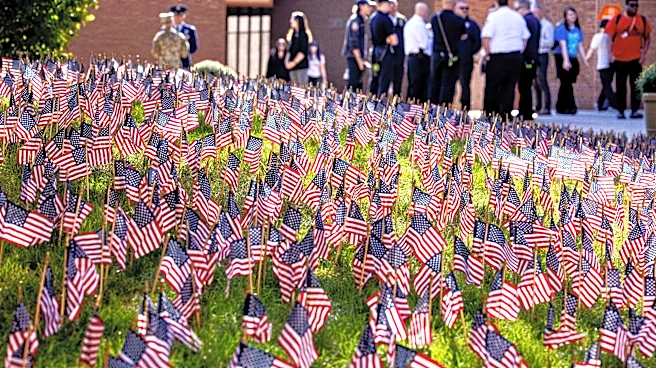
Today, 9/11 sits in the netherspace between marked and unmarked, but people still lower flags, share a moment of silence, tell stories, ask each other where they were.
Interestingly, the day with little institutional machinery behind it has been remembered more faithfully than holidays with plenty. The one day we never formalized may be the one day we still actually mean. Americans observe it because they remember. Voluntarily. Every year. On purpose.
But voluntary memory has an expiration date; 2026 is the year it comes into view.
What happens when the people who are doing the remembering are no longer the majority?
People who remember where they were are aging. People entering adulthood right now don't have a "where I was" story at all.
I’ve seen it in my classroom. The story I describe has the same emotional weight, for me, as Pearl Harbor had for my grandparents: an event that mattered enormously and that I know only secondhand.
What will the future learn about that painful day in September?
A society decides which stories to carry forward, and how.
In Ohio, the transition isn’t being managed carefully. Even providing students a history lesson is generous. There is no state mandate for how, or whether, schools teach Sept. 11 at all. The model curriculum for K-12 social studies from the Ohio Department of Education mentions it exactly once, in a suggested unit on the post–Cold War era:
“Focusing on foreign policy, the United States faces ongoing economic, political, military, and social challenges in the post-Cold War era and following the attacks of September 11, 2001.”
By focusing on the aftermath, the curriculum treats the event as simply an optional prologue. The attacks – what happened, who died, where, and lessons from each – never appear as content to be taught. They’re the hinge the curriculum swings off of, but not the subject.
Everything else, if anything else, is left to whichever teacher happens to be standing in the room that year. My high school never held a moment of silence. I went through college and never heard it discussed once.
As a society, we haven’t built infrastructure for the handoff. Perhaps we never thought we needed one.
How might we, as a country, build a durable ritual around 9/11?
A mandated moment of silence ensures children reflect. A documentary sparks conversation. A required unit for a particular grade ensures the lesson is never forgotten.
None of these solutions are radical. What is radical is how long we've gone without deciding.
For 25 years, Americans have remembered Sept. 11 without needing a day off to tell them to. That may be the strongest argument against ever making it one. It may also be the strongest argument for deciding, now, what we will carry forward when it must be taught, on purpose, by people who didn’t watch it live.
What happens after memory?

Daniel Pfaltzgraf serves corporations and classrooms – designing experiences and innovations for multinational companies, teaching at the University of Toledo. He is lead author of the Wiley textbook "Contemporary Business," and can be reached at dpfaltzgraf@me.com.
This article originally appeared on The Columbus Dispatch: How will we never forget? We're doing a poor job handing off memory of 9/11 | Opinion