



Thomas Suddes is a former legislative reporter and writes from Ohio University.
Out-of-state people measuring Republican prospects, given the Donald Trump presidency’s failures, are exploring Ohio like it’s some newly discovered bend in the Amazon, peopled by a sassy but inscrutable tribe called “Voters.”
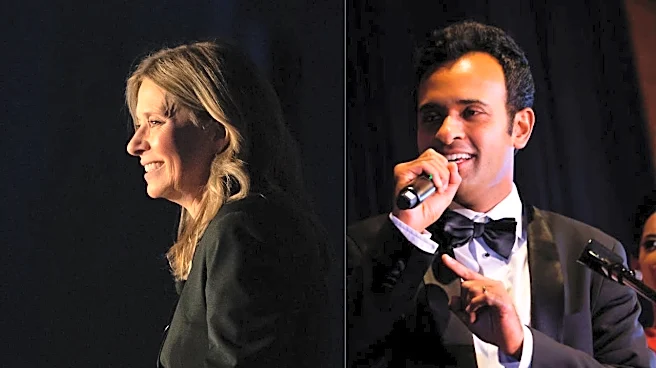
Will they elect Republican gubernatorial nominee Vivek Ramaswamy, of Upper Arlington, or the Democrat, Dr. Amy Acton, of Bexley?
Will they retain appointed U.S. Sen. Jon Husted, an Upper Arlington Republican, or unseat him in favor of former Sen. Sherrod Brown, a Bexley Democrat?
And, oh yeah, because Ohio three times voted to give Trump a White House to trash, that means Ohio is an all-in GOP state, while Democrats bite their nails.
Trouble is
that some visitors don’t do test prep.
That’s because the classic definition of Ohio politics, formulated in 1960 by political scientist Thomas A. Flinn, then of Oberlin, later of Cleveland State, still applies:
“Ohio is now and has long been a competitive two-party state in which the Republicans enjoy the advantage.”
Note: “Advantage,” not slam-dunks.
True, the competition is sharper. In 1960, a new high school graduate in, say, Ohio’s Northeast, unless first drafted into the armed forces, could expect rising wages and better benefits over what amounted to a lifetime job at, say, Ford or Youngstown Sheet & Tube, thanks to the United Auto Workers’ or United Steelworkers’ clout.
Those men and women formed Democrats’ base. But as a bloc, it eroded from Richard M. Nixon’s presidency on. Still, the social-democratic ideas industrial unionism spawned – government does have a responsibility for people’s betterment – and the concurrent rise of women’s fight for equality meant there was no appetite for the dog-eat-dog world that was pre-Depression Ohio.
The interparty fight instead became over the scope of those government responsibilities (Democrats more, Republicans less) and over racial justice, with the GOP, once the civil rights party, especially in Ohio, flirting with Dixie instead.

Ohio is complicated, alright
Still, Ohio, as Flinn found, remains a paradox. Over the last 60 years, Buckeyes have sent a rootin’, tootin’ liberal, Howard M. Metzenbaum, to the Senate – and a Main Street conservative, Mike DeWine.
Ohio also elected its two most liberal governors – Democrats John J. Gilligan and Richard F. Celeste – yet also one of its most conservative in decades, Republican John R. Kasich.
But in many ways, what exemplified Ohio politics were the 16 years that an unprincipled (in the philosophical sense, too) colossus strode Ohio, Republican (that’s what the ballot label said, anyway) James A. Rhodes, of Columbus, who rose from a Jackson County coal town to an Upper Arlington mansion bordering the Scioto Country Club’s golf course.
That’s the James Rhodes who, with a virtually unanimous, GOP-run legislature agreeing, affiliated Ohio with the federal-state Medicaid health care program, now the single most expensive item in the state budget.
And that’s the John R. Kasich who – to his everlasting credit – expanded Medicaid in Ohio to cover more of the poor in accordance with the (Barack Obama-signed) Affordable Care Act.
What they don't get about Ohio
So while “philosophy” may get mentions in fund-raising letters, the real fights in Ohio elections aren’t conservative-vs.-liberal, but about (a) who will help me live better or (b) who dislikes the same kinds of people I dislike. The rest is show business, and Republicans are pretty good at show business, as Ronald Reagan showed.
While Election Day tallies, which generally and (with the help of gerrymandered congressional and General Assembly districts) accurately show Republicans having an edge, mask some facts about Ohio voting.
Example: Voters’ statewide decision in November 2023 to protect women’s access to abortion (57% “yes”) in a state that in 2022 had cast 62% of its vote to re-elect Republican DeWine, a lifelong foe of abortion.
That fluidity in voters’ decisions is one reason why the gubernatorial campaign (Democrat Acton vs. Republican Ramaswamy) and the Senate race (Democrat Brown vs. Republican Husted) are so fierce: Margins may be exceedingly tight, but if fuel prices don’t fall, and if Trump’s undeclared war in the Near East doesn’t end, Democrats may have an easier time of it.
Still, interpreting the state of play in Ohio’s tight statewide contests requires perspective. And that’s been almost as scarce as cheap gas.

Thomas Suddes is a former legislative reporter and writes from Ohio University.
This article originally appeared on The Columbus Dispatch: Is Ohio a blue, red or purple state? Um, it's complicated. | Opinion