





The chair of the Ohio Senate Education Committee said the legislature could take a look this fall at increasing oversight after dozens of charter and public schools had anomalies on state testing.
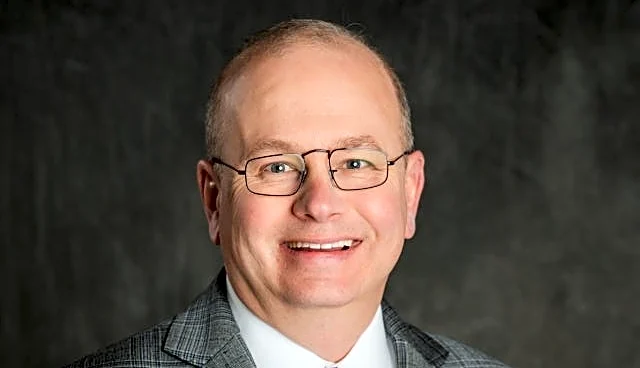
State Sen. Andrew Brenner, a Delaware Republican, said that the Ohio General Assembly may take a look this fall during the legislature's lame duck session to see if there is a need for additional oversight and security in the state's standardized testing.
"I think I want to wait and see what the final report is, and what they've determined what the cause was before we go and start passing legislation willy-nilly," Brenner said.
On Sept. 4, the Ohio Department of Education and Workforce announced it had found 52 public and charter schools with "anomalous"
results on state standardized testing after looking into the matter when Columbus City Schools self-reported its own anomalous results. The ODEW is still investigating how the schools came to have anomalous testing results.
The investigation found 52 unreported yet "significant" testing anomalies at dozens of public and charter schools around the state on tests administered in spring 2026. A majority of the schools were charter schools, with 37 charters and 15 public schools.
A sample of the letters sent to schools lists reasons such as changing answers in the last 15 minutes of the test, results inconsistent with student ability, between-year changes, and speed the students completed the tests. A test is flagged when it falls above or below standard deviation on any of the categories.
The letter said that the percentage of "flagged assessments" in the schools was higher than observed across the state and "exceeded statistical patterns."
Brenner, whose term expires this year and did not win his May primary race, said he had spoken to some of the schools on the list, and said they didn't do anything wrong and its unclear what the ODEW is even asking for.
"I'd like to see some more transparency in the whole overall system, which may lead to some legislation," Brenner said, adding that changes could be placed into an existing piece of legislation during the lame duck period.

Brenner said without a complete ODEW investigation, he wasn't sure if this was a result of deliberate cheating, a software glitch or simply the schools in question "teaching to the test" or other strategies aimed at producing high test scores.
"I would make sure you've got a system where that doesn't happen," Brenner said.
Pro-charter school think tank calls for accountability
Aaron Churchill, lead Ohio researcher for pro-charter school education think tank Fordham Institute, said that Columbus choosing to self-report its own anomalies may have been the "canary in the coal mine" for a much larger problem.
"We need to let the investigations run their course and see what the findings are, and we should know what those are at some point since this has become a public issue," Churchill said.
He said it was important the state takes an oversight role in monitoring state testing and applauded the ODEW for finding the anomalies, but also said it should be regularly monitoring for such things.
"The integrity of state assessments, they matter to the public, they matter to parents, we cannot be giving dishonest information to to the public and and parents," Churchill said. "If there is cheating happening, that is completely unfair to parents – and the students most of all."
Columbus City Schools Superintendent Angela Chapman told The Dispatch that she was pleased the district had in-house accountability to detect anomalies like these, and said other districts are reaching out to CCS to see how they can implement their own protections.
"We were transparent, we let the community know, we took action, but more importantly we also took action on how we can remediate so this doesn't happen again," Chapman said.
Cole Behrens covers K-12 education and school districts in central Ohio. Have a tip? Contact Cole at cbehrens@dispatch.com or connect with him on X at @Colebehr_report
This article originally appeared on The Columbus Dispatch: Ohio lawmaker says state testing 'anomalies' could spur law changes