



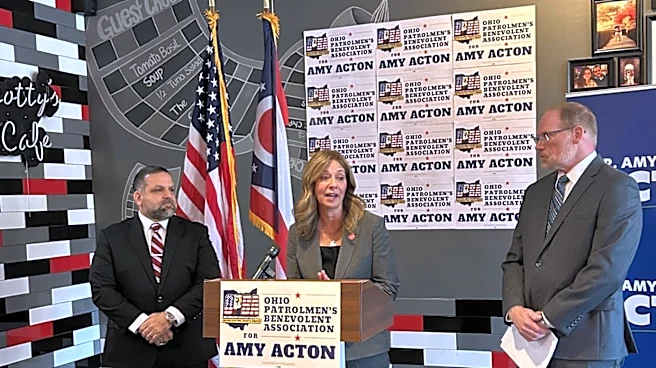
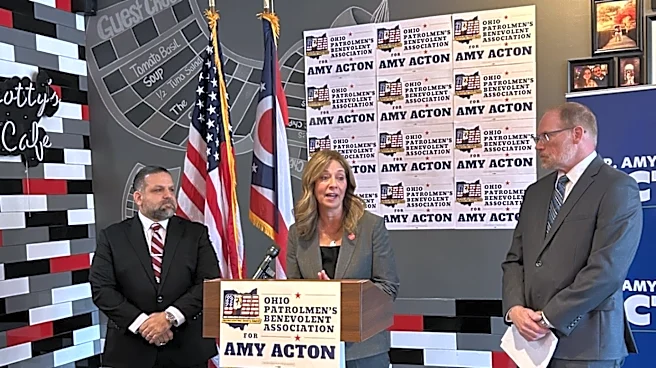
State Reps. Kevin Ritter and Justin Pizzulli represent southeastern Ohio and serve as co-chairs of the Ohio Legislative Appalachian Caucus.
For a century, southeastern Ohio has powered this state. Our coal, our gas, our labor and our land built the industrial economy that made Ohio a manufacturing giant. What we too rarely received in return was a fair share of the prosperity we generated.
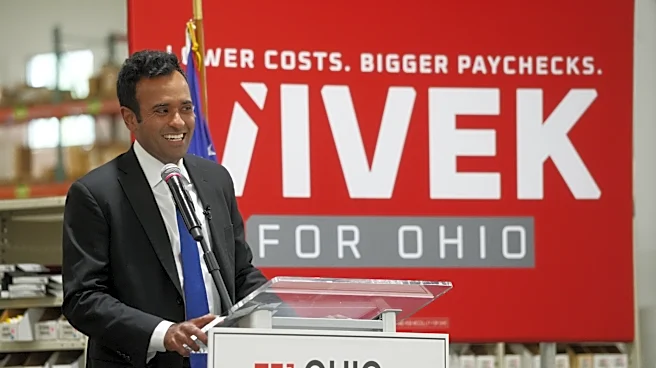
That history is exactly why we read Vivek Ramaswamy’s data center planwith interest – and why we think the conversation he started deserves to be finished by the communities that will host these projects.
He is right about the premise.
If a company is going to build a facility in your township that consumes enormous amounts of electricity and water, the people
who live next to it should be measurably better off for it. Measurably.
The idea of a defined “benefit zone,” in which residents near a data center see their utility costs eliminated or dramatically reduced, is the kind of concrete, kitchen-table commitment our constituents have earned.
What Ramaswamy’s plan could mean for Appalachia Ohio?

Appalachian Ohio carries some of the lowest household incomes and highest energy burdens in the state. Families in our districts routinely choose between the electric bill and the grocery bill. A policy that zeroes out residential power costs in a host county is not a talking point here – it is transformative.
If Ohio is going to hand hyperscalers the load capacity they are competing for nationwide, we should expect that benefit and direct it into the counties that need it most.
He is also right about brownfields, and this is where Appalachia holds a genuine competitive advantage.
We have abandoned mine lands, shuttered industrial parks and retired power plant sites – many already served by high-voltage transmission, rail and water infrastructure.
These are assets, not liabilities. Siting data centers on ground that is already developed and already interconnected is faster for developers, cheaper for ratepayers, and it keeps productive farmland in production. Any serious state framework should push development toward these sites rather than toward the best soil in the county.
We also believe that a framework that guarantees benefits must not quietly strip authority from the people delivering them.
Decisions that impact us should be made by us
Valuation, property taxation and the collection of local sales taxes are local decisions, and they must remain local decisions. Our county auditors, commissioners, township trustees and school boards understand their tax bases and their obligations better than any office in Columbus.
If a community negotiates an agreement with a developer, that agreement belongs to the community. The state’s proper role is to set a floor beneath host communities – not a ceiling above them, and not a preemption of the local judgment that has protected our schools, roads and first responders.
We are conservatives. We believe in growth, in capital investment and in getting government out of the way of a good deal. We also believe the decisions that hit closest to home should be made closest to home.
As co-chairs of the Appalachian Caucus, we are ready to write that legislation. Our door is open to any candidate for governor who wishes to join us in that effort.


State Reps. Kevin Ritter and Justin Pizzulli represent southeastern Ohio and serve as co-chairs of the Ohio Legislative Appalachian Caucus.
This article originally appeared on The Columbus Dispatch: Ramaswamy's data center plan could work for Appalachian but we have terms l | Opinion