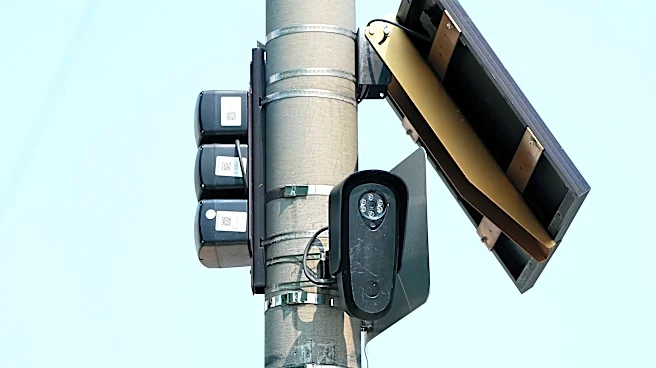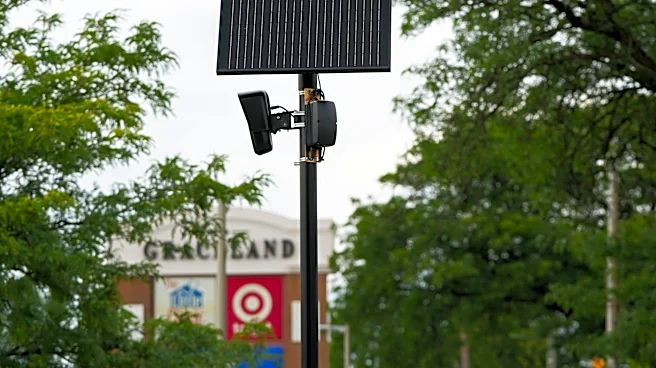







Columbus Mayor Andrew Ginther announced several policy changes affecting the city’s Flock camera network Aug. 28 in what appears to be an effort to convince the public and the City Council to keep the AI-powered license plate cameras in the city.
The changes include codifying amendments that Flock Safety announced earlier in August, as well as restricting outside sharing to specific requests.
Ginther’s announcement comes two days after The Dispatch exclusively reported that a majority of Columbus City Council members support ending Flock camera use in the city before the contract expires in December.
“This should not be a choice between protecting civil liberties and protecting people from violent crime,” Ginther said in a press release. “Columbus
can and should demand both. We will use technology when it makes our residents safer, put strong guardrails around its use and hold ourselves, and our technology partners, accountable to the people we serve.”

The anti-Flock city council members include Council President Shannon Hardin, who recently announced a mayoral campaign challenging Ginther. Since multiple council members have expressed distrust in Flock Safety as a company, which has been caught lying to municipalities before, it remains to be seen if these steps by Ginther will change minds on council.
Councilmember Melissa Green, who has been calling for the cameras to come down for months, told The Dispatch that she still needs to be briefed on these changes but she's skeptical it will change anything for her.
"I question whether or not as a local municipality we have the ability to put enough protections in place that will adequately address the concerns of the community," Green said. "My concerns over Flock don't center on the Columbus Division of Police. My concerns center on external access to our data and legal authority to legislate rules and requirements and policies outside of our own jurisdiction."
Some of the changes Ginther announced mirror the additional safeguards Flock Safety announced earlier in August. Columbus Police did not respond to multiple requests for comment at the time about how the national amendments would affect Columbus.
Flock’s changes included reducing the system’s default data retention policy from 30 days to seven, requiring a case number for all searches and an automated auditing tool.
However, Ginther’s announcement includes other changes that go above and beyond what Flock implemented, such as ending direct access to Columbus Flock data from outside agencies. External organizations will now only be able to access data via a direct request to police.
Also, if there is a discovery of misuse or security threat, there will be a new public safety “kill switch” to suspend outside access.
The city ended sharing with Flock’s national and state networks earlier this summer, restricting access to over 400 law enforcement agencies around Ohio and the country with direct sharing agreements.
Although the City of Columbus has implemented a filter on immigration-related searches, Flock’s system does not denote whether agencies have enacted a direct partnership with U.S. Immigration and Customs Enforcement. The city removed four additional ICE-partnered agencies from its direct sharing partnerships in July after The Dispatch raised questions about the city’s agreements.
Ginther's announcement included topic-specific restrictions that have previously been announced, such as that the city is prohibiting Flock data for "civil immigration enforcement" and reproductive healthcare searches.
Ginther also announced new third-party “independent audits” of the police division’s Flock use, every other month, that will be shared with the public. Jennifer Fening, a spokesperson for Ginther, said who the third-party auditor will be is still being assessed and will be announced in the coming week.
Ginther’s announcement also said that “supervisory oversight” of license plate searches will now be required and that access to the system will be suspended “immediately if potential misuse is identified.”
The city will not install or activate 11 additional cameras planned for 2026, adding to the dozens of cameras already in the city’s network.
Columbus Police Chief Elaine Bryant said in the same press release that license plate data has been a part of 60% of recent homicide arrests.
“We cannot understate what that means to families of victims and missing people, and public safety overall in Columbus. But the effectiveness of a tool does not eliminate our responsibility to use it appropriately,” Bryant said. “Every search must have a legitimate law-enforcement purpose, every user must be accountable, and misuse will not be tolerated. And let me be clear: Those who break the trust of our community will face severe consequences.”
Columbus Police have yet to publicize a centralized policy for Flock, which has been in the works since late last year. Ginther’s press release said that the policy would be published Sept. 4.
Anna Lynn Winfrey and Jordan Laird are reporters for the Columbus Dispatch. They can be reached at awinfrey@dispatch.com and jlaird@dispatch.com.
This article originally appeared on The Columbus Dispatch: Ginther adds Flock safeguards as council weighs ending Columbus program