






Matt Farabaugh is a former campaign manager for the Ohio Coalition to End Qualified Immunity and is a software engineer in Columbus.
It is difficult to sue police and other public employees in Ohio for rights violations because they enjoy a special legal defense called qualified immunity.
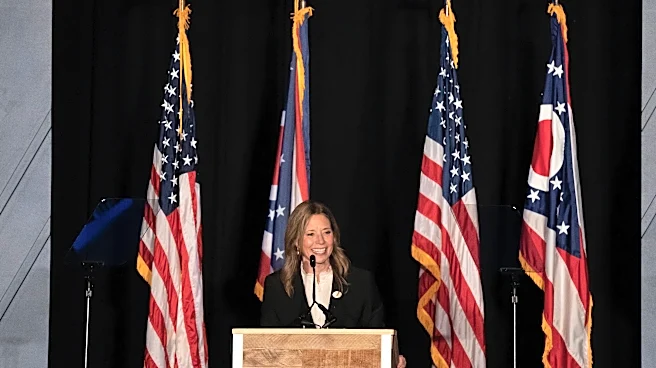
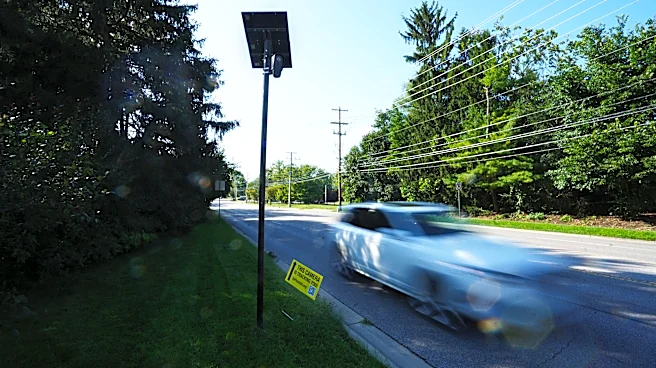
Amy Acton, who recently won the endorsement of the Ohio Patrolmen's Benevolent Association, opposes a statewide ballot initiative that would bypass qualified immunity. This is but one sign of her mad dash to the political center, along with a smiling invitation to federal law enforcement agencies like ICE to Ohio and a tepid promise for a "comprehensive overview" of Flock cameras.
True public safety, however, is endangered by these three positions, with qualified
immunity posing the greatest threat.
What Amy Acton is truly supporting
As Acton acknowledges, technology has indeed helped solve crimes, but every new such tool law enforcement uses becomes a threat to our civil liberties; the mechanics of qualified immunity in court practically guarantee this.
To even reach a jury, a plaintiff must demonstrate that an officer’s actions were "clearly established" as unconstitutional, i.e., a prior court ruling exists with nearly identical facts.
Earlier this week I publicly called for a thorough review of Flock cameras and other AI technology that public safety officers in Ohio utilize. As governor, I will stop the abuse of any AI surveillance. My number one priority is keeping Ohioans safe, but it will never come at the…
— Dr. Amy Acton (@amyactonoh) August 27, 2026
Thus, as soon as Flock is used, for example, to make a false arrest or violate someone's privacy, the offending officer is shielded by a new fact pattern. What's more, courts are not obligated to determine whether a right was violated in this scenario, so the same misconduct can recur ad nauseam until a court finally takes responsibility.
This is what Acton tacitly supports when she opposes the ballot initiative. But note that in the absence of qualified immunity, Flock abuses would result in the government losing lawsuits, which would drive better police training and policies, thus making the public safer.
Acton welcoming federal law enforcement into Ohio is also dangerous for the people.
U.S. Customs and Border Protection has invaded people's property, and ICE has arrested citizens with no probable cause, inflicted excessive force against protesters and threatened its critics. The corrective power of lawsuits to safeguard our rights is even weaker in this context compared to state and local law enforcement since federal officials can only be sued under extremely limited circumstances, and even then, they can still invoke qualified immunity.
Acton is thus inviting a practically unaccountable juggernaut into our midst.
A common argument against abolishing qualified immunity is that it would lower police recruitment and retention. When Acton was asked her stance on the ballot initiative, the chief counsel of the Ohio Patrolmen's Benevolent Association, Daniel Leffler, answered for her: "Police officers would not want to go out or take the job in the first place if they didn't have some protection against their own personal assets."
Amy Acton should know better
Leaders in the Fraternal Order of Police have made similar statements. However, one need only look at the text of the ballot initiative to know this is misleading: "[I]f a [law enforcement officer] is found liable for [rights violations under color of law] ... then the [employer of the officer pays]."
The personal assets of cops are explicitly off limits under this ballot initiative. Damages would be paid by municipalities, again driving better training and hiring practices. Ironically, were the ballot initiative to pass, a drop in recruitment would be due to police unions' own propaganda. Would that bode well for public safety?
For that matter, what about not being able to sue after cops steal from you during the execution of a search warrant, simply because it's not "clearly established" that a cop can't steal from you? What about not being able to sue after a 250-pound math teacher strangles your 7-year-old boy for minutes on end? What about not being able to sue after your public employer fires you for exercising your Second Amendment rights in self-defense?
Qualified immunity regularly leads to such absurd legal outcomes, and none of that seems to bode well for public safety to me. Acton should know.
In reality, there is opposition to qualified immunity on both sides of the aisle.
The ACLU and Cato Institute have both fought it.
Progressives tend to focus on excessive force wielded against minority groups, but civil libertarians recognize that the problem is a disregard for the Bill of Rights at large, which endangers everyone in the country.
If the government can violate our rights and there is no remedy, no accountability, then the people entrusted with our safety will inevitably undermine it. And if Amy Acton can't understand that, she doesn't deserve my vote.

Matt Farabaugh is a former campaign manager for the Ohio Coalition to End Qualified Immunity and is a software engineer in Columbus.
This article originally appeared on The Columbus Dispatch: Amy Acton's police immunity, Flock views dangerous. She doesn't deserve my vote | Opinion