



Ohio removed guardrails around homeschooling students, allowing families to educate their kids with little state oversight or enforceable requirements.
In 2023, lawmakers put homeschooling reforms into the state budget bill: no requirements that the instructor have at a high school diploma; no mandatory academic progress reports or assessment tests; and no minimum hours of instruction.
Under the new law, parents only have to notify the local school district and swear to instruct the students in English, math, science, history, government and social studies. There is little mechanism to make sure that those subjects are being covered unless a child protective services complaint is lodged against the family.
Homeschool students no longer have to
ask to be excused from compulsory attendance. Under the new law, they are exempt from compulsory attendance when the parents notify the district, according to Melanie Elsey of the Christian Home Educators of Ohio, which lobbied for the changes.
It's proving to be popular. The year following the changes, homeschooling jumped by 15% to 61,000 for the 2024-2025 academic year. Numbers for the 2025-2026 school year will be available in mid-September. Nearly twice as many Ohio children are now being homeschooled than there were eight years ago.
Advocates for homeschooling applauded the changes, which lessened the paperwork burden on parents.
Elsey said families continue to have students take assessment tests, but they're no longer required to share the scores with public school districts, which in the past only received them for informational purposes.
Elsey added that parents failing to teach required subjects would be a rare situation.
"Parents who are entering into home education have a commitment not just to cover six core subject areas, they're covering everything. They're covering health and foreign language and phys ed," said Elsey, who home schooled her now adult children.
Homeschooling parents share resources to cover a variety of subjects. "Parents figure out how to do things well," Elsey said. "I'm just not concerned about an abstract concept of whether somebody has to step in to the home and look at exactly what an individual family is teaching."
Ohio dropped the requirement that the home instructor have at least a high school diploma. Elsey said that allows parents who were home schooled and don't have a diploma to in turn educate their own children at home.
Ohio House Education Committee Chairwoman Sarah Fowler Arthur, R-Ashtabula, who was homeschooled and is now homeschooling her three children, said the new law aligns Ohio with about 35 other states. Previously, Ohio was among the 12 most regulated homeschooling states, she said.
She noted that some homeschooling advocates wanted Ohio to eliminate the notification requirement. Ohio also retained a requirement that kids returning to a public school can be tested by the superintendent and assigned to a grade level, she said.
"We also very firmly believe that parents want to see their children succeed and excel, but every kid has a different need and a different trajectory to do that," Arthur said. "So, this allows flexibility while maintaining similar regulatory structures to the majority of states across the nation."
Where is homeschooling popular in Ohio?
By sheer numbers, the most homeschooled students reside in the bigger school districts. Columbus, Southwestern City, Cincinnati, Lakota Local, Beavercreek City, Toledo City and Westerville each have 500 or more homeschooled students.
But the districts with the highest number of homeschooled students as a percentage of district enrollment tend to be in more rural areas.
Cedar Cliff Local in Greene County, Bloomfield-Mespo Local in Trumbull County and Vanlue Local in Hancock County each reported that more than one in five students in their districts are homeschooled.
Reasons for homeschooling
A national study found that families often homeschool their children because they're unhappy with public schools' environment or academics, want to emphasize family life together or want to provide religious or moral instruction. Other parents pull their children from public schools because of bullying or other issues.
During the COVID-19 pandemic, Ohio saw a surge in families that ditched zoom classes with public school teachers and opted to homeschool their children. Some families stuck with it.

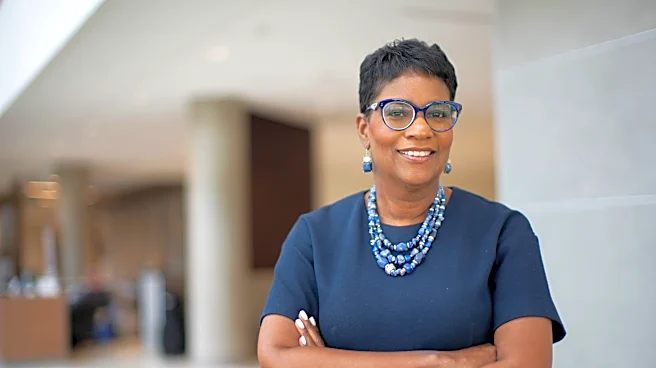
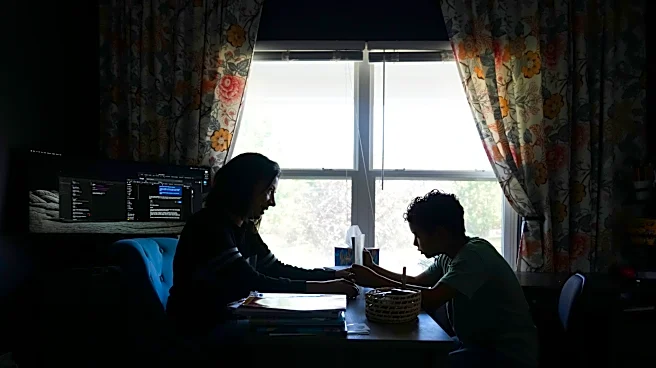
Monica Brooks, of Pickerington near Columbus, began homeschooling her son during the pandemic. She said she and her son ended up “loving the freedom it provided.”
She said the pandemic opened other parents' eyes that homeschooling was a viable choice. Brooks, who is a motivational speaker, said that homeschooling gave her and her son the chance to travel and get hands-on learning experiences at museums, libraries and elsewhere.
She has also been able to keep her son, who is now 10, connected and social with other young people his age, including participation on a homeschool swim team. She said that a negative perception still exists for homeschooling.
“I think the old perception is that I don’t let my kid get out,” Brooks said. “This works for us, and you have to manage the perception, you’re always going to be jabbed when you go against the grain, no matter what it is.”
While she said some families might do home schooling for other reasons like religious or political beliefs, Brooks said “the possibilities are endless on how you want to do it.”
“I think the ultimate goal whether your kids are going to public school or you’re homeschooling them is to raise a good human,” Brooks said. “How we’re raising humans, with kindness and compassion and changing the world – that is my goal, to raise someone like that whether they go to public school or are homeschooled.”
Columbus Dispatch reporter Anna Lynn Winfrey contributed to this report.
State government reporter Laura Bischoff can be reached at lbischoff@usatodayco.com and @lbischoff on X.
This article originally appeared on The Columbus Dispatch: Ohio wiped out guardrails for homeschooling. It's proving to be popular