




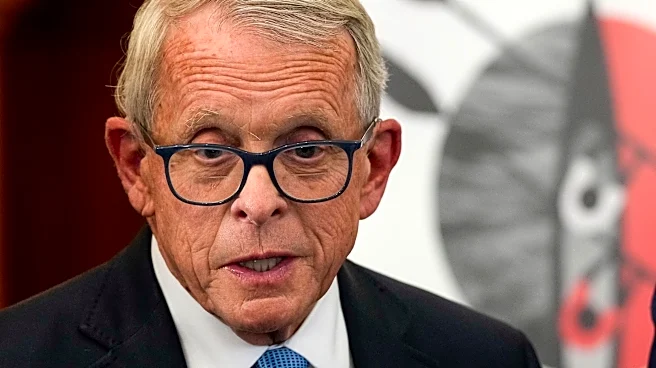
Rick Platt is President and CEO of the Heath-Newark-Licking County Port Authority with over three decades of experience in Ohio industrial development. He is a board member of JobsOhio.
Labor Day is upon us.
Ohioan Jacob Coxey from my hometown, Massillon, led a march on Washington for economic policy in 1894. Labor Day became a thing that same year as Congress’ answer to the populist demands of the time.
Not long after, the labor holiday also became the traditional start of political campaigns. Voter interest picks up in the sprint to November.
Economic policy and political campaigning are intertwined with Labor Day. Ohioans still tend to tune in to elections more after Labor Day to ponder how they are going to vote. It’s also when candidates are starting
to think more seriously about what happens after Election Day.
With that backdrop, I have three thoughts for Ohio’s next governor about what governing looks like after the results have set in. There are lessons to be gleaned from past governors.

First Thought: Jobs. Jobs. Jobs.
Ohio Gov. Jim Rhodes turned a catchphrase into a governing roadmap. His “jobs, jobs and jobs” theme is still spot on today.
His closest gubernatorial race in 1974 was a referendum on manufacturing jobs versus a service-sector shift. The lesson then is the lesson today: Focusing on manufacturing jobs is job one, two and three for an Ohio governor.
Keep a focus on Ohio’s economic base. Bad economic times come inevitably, and the most resilient state economy is one where the base stays diverse and strong. History shows an economic downtown is worse in places where the base is weakened and overdependent on a few sectors.
Every cabinet agency should answer the question: How does this policy affect manufacturing? Manufacturing is the foundation of our Ohio economy.

Another Thought: All development is local
Tip O’Neill’s saying, “All politics is local,” also applies to development.
Ohio Gov. George Voinovich, himself a local official at heart, coached local officials he met to think about their community needs, saying, “If you know what you want, you can get it.” Local consensus building was central to the Voinovich development approach.
That translates to: Empower local communities.
For example, no development happens without a site or building. At the core of local economic growth is site readiness – a locally driven endeavor. State government can only empower local readiness, not replace it.

Third Thought: Business climate matters
It was a governor, then-Texas Gov. George W. Bush, who gave the best definition of economic development I’ve heard, saying, “Economic development is creating an environment where people are willing to risk capital.”
Some things only a governor can do.
Gov. Mike DeWine famously met with corporate decision-makers over Fran’s breakfast. That sincere, personal touch – something only a governor can deliver – is how even multibillion-dollar, job-creating investments get closed.
There’s more to this business-climate factor, as the recent CNBC rankings demonstrate.
Infrastructure and workforce are woven into business climate, and that’s where a governor is both a general and a front-line soldier.
Grassroots political campaigning causes gubernatorial candidates to see more from the front lines of the economy and development than any state aides will ever see. You can’t visit dozens of county fairs, festivals and parades and not absorb an understanding of the wants and needs of Ohioans. Trust what you learn.
Labor Day is when governing questions come into focus for Ohioans and for future governors alike. Manufacturing jobs focus, local economic resilience and business climate should be at the forefront.
Rick Platt is President and CEO of the Heath-Newark-Licking County Port Authority with over three decades of experience in Ohio industrial development. He is a board member of JobsOhio.
This article originally appeared on The Columbus Dispatch: How Labor Day offers lessons for Ohio’s next governor | Column