







Art Jipson is a University of Dayton associate professor of sociology.
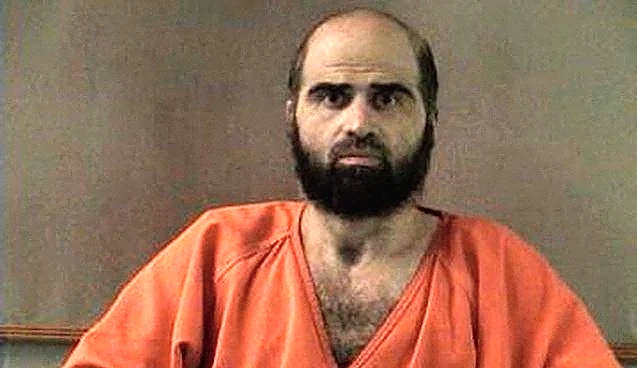
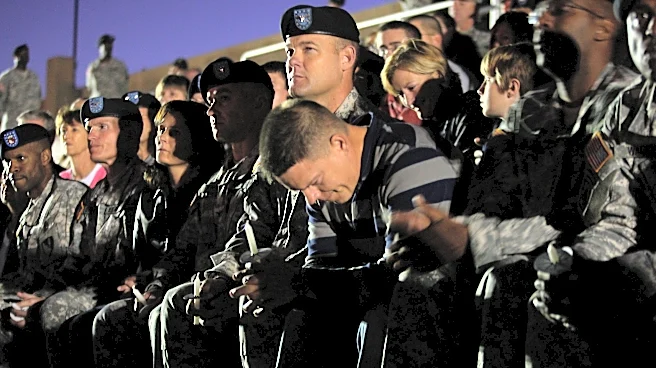
What Nidal Malik Hasan did is horrific. The former U.S. Army psychiatrist was convicted of murdering 13 people and injuring 32 others at Fort Hood in 2009.
The suffering of his victims, survivors and families deserves recognition, compassion and justice. But acknowledging suffering does not require us to abandon the principle that even people convicted of terrible crimes retain their fundamental human rights.
Defense Secretary Pete Hegsethargues a livestreamedexecution by firing squadof Hasan is a way to demonstrate serious crimes carry serious consequences.
The question is not whether Hasan should be held accountable. It is whether the government should transform his death into
a public demonstration of its power to kill.
Undermining our values

The United Nations Office of the High Commissioner for Human Rights has warned livestreaming an execution would amount to a public execution and breach the absolute prohibition on torture while characterizing public executions as cruel, inhuman and degrading treatment or punishment. This is a serious human rights concern, not simply a matter of taste or political disagreement.
The proposal also invites a disturbing question about political consistency. Governments routinely condemn public executions conducted by authoritarian regimes and extremist organizations. Yet the United States risks undermining its own human rights credibility if it adopts the same underlying logic of making a person's death a public warning.
Sociologist Émile Durkheim argued punishment serves purposes beyond addressing individual wrongdoing: it reinforces collective moral boundaries and expresses a society’s shared values. Yet punishment also reveals what a society considers legitimate, including the limits it places on its authority.
Public executions historically served as spectacles in which governments demonstrated their power through the condemned person's suffering.
In the United States, the last widely recognized public execution took place in 1936, when an estimated 20,000 spectators gathered in Owensboro, Kentucky, to watch the hanging of Rainey Bethea.
The subsequent retreat from such spectacles reflected a growing societal recognition that public killing could easily devolve into a degrading carnival rather than a meaningful, solemn expression of justice.
Livestreaming an execution revives that troubling logic for the digital age.
The audience is no longer limited to people gathered around a scaffold. The spectacle can enter homes, circulate across social media and become a political symbol detached from the suffering of victims and the gravity of the crime.
The issue is not that every execution is equivalent to every other act of political violence. It is that a government cannot credibly defend human dignity abroad while treating a condemned person's death as a domestic spectacle of state power.
Sociologically, the danger extends beyond the execution itself.
Public institutions help establish boundaries of what a society regards as acceptable. When government leaders present violence as a demonstration of strength and power, they risk normalizing the idea that inflicting suffering is an appropriate way to resolve social and political problems.
Nor should the spectacle be confused with transparency. The public has a legitimate interest in knowing how capital punishment operates, what it costs, whether it is administered fairly and whether it produces irreversible injustices. But these questions can be investigated through public records, independent oversight, journalism and legal scrutiny. Broadcasting a person's death is not necessary to achieve meaningful accountability.

The victims of Fort Hood deserve remembrance, and their families deserve compassion. Neither requires a livestreamed execution.
Justice should establish accountability without turning death into entertainment or teaching the public that cruelty is evidence of strength.

Art Jipson is a University of Dayton associate professor of sociology.
This article originally appeared on The Columbus Dispatch: Livestreaming murderer's body being riddled with bullets would break America | Opinion