
The Ohio Department of Transportation delivered its final report on a potential U.S. 23 and Interstate 71 connector route to the Ohio Legislature on Sept. 30, ending over a year of studies, public meetings
and opposition from central Ohioans.
The Ohio Legislature directed ODOT to study the connector route in the state's 2026-2027 operating budget, which was passed in 2025.
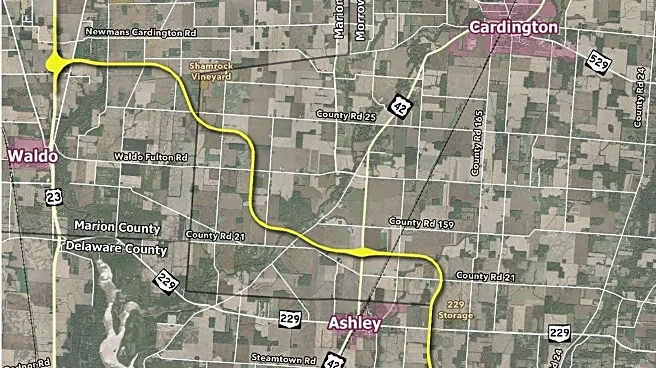
The U.S. 23/I-71 connector, if Ohio lawmakers agree to build it, would span 18.2 miles of mostly agricultural land in Morrow, Marion and Delaware counties. ODOT's preferred route for the connector runs from U.S. 23 north of the village of Waldo, passes north of the village of Ashley and connects with I-71 just south of State Route 521 in Delaware County. There would be only one interchange – north of Ashley – over the length of the connector between Waldo and I-71,
The route would impact eight residential structures, three agricultural structures, two other structures, 23 acres of floodplain, four acres of wetlands, 1,583 feet of ODNR mussel streams, 5,818 feet of other streams and 91 acresof forest, according to the report.

The state would have to spend around $890 million to build the connector, assuming construction starts in 2035, and might have to spend an additional $236 million to add lanes to I-71 to support the connector. In total, that means the project could cost around $1.1 billion.
ODOT expects around 21,900 vehicles would take the connector route every day by 2055, and the route would reduce travel time between Interstate 475 outside of Toledo and Interstate 270 in Columbus by six minutes during non-peak hours and 22 minutes during peak hours.
If the state made the connector route a toll road, ODOT estimates only around 8,500 vehicles would take the route each day. Toll revenue could cover maintenance and operation costs for the route, and around 17.8% of the total project cost, but would not be enough to fund construction of the route, according to the report.
Ohio drivers would save around $4.33 billion in crash savings, fuel savings, car travel time savings and from other savings from 2035 to 2055 if the state builds the connector route and adds more lanes to I-71, according to the report.
ODOT received around 3,800 public comments on the connector route during its spring and summer public engagement windows. Of those 3,800, 94% "expressed concerns" about the connector, 2% supported it, and 4% were neutral. The most common concerns raised by public commenters were about the route's impacts on homes, farmland, property values or other private property, according to the report.
Support for the connector route is largely divided along regional lines. Northwest Ohioans who want a faster way to get to Columbus generally support it, while central Ohioans who live near proposed the connector largely oppose it, The Dispatch previously reported.
Read the full report online below. The report is also available online on ODOT's public input site for the connector.
Reporter Nathan Hart can be reached at NHart@dispatch.com, @NathanRHart on X and nathanhart.dispatch.com on Bluesky.
This article originally appeared on The Columbus Dispatch: ODOT releases final U.S. 23/I-71 connector route report