








Columbus is mulling a price hike on peak water use for high-volume users, AKA data centers.
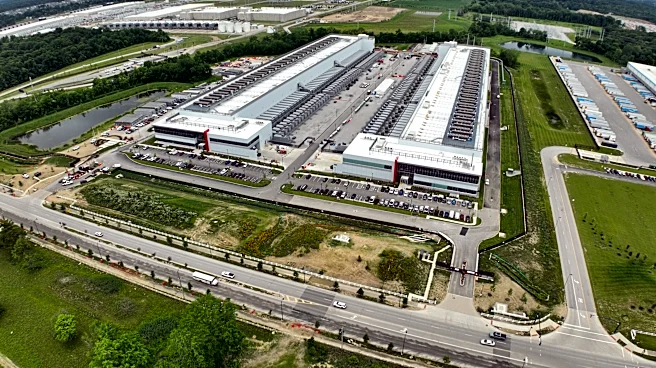
While most of the region's largest data centers are built outside the city's limits, many of them get water from Columbus Water & Power. Data centers used about 1.2 billion gallons, or about 3%, of the city's water in a 12-month period according to a Dispatch report.
Since last fall, Columbus City Councilmember Christopher Wyche, chair of the council's Public Utilities & Sustainability Committee, has raised concerns about data center customers paying their fair share for water infrastructure upgrades. This comes as the city pursues building a fourth water plant for the region, which will cost nearly $2 billion or more, and makes other costly upgrades that
are pushing residential customers' bills higher.
Ahead of City Hall considering annual rate increases for all customers this fall, Wyche and Council President Shannon Hardin are sponsoring legislation that would direct Columbus Water & Power to establish peak rates for high-volume industrial users. Hardin calls it common sense. Columbus City Council is set to vote on the legislation at council's next meeting on Sept. 28.
On Sept. 16, Wyche is holding another council hearing about data center regulations at City Hall at 5:30 p.m.
"Last year, a lot of the conversation (on rate increases) was around high-capacity users, specifically around data centers, and are they paying their fair share for the amount of investment that is needed to deliver peak water capacity based on the infrastructure we have to build," Wyche said.
Some kinds of data centers use water for cooling servers but the amount they use can vary based on factors like how hot it is outside. So Columbus Water & Power has to build infrastructure that can handle the peak days when a data center is using much more water than on other days. While data centers already pay for all the water they use, the current fee structure in Columbus doesn't take variable use into account and effectively bill data centers for the infrastructure improvements they necessitate, according to Wyche.
When City Council voted to raise rates in November 2025, the council also ordered Columbus Water & Power to deliver a report by the end of June on how the city could ensure high water users support their fair share of infrastructure investment. That report found enough peak volume and variability to justify billing based on cost-causation rather than just total consumption, according to the legislation before council.
"I think it is prudent that as the city grows, our residents expect that high volume water users pay their fair share," Hardin said.
Randy Borntrager, deputy chief of staff over communications for Mayor Andrew Ginther, said the mayor's office has for two years examined this idea of implementing peak rates for large industrial users.
"Our focus remains on residential affordability while considering rate adjustments, including any potential industrial peaking factor, to support the growth and maintenance of Water & Power’s infrastructure," Borntrager said in an emailed statement.
Representatives with the Data Center Coalition did not respond to The Dispatch's request for comment on this legislation in time for publication.
At a council hearing in March, Heather Coil, senior manager of state policy at the coalition, said the data center industry is committed to paying the full cost for infrastructure needed to support their industry while referring to the power grid. On the topic of water, Coil said the public often holds misconceptions about data center water usage and said data centers use similar amounts of water to office buildings.
Government and politics reporter Jordan Laird can be reached at jlaird@dispatch.com. Follow her on X, Instagram and Bluesky at @LairdWrites.
This article originally appeared on The Columbus Dispatch: Columbus seeks bigger water payments from data centers