



About a year and a half ago, Ohio State University astronomy professor David Weinberg wasn't sure whether the Nancy Grace Roman Space Telescope would ever make it to space.
On Aug. 30, Weinberg was among about two dozen Ohio State faculty members, postdoctoral researchers and students who traveled to NASA's Kennedy Space Center in Florida to watch the telescope launch.
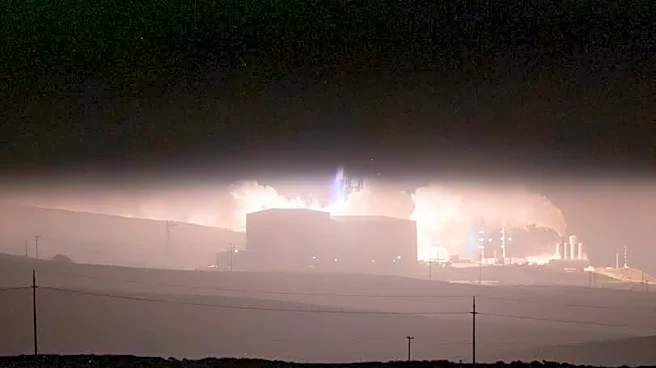
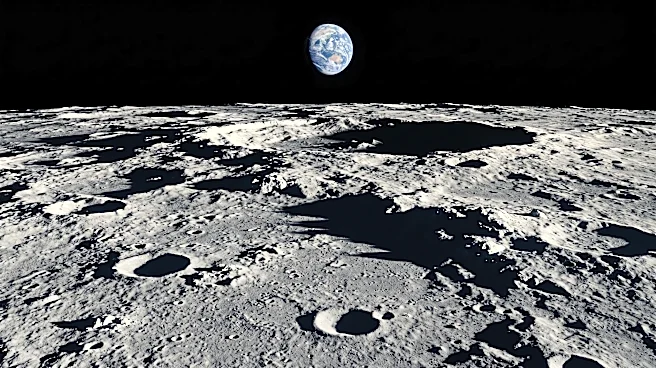
The telescope lifted off aboard a SpaceX Falcon Heavy rocket at 7:26 a.m. Aug. 30, beginning a journey that will eventually take it about 1 million miles beyond the moon.
The launch marks a major milestone for a mission that Ohio State researchers have helped shape for years and that, as recently as 2025,
faced the possibility of cancellation under proposed federal budget cuts.
"It feels amazing," Weinberg said. "These projects are big and ambitious and expensive," adding that Roman had been canceled or nearly canceled at least four times during its development.
Now safely on its way into space, Roman could give astronomers an unprecedented view of the universe, helping scientists study everything from dark matter and dark energy to distant planets and black holes.
And Ohio State researchers will have a front-row seat.

Ohio State researchers watch Roman launch from Florida
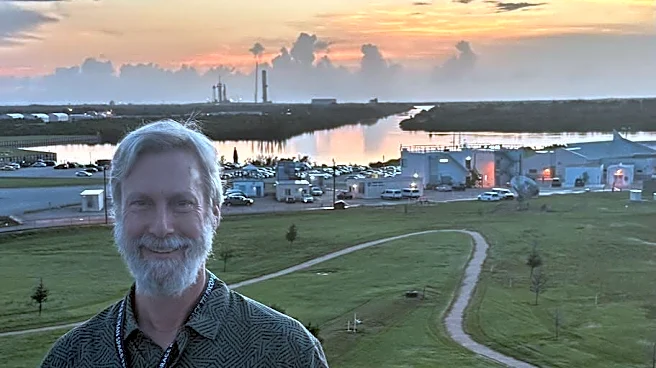
Weinberg, a distinguished university professor of astronomy at Ohio State, watched the launch from a site about 3 miles from the launch pad alongside NASA officials and other invited guests.
For about half an hour after liftoff, Weinberg said, he and other Ohio State professors and scientists watched as Roman cleared several of the most consequential stages of its launch.
"Most of the things that could have gone wrong would have already gone wrong by now," he said. "So the fact that they're all good means we're all feeling pretty happy."
Among them was astronomy professor Scott Gaudi, who has officially worked on Roman for 16 years and traces his involvement with the science behind the mission back roughly 20 years.
"The launch itself was amazing," Gaudi said. "It was moving, it was thrilling, exhilarating."
For Gaudi, getting Roman into space represented "in many ways kind of the culmination of my entire career." Now, he said, comes another challenge: analyzing the data and turning it into scientific discoveries.
Physics and astronomy professor Christopher Hirata has worked on Roman even longer - since 2005.
"I've been working on this for 21 years," Hirata said. "It's not another design study; it's not a simulation this time. It's the real thing."
Hirata said the magnitude of the moment didn't fully sink in until after liftoff: "I just realized, wow, our mission is up there. Can't change the design anymore. Now it's really happening."
"This is the first rocket launch I've been to, and I'm 62," Weinberg said. "It's been very inspirational for me."
For the undergraduate researchers who have already contributed to the mission, being able to travel to Florida and see the telescope launch was "a pretty spectacular experience," he said.
What has Ohio State done for the Roman Space Telescope?
Thousands of people across NASA, universities and private contractors have contributed to Roman, but Ohio State has had an unusually large role compared with other universities involved in the mission.
Gaudi said Ohio State has the largest footprint of any university involved, with researchers contributing across multiple areas of science. Weinberg said only about 30 to 40 university scientists and astronomers have been continuously involved in Roman throughout its development, including three Ohio State faculty members − Weinberg, Hirata and Gaudi.
"We're not making the drawings and building the hardware," Weinberg said. "But we're the ones who are saying, 'Here's the observations it's going to do. Here's the science goal.'"
Ohio State students and researchers have also written critical scientific-analysis software, worked on calibrations and helped researchers understand the telescope's components, Hirata said.
Hirata has been heavily involved in Roman's cosmology work and technical decisions, while Gaudi leads a major science program focused on finding planets using gravitational microlensing, a technique largely developed at Ohio State. Weinberg and Hirata helped design Roman's largest survey, which will cover roughly 10% of the sky to study dark matter and dark energy, and Weinberg is one of two leaders of the international Roman Science Collaboration.
"This mission could not have happened without Ohio State," Hirata said.
What could the Roman Space Telescope discover?
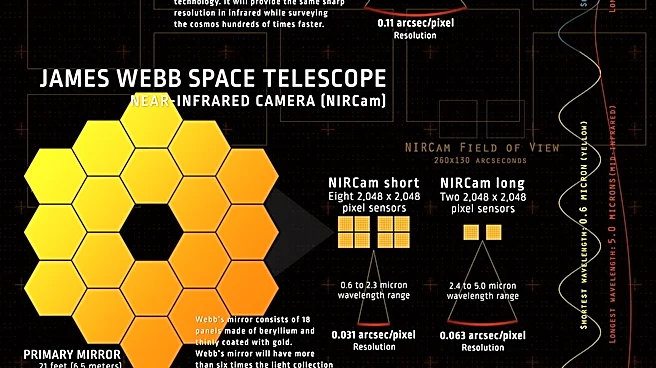
Roman has a mirror about the same size as Hubble's and can produce similarly detailed images, but its enormous camera and field of view allow it to capture far more of the sky at once.
"In a month of Roman, you're getting data that would take a century of Hubble," Weinberg said.
That enormous amount of data could help astronomers tackle some of science's biggest unanswered questions, including why the expansion of the universe is accelerating.
"What I most hope is that Roman will tell us something new that allows us to understand gravity on cosmic scales," Weinberg said.
Roman will also search for planets beyond our solar system, estimate how many black holes exist in the Milky Way and help scientists determine how common "free-floating" planets − worlds ejected from the star systems where they formed − may be.
Some of its biggest discoveries, however, could be things scientists aren't expecting.
"I think possibly the first big discoveries will actually be phenomena that are so rare that we've never seen them before," Weinberg said.
Roman is expected to take about three months to reach its final orbit roughly 1 million miles beyond the moon. During that time, researchers will test and calibrate the telescope before its main science programs begin.
The first publicly released images and data are expected in late November or early December, Weinberg said, with Roman's main science programs scheduled to begin in January. Gaudi's planet-hunting survey is expected to begin in February and could start producing discoveries as soon as March or April.
For Gaudi, the telescope and what it discovers ultimately belong to more than the scientists who spent years working on it.
"It's just going to be a really kind of breathtaking new view of the universe," he said, "and one that allows us to understand it at a level of detail that we never could before."
Trending reporter Amani Bayo can be reached at abayo@dispatch.com.
This article originally appeared on The Columbus Dispatch: NASA's Roman telescope 'could not have happened without Ohio State'