






Now that we've passed the autumnal equinox, you may be harvesting the fruits and vegetables you've planted in the spring. It's time to harvest Ohio's native pawpaw, which bears a delicious green fruit that you can eat.
The pawpaw tree is native to Ohio and is extremely common, according to the Ohio Department of Natural Resources. Want to find a pawpaw tree so you can try the fruit? Here’s more about the broad-leaf tree that calls Ohio home.
What does pawpaw fruit taste like?
The pawpaw fruit was named the official native fruit of Ohio in 2009, and is also known as the ‘Indian banana’.
Are you a fruit-lover and want to try all fruits? You’re in luck because the pawpaw fruit is safe to eat.
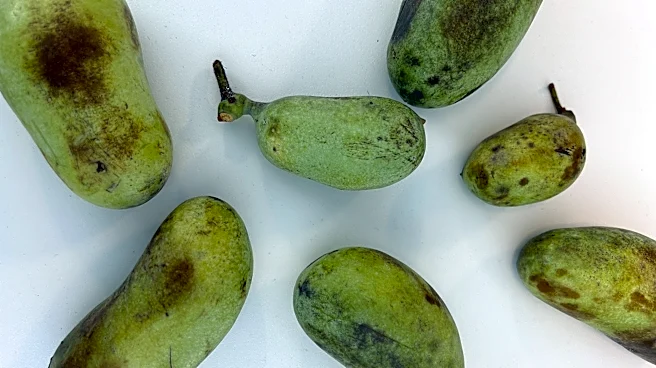
This fruit is shaped like a potato and can be light green to yellow-brown. The pawpaw fruit tastes
like a combination of banana, mango and pineapple, according to Ohio State’s CFAES. The inside is yellow and can be soft like the fruit of an avocado.
Why don't we eat pawpaw fruit?

It's not that people don't eat pawpaw fruit. They can and do, even though they may not find pawpaw fruits in the wild because animals tend to devour them during their harvesting season.
The challenge is making them commercially available. The short harvesting season, the even shorter period the fruit is ripe and the ease with which it bruises can make it nearly impossible to get pawpaw fruit onto grocery store shelves, according to The Atlantic.
What does a pawpaw tree look like?

The pyramid-shaped, tropical-looking pawpaw tree grows in moist areas throughout Ohio and across parts of the United States. It can be up to 25 feet tall and 15 feet wide.
Pawpaw trees have smooth gray bark with dark green leaves hanging down like dog ears from its branches. Flowers are rarely found, but when they are present, they hang like hats and can be dark lavender to purplish-red. A light green potato-shaped fruit begins to grow in the spring and can be harvested and eaten in late summer and early fall, when it’s yellow-brown.
When is pawpaw season?

The pawpaw fruit season is typically short, lasting around only eight weeks.
In Ohio, pawpaws usually ripen in late August through October (at the latest).
Where can you find pawpaw trees?
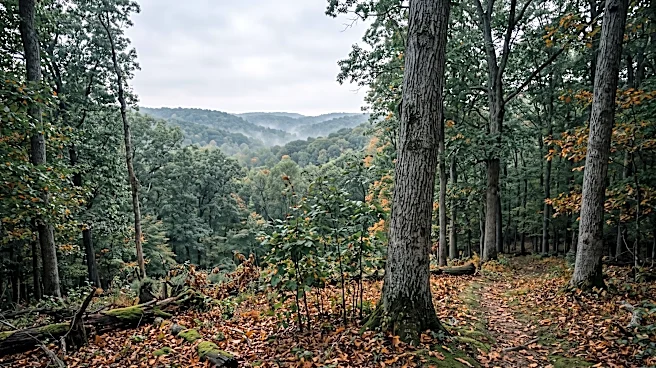
Pawpaw trees thrive in sunny, moist areas with rich, well-drained soil. The trees are commonly found at the bottoms of ravines and along steep hillsides and creek banks.
Of tropical origin, the pawpaw tree is distantly related to magnolias and the tulip tree.
Can you grow a pawpaw tree?
Yes, you can, but there are specific steps to take for the pawpaw tree to grow and thrive successfully.
If you’re planting a young tree or seedling, it needs a shaded area to establish. Additionally, it’s important to keep in mind the pawpaw’s preference for moist and well-drained soil. Successful growth can happen if a seedling begins its growth in a tree container, rather than on the ground.
Eventually, the pawpaw tree can live in areas with full sun, and it can have successful cross-pollination if planted near other pawpaw trees.
More information on Pawpaw tree plant requirements can be found on the ODNR website.
Can pawpaw trees be difficult to grow?
No, pawpaw trees are typically free of pests and diseases.
However, if you want to move a pawpaw tree after it’s planted into the ground, it will be difficult to re-establish due to its sparse root system.
This article originally appeared on The Columbus Dispatch: Why don't we eat pawpaw fruit? More about Ohio's official native fruit