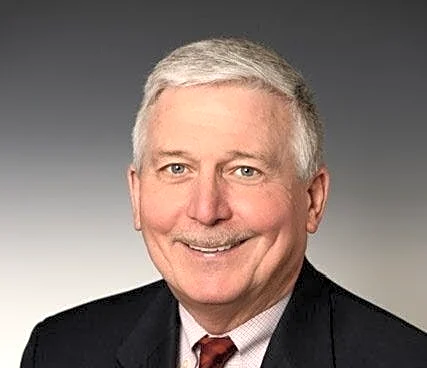




Mike Curtin is a former editor and associate publisher of The Columbus Dispatch, and a former two-term state lawmaker.
“I’m driven by the facts.” – Vivek Ramaswamy, Republican candidate for governor, April 25, 2025, in an interview with Karen Kasler, Statehouse bureau chief for Ohio Public Media.
“I believe a world-class education is your birthright as an Ohioan,” Ramaswamy told Kasler. “But the real question we’ve got to be asking is, ‘How well are we spending the dollars already allocated to public education?’ And the answer, sadly right now, is poorly. There’s no way around that fact. A majority of dollars in our public schools don’t even go to classroom instruction.”
In the early months of his campaign, Ramaswamy repeatedly made this false
claim. As Casey Stengel famously advised, “You could look it up.”
Had Ramaswamy looked it up, he would have found, in the Ohio Department of Education and Workforce’s district profile reports (The Cupp Report), that for the past two decades Ohio’s traditional public-school districts have devoted two-thirds of their operating expenditures to classroom instruction.
Someone on his campaign staff must have gotten around to looking it up. Because Ramaswamy seems to have dropped the false claim, shifting his education talking points to higher academic standards, merit pay for teachers and school choice.
Meanwhile, Dr. Amy Acton, the Democratic candidate, has advocated since December 2025 for free, universal pre-K to close Ohio’s early achievement gaps, and for fully funding the Fair School Funding Plan (Cupp-Patterson). The Ramaswamy campaign has called her proposals unaffordable budget-busters.
Acton is a pediatrician with a research background in preventive and public health. Ramaswamy earned a bachelor’s degree in biology (with honors) from Harvard, and a law degree from Yale.
Given their academic bona fides, both should fully understand the critical importance of universal pre-K.
A newborn’s unfinished brain has nearly 100 billion neurons ready to be developed and connected. After six years, the brain begins to prune the undeveloped neural connections. Deprived of cognitive stimulation, a child’s intellectual potential is compromised. Kids who enter kindergarten behind spend their lives trying to catch up.
The United States lags many other nations in this effort, and Ohio is a laggard among states. Ohio ranks 32nd among states in early childhood education, and 35th in state financial support for it.
Any candidate who proclaims “a world-class education is your birthright as an Ohioan” is mouthing worthless platitudes absent a promise and a plan for fully funding high-quality, universal pre-K.
Georgia, with a population slightly smaller than Ohio’s, is a national leader in universal pre-K for 4-year-olds.
Funded mainly by the state’s lottery, Georgia enrolls three times as many children as Ohio and spends about four times as much money.
In his proposed budgets, Gov. Mike DeWine repeatedly has urged the General Assembly to expand pre-K eligibility and other early childhood programs, with limited success. Ohio’s state-supported pre-K is income-based, pegged to families earning less than 200% of the federal poverty level.
Should Ohio’s next governor be able to persuade the General Assembly to make universal pre-K a priority, there is no shortage of in-state expertise to assist. Ohio’s pediatric hospitals and affiliated research institutions are national leaders in developmental neuroscience and early childhood development.
At Ohio State, the Crane Center for Early Childhood Research and Policy has achieved national prominence for leading multistate research projects that shape early childhood initiatives.
Yes, high-quality pre-K is expensive. But not nearly as expensive as the tax cuts Ramaswamy is promising.
His first budget, Ramaswamy has pledged, will propose elimination of Ohio’s taxation of capital gains.
The state’s Legislative Budget Office estimates that would reduce state revenues by up to $648 million in fiscal 2027 and up to $680 million in fiscal 2028 – about $100 million more than Georgia currently spends annually on pre-K.
Ramaswamy also has pledged, “I will make Ohio a zero income-tax state on my watch.” At present, Ohio collects about $11 billion annually in income taxes. With a flat rate of 2.75%, Ohio already has the second-lowest income-tax rate among the 41 states that have income taxes. DeWine says further income tax cuts are unnecessary.
A billionaire investor, Ramaswamy would be one of the biggest beneficiaries of the tax cuts he promises. There’s no way around that fact.

Mike Curtin is a former editor and associate publisher of The Columbus Dispatch, and a former two-term state lawmaker who served on the Ohio Constitutional Modernization Commission.
This article originally appeared on The Columbus Dispatch: Vivek Ramaswamy gets no more than an 'F' when it comes to education. Here's why | Opinion