








With nesting season pretty much done with as spring tilts toward midsummer, the state wants the public's help in counting results.
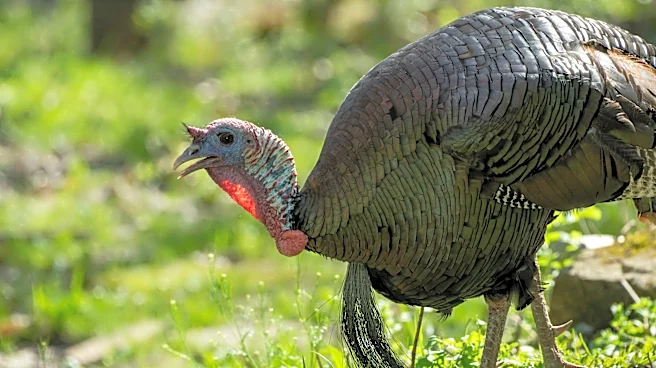
The Ohio Division of Wildlife welcomes receiving reports on sightings of wild turkeys and ruffed grouse. Observers can report observations by utilizing the Wildlife Reporting System on wildohio.gov or on the HuntFish Ohio mobile app.
Observations help assess the year’s nesting success, one determinant of hunting season length and limits. Probably the key aspect of the surveys involves an accounting of the number of young birds observed as they tag along with a protective mother until they reach the go-it-alone stage of growth.
The young birds are easily distinguishable from adults the first few months after they hatch.
Observations are called for in July and August.

Wildlife division biologists have been utilizing turkey observations since 1962 and ruffed grouse sightings since 1999.
Although both species may be legally hunted, the population of both has declined from previous peaks.
Wild turkeys were pretty much extirpated from Ohio until sustained restoration efforts began during the 1950s. Favorable habitat gains made possible the efforts to return the turkey to every county in the state.
While numbers surged for a time, enough to permit a two-bird spring limit during the first decades of the 2000s, a tapering of the population brought stricter regulations to help preserve numbers.
What’s happened to Ohio turkeys is being studied, although predation, habitat, nesting-season weather and food availability count among factors that affect numbers.
The 2025 hatch resulted in slightly below average nesting success compared with the long-term average. From 2021 through 2024, nesting production rated above average.
The ruffed grouse situation is more problematic, so hunting for the bird this year will be restricted to a single site. Not so many years ago, grouse could be hunted from November through February, one of the longer and latest seasons for a game bird in the state.
Once a common denizen of the Appalachian counties in Ohio, the bird thrived during a period after forests leveled to feed iron furnaces or grow crops were abandoned and began to grow back. Ruffed grouse require in-between habitat that’s more meadow-like than forested.
As trees aged into mature woodlands, grouse numbers dropped. The bird, some models suggest, might be at risk of vanishing altogether as southern Ohio returns to its natural wooded state.
West Nile virus, a relatively recent and widespread bane of birds, might have had an impact on the undoing of the grouse in Ohio, a division release states.
Crane count
The 2026 Midwest Crane Count, conducted in mid-April, shorted out in Ohio.
There were 344 sandhill cranes reported in 27 of the 33 counties covered by the survey, down from 428 in 2025 and 412 in 2024.
The wildlife division, addressing the spring fall, pointed to bad weather on the day of the count keeping voluntary observers out of the field.
Pickaway led central Ohio counties with nine cranes spotted, followed by Fairfield with five, Licking with four, Franklin three and Delaware two. Ottawa led all Ohio counties with 63.
Wayne County, where the first Ohio sandhill crane was seen in 1987 after years of extirpation, totaled 61 sightings, although that was about 50 fewer than the three-year average.
Owl rescue
An owl snared in a soccer net, an apparently not uncommon occurrence based on a web search, was recently freed unharmed by police in Avon in northeast Ohio.
This article originally appeared on The Columbus Dispatch: Why Ohio is asking public to help count wild turkeys, ruffed grouse