




Some Clintonville residents are pushing back on a proposal to build a roadway through a protected ravine that would connect the Ohio State School for the Blind and Ohio School for the Deaf campuses.
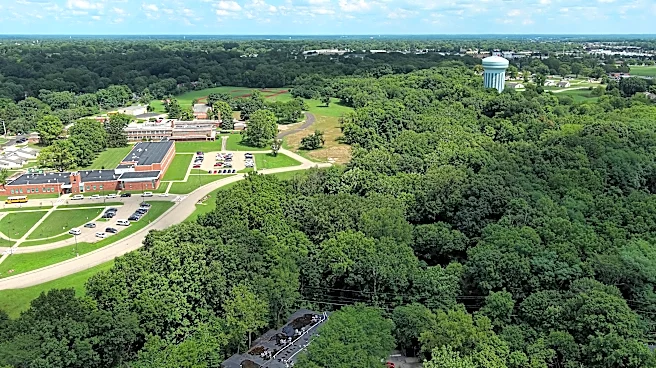
The protected land in question is a 73-acre conservation easement north of Morse Road between North High Street and Indianola Avenue in Clintonville. Since 1999, the area has been protected by a "perpetual conservation easement," which is a deed restriction placed on a piece of land that indefinitely limits certain development and land uses.
The land, often referred to as Bill Moose Run for the stream that runs through it, is owned by the state of Ohio and designated for use by the schools. The easement is owned by Franklin Soil and Water Conservation
District, or FSWCD, a political subdivision of the state.
The Ohio State School for the Blind and Ohio School for the Deaf, both state institutions, sit just northwest and southeast of the easement, respectively. The schools are seeking approval to build a two-lane roadway and multi-use pedestrian pathway across roughly 2 acres of the easement.
Lou Maynus, superintendent of Ohio Deaf and Blind Education Services – the agency that oversees both schools – said the connection would improve safety for students and staff who regularly travel between campuses to access shared resources.

“Our primary responsibility is to make sure our students can access the services they need safely and efficiently," Maynus said in a statement. "The campus connector bridge eliminates the need for students and staff to travel along busy roadways between campuses, while also saving valuable time and reducing the costs associated with that travel."
"This is a forward-looking investment in the safety of our students and our educational community, and one we believe reflects our responsibility to be thoughtful stewards of state dollars.”
But some Clintonville residents have raised concern with the proposal, saying it would divide the existing natural area in two and could set a precedent for overriding perpetual conservation easements in the future. Clintonville Area Commissioner Joshua Hively, who lives just south of the easement, said he's heard pushback from several neighbors over a perceived lack of discussion with the schools about alternative options that might reduce impacts on both the land and its surrounding neighborhood.
"Speaking on behalf of the folks in the neighborhood, I don't think it's a question of killing the project altogether," Hively said. "I think everybody's just kind of looking for a deeper conversation and maybe some more transparency and trying to figure out what is the best solution to support the schools and the local environment."
It's up to the FSWCD Board of Supervisors to decide whether to approve or deny the schools' request. Kyle Wilson, FSWCD assistant director, said no decisions have been made, and he doesn't anticipate a decision until the board's October meeting, at the earliest.
Though they're defined as permanent, perpetual easements can still be amended. Wilson said there are clauses in easement language that say modifications can be made if agreed to by both the land owner and the easement holder. He also clarified the land is not open to the general public and would stay that way even if the bridge were approved.
Wilson encouraged any residents with questions or concerns about the bridge proposal to attend a public information session with representatives from both FSWCD and the schools on Sept. 2 from 5-7 p.m. at FSWCD's office building at 1404 Goodale Blvd.

Neighbors worry project is a 'sure thing,' but schools and FSWCD say otherwise
This is not the first time the schools have sought a connector between their campuses. Maynus said the schools had separate, informal agreements with FSWCD in 2009, 2012 and 2017 to build a similar bridge, but the plans fell through each time due to a lack of funding.
This time around, the state of Ohio has provided budget dollars to fund the project. The state appropriated $3.5 million in the 2025-26 budget cycle, plus $10.1 million in the 2027-28 cycle, according to a state Controlling Board document.
That's part of the reason why Hively said some nearby residents are frustrated – they feel the state's funding commitment is a sign the project is a "for sure thing" even before FSWCD has made a decision. Hively also pointed to an incident in fall 2025 when residents observed work taking place within the easement before approval had been granted.
"We found out about the project via bulldozer trafficking through the woods behind our house," he said, "which is probably not an ideal way to find out about a project like that."
Wilson confirmed that FSWCD later learned the activity involved environmental sampling and soil-boring work, which he attributed to new school administrators who were unfamiliar with the easement's restrictions and approval requirements. After FSWCD notified the schools of those requirements, Wilson said they have acted in "good faith," and no construction work has taken place on the easement since.
Maynus acknowledged previous plans for an upcoming ribbon-cutting event with the schools and Ohio Gov. Mike DeWine, saying she and the schools hoped to have a ceremony after securing state funding. But given FSWCD is still deliberating, she said the schools are "on pause for a celebration."
A spokesperson for Ohio Deaf and Blind Education Services said the agency has had conversations with the Clintonville Area Commission since December 2025, plus two virtual information sessions and other community conversations. She added that the agency has been working to ensure all environmental standards are met and additional protections for the land are in place.
Wilson noted that FSWCD staff are also considering mitigation options and have come up with at least one proposal that would involve adding a currently unused, 13-acre plot on the northeast corner of the schools' land to the easement. That land was the site of a former YMCA center proposal from years ago that never came to fruition.
Reporter Emma Wozniak can be reached at ewozniak@dispatch.com or @emma_wozniak_ on X, formerly known as Twitter.
This article originally appeared on The Columbus Dispatch: Roadway plans through protected Clintonville ravine raise resident concerns