







Editor’s note: Throughout the growing season, Mike Hogan, OSU Extension educator for Agriculture and Natural Resources in Franklin County, will answer gardening and home landscape questions submitted by Dispatch readers. Send your questions to hogan.1@osu.edu.
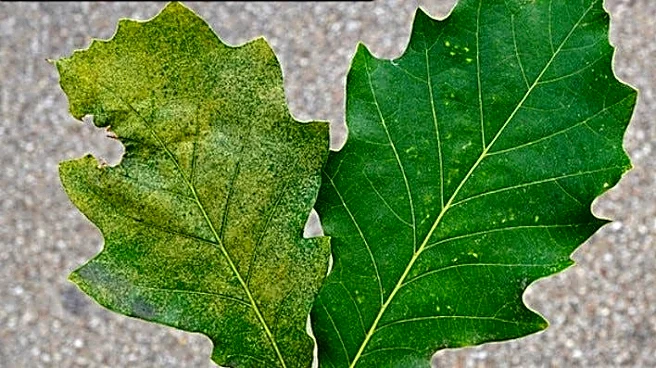
Question: Many of the oak trees in our yard and the woods behind our house have had leaves turn yellow and fall to the ground starting in July this year. The fallen leaves look like they have tiny yellow and brown spots all over them. Is there a blight in the area that is causing this?
Answer: The damage you describe sounds like the damage caused by lace bugs, which we have seen quite a lot of this summer. Several different species of lace bugs feed on different species of trees, including
the oak lace bug, which feeds on its namesake host.
Lace bug adults and nymphs stab their piercing-sucking mouthparts into the leaf surface and rupture the cells in the leaf. The damaged leaf cells die, producing numerous tiny yellow spots called stippling. With enough spots on a leaf, the leaf can turn completely yellow or brown and fall from the tree resulting in premature leaf drop.
Rarely do lace bugs cause long-term plant health problems on mature trees, as these trees have already stored enough nutrients for the season in preparation for renewed growth next spring. Heavy infestations on very young oak trees might result in reduced vigor of a tree, but measures to control the insect would not reverse such damage.

Q: We only have two tomato plants in our small raised-bed garden, but this year, both tomato plants appear to be stunted with odd-shaped, small, curled leaves that are very pale green. We have applied a liquid nitrogen fertilizer twice, but the plants have not greened up or increased in size. Very few flowers have set fruit, and only one tomato has ripened. What could be causing this condition?
A: The symptoms you describe sound suspiciously like those caused by cucumber mosaic virus. This disease affects not only cucurbit crops such as cucumber and melon, but hundreds of other plants including common vegetable plants such as pepper, beans, spinach, potato and tomato. Symptoms of the disease on tomato include stunted growth, giving plants an almost bushy appearance; mottled leaves in different shades of light green and yellow; and small, distorted-shaped leaves. Low yields and small fruit size are also common in tomato plants infected with the virus.
Cucumber mosaic virus is spread by many species of aphids in the environment which spread the virus from one infected plant to another. It is easily spread from one neighborhood garden to others in the vicinity, and sometimes seedlings become infected in the greenhouse with symptoms appearing only after an unsuspecting vegetable gardener purchases the seedlings and transplants them into their garden.
While positive identification of this virus can be made in a laboratory, like most plant diseases, there is no rescue treatment to reverse the damage. The good news is that this particular virus does not persist in soil or plant debris, so you should not be dealing with this disease in your bed next season.

This article originally appeared on The Columbus Dispatch: Expert advice for dying oak trees and tomato plants