





Tens of thousands of Haitian Columbus residents who lost temporary protected status (TPS) went from having homes and jobs to struggling to get basic necessities like food and shelter, said leaders with the Haitian Community Network.
"Everybody is trying to stay calm, but the fear is loud," Marc Fequiere, executive director of the Haitian Community Network said. "You can taste it. You can feel it everywhere you go. Our businesses are shutting down. People don't go out anymore. Parents are afraid to send their kids to daycare. A lot of people lost their jobs."
Fequiere's nonprofit, often called HaCoNet, serves the large Haitian diaspora living in Columbus, which is larger than the Haitian population in Springfield, Ohio, that has been the target
of President Donald Trump and Immigration and Customs Enforcement.
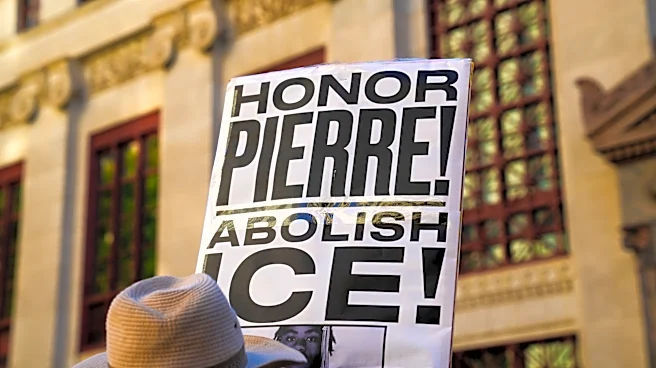
Fequiere said HaCoNet is focusing now on getting food, shelter and mental health services to Haitian residents who remain in the city. The emphasis on mental health comes in the wake of Haitian college student Pierre Damas Bel's death on Aug. 31 in a suspected suicide after he was humiliated by wearing an ankle monitor that ICE required for him to remain in the U.S.
Columbus City Councilmember Lourdes Barroso de Padilla spoke through tears during the the council meeting as she spoke about Bel before introducing a $30,000 grant for HaCoNet that passed council unanimously in a 9-0 vote.
Barroso de Padilla said the end of TPS has created tremendous uncertainty and stress for the Haitian community. She said that while one thing cannot alone explain why someone takes their own life, prolonged fear, stigma and trauma weighs heavily on people.
"This funding does not solve every challenge facing the Haitian community but it helps create a network of support so that when someone is struggling, they don't have to navigate that struggle alone," Barroso de Padilla said.
Bernice Louis, chief operating officer at HaCoNet, told The Dispatch that many Haitians on TPS went from having houses in their names and working to being homeless or sleeping on couches.
"We're talking about basic things," Louis said. "We're talking about somebody who cannot feed their kids in America. It's very concerning. A lot of kids, a lot of parents, don't even know what they're going to do tomorrow."
Fequiere said Haitians living in the U.S. have nothing to go back to in Haiti.
"A quick Google search will show you what's happening there," Fequiere said. "Where you go to sleep at night, you don't know if you're going to wake up in the morning. There's no safety, no security. People running for their lives. The gangs are in control."
For now, Haitians living in Columbus are on "indefinite standby," Fequiere said, and hopeful for a change after the midterm elections.
Government and politics reporter Jordan Laird can be reached at jlaird@dispatch.com. Follow her on X, Instagram and Bluesky at @LairdWrites.
This article originally appeared on The Columbus Dispatch: Columbus grants $30k to Haitians facing hardship, fear after TPS ended