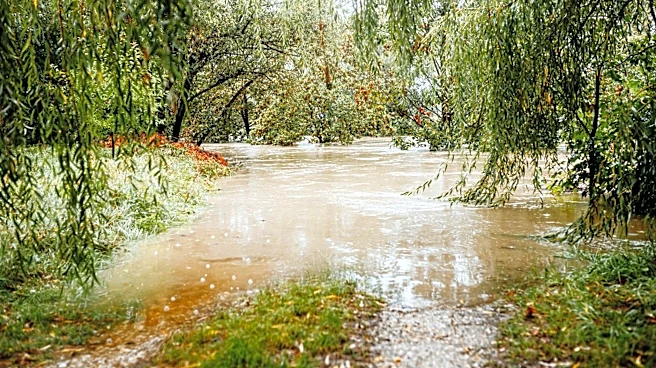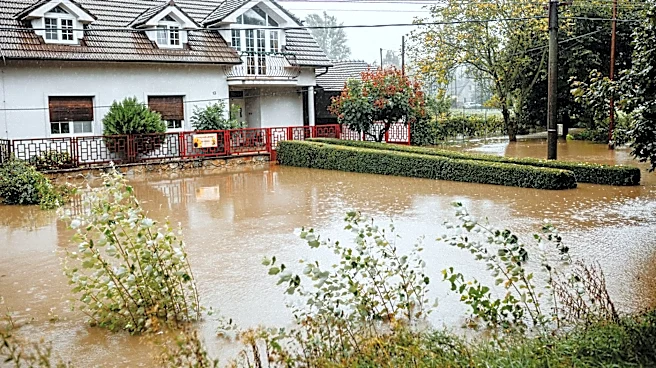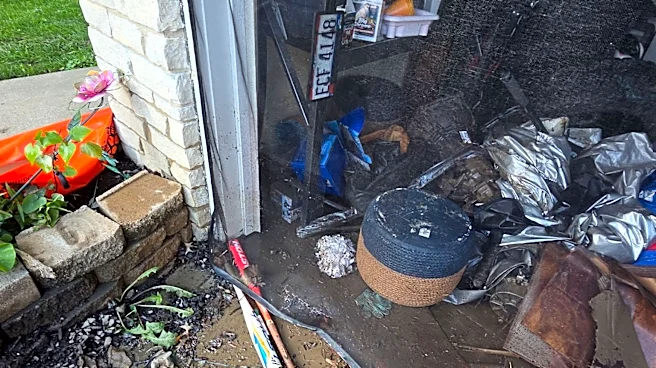








A week after severe flooding sent feet of water surging into the Peggys Cove cul-de-sac in Reynoldsburg, residents worked around the wreckage of their lives, throwing water-soaked appliances into vehicles and trimming their lawns amid discarded children's toys.
Some of those homes, and families, might not have been on Peggys Cove last week if not for a Trump administration change to a FEMA grant program that could have bought out their homes at market rate, according to Reynoldsburg Mayor Joe Begeny.

The city of Reynoldsburg released a study of the Blacklick Creek Watershed in 2025 that recommended every home on Peggys Cove, White Butterfly Lane and another nearby cul-de-sac, Promise Court, be purchased and demolished to restore the creek's floodplain.
The city would have applied for a FEMA flood mitigation assistance grant to buy and demolish the homes last September, and by the time of the Aug. 20 floods, some of the Peggys Cove homes might have already been gone if the city got the grant, Begeny said.
But the city couldn't apply for the FEMA grant last year. FEMA took the grant off its regular schedule to update the program with the Trump administration's second-term priorities, pushing the application window back until April. When it opened, FEMA wanted new information from Reynoldsburg that it couldn't gather in the few weeks before the window closed, Begeny said.
Had Reynoldsburg been able to apply for the competitive grant, it might have had an advantage over other communities because of its 2025 watershed study, Begeny said.
"[T]hat would have put us a leg up on it. I do believe we would get it," he said. "...You never know, but I would assume that with the recent events that not only would we be guaranteed, we'd probably be enthusiastically supported for this grant."
In a statement, a FEMA spokesperson said it's up to states and local communities to initiate and manage their own acquisition projects.
"States establish mitigation priorities based on FEMA-approved hazard mitigation plans, and local communities are responsible for developing projects and submitting applications through the state for consideration under a specific grant program," the spokesperson said. "FEMA’s role is to provide funding, technical assistance, and program guidance when eligible applications are submitted. The selection, timing, and advancement of individual local projects depends on state and local priorities, application readiness, eligibility, and available funding. This reflects the longstanding emergency management framework in which disaster recovery and mitigation are state-led and federally supported."
Reynoldsburg resident Angie Hanson was out on Peggy's Cove Aug. 27, working on the home of her sister, Patty Diewald, while her sister tried to fix one of her damaged cars. The Aug. 20 flood completely filled Diewald's basement and sent three feet of water into her first floor. Diewald's family had to be rescued by boat.

During the flood cleanup, Hanson's father fell down the stairs, which led to a cracked rib and a collapsed lung. Diewald's house was one of the first homes on the list to be bought out before the FEMA grant schedule changed, Hanson said.
"They were definitely considering it," she said.
The homes on Peggys Cove sit in a FEMA regulatory floodway due to their proximity to Blacklick Creek, which runs through several backyards. Development in a regulatory floodway is heavily restricted; nothing can be built there that would increase the elevation of any potential flooding. Every home in a floodway that has a federally backed mortgage is also required to have flood insurance.

The Peggys Cove homes were built in the early 1970s, before FEMA's flood maps were established. They would never have been built there today, Mayor Begeny said.
Peggys Cove resident Edward Thomas had been in his home for less than a year when the floods came. His basement filled with four feet of water, and his insurer told him he couldn't remove his soaked furniture until they inspected it.
"I have to wait until Saturday or Sunday when the company comes to dig through our personal lives. And then put an evaluation on it and offer some money for it. And only then can I have it thrown in the dumpster. Otherwise, I'm going to pay for it," he said.

Thomas said he wouldn't have bought his house last September and would've let the city buy it instead if the acquisition program was running then.
A new application process started for the flood mitigation assistance grant in July, and Reynoldsburg is working to get an application in, Begeny said. The city is also working through to get a federal disaster declaration for the recent flooding, which could provide financial relief for Reynoldsburg's flooded homes.
Transportation and neighborhoods reporter Nathan Hart can be reached at NHart@dispatch.com, @NathanRHart on X and nathanhart.dispatch.com on Bluesky.
This article originally appeared on The Columbus Dispatch: Trump's FEMA changed a grant. Then the flooding came for Reynoldsburg | Exclusive