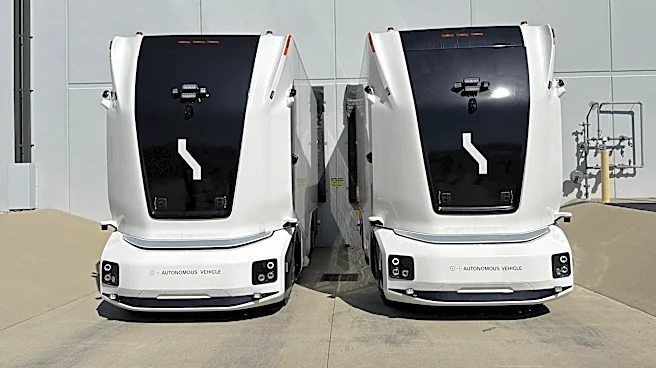








Between two massive warehouses in Marysville, two strange-looking trucks – which look like shipping containers with wheels from the side and from the front like a robotic Beluga whale – trundled along a short road almost silently. They have no steering wheels, no pedals, no cabin, and no driver.
These electric trucks, developed by Swedish transportation company Einride and used by Dublin-based logistics firm EASE Logistics, are part of the Ohio Department of Transportation and the Indiana Department of Transportation's years-long Truck Automation Project. The $8.8 million effort, which began in 2021, is meant to study and deploy autonomous trucks across the two states to advance automated trucking in the Midwest, according to ODOT.
EASE and Einride
hosted a demonstration of the trucks for members of the press Oct. 5.

The vehicles, which cost almost double the price of a normal electric truck, use a combination of radar, light detection and ranging (LiDAR) sensors, and camera feeds to detect and navigate the world. EASE Logistics has been using them since the summer to move goods between two of their warehouses within walking distance of each other, a small task that would normally fall to a company truck driver to perform. With these trucks handling those short, repetitive trips, EASE's drivers are freed up to work longer trips that the automated trucks cannot, EASE Logistics CEO Peter Coratola Jr. said.
Unlike with a human driver, Einride's trucks can perfectly dock with a warehouse every time, said Alex Brown, global autonomous solutions delivery manager for Einride. During the press demo, the trucks pulled up in front of an EASE docking bay, let out the familiar beeping alarm of a truck backing up and slowly reversed. After a brief pause to make sure there was nothing in the way, the trucks backed into the loading docks, seemingly aligned with them.

Einride's trucks are classified as SAE Level 4 autonomous vehicles, meaning they do not have a driver but will only operate in certain conditions. Einride employees monitor the vehicles from a control center in Austin, Texas, and can assist them if needed, said Henrik Green, Einride's chief technology officer.
Einride only has a "low double digit" number of autonomous trucks operating in the world currently, but it has plans to keep growing. The trucks are capable of driving as fast as a normal truck, but the company is currently limited by the road permits they can get from governments around the world, Green said.
"Of course there is a safety case behind that. Together, with the authorities, we keep expanding and growing. We are growing from shorter distances to medium distances and to longer distances, and similarly we're also growing in speed limitation from fairly slow to slightly faster and faster," he said.
The number of autonomous trucks on public roads will double every year from here on out, Green estimated.
ODOT and INDOT's Truck Automation Project will end in January 2027.
Reporter Nathan Hart can be reached at NHart@dispatch.com, @NathanRHart on X and nathanhart.dispatch.com on Bluesky.
This article originally appeared on The Columbus Dispatch: Driverless, autonomous freight trucks operating in central Ohio