






Peter Max, the psychedelic artist whose colorful work became synonymous with the 1960s counterculture and who later designed the official poster for Columbus' AmeriFlora '92 exposition, has died. He was 88.
Max died Sept. 14 at a hospital, his son, Adam, told The New York Times and The Associated Press. A cause of death was not provided.
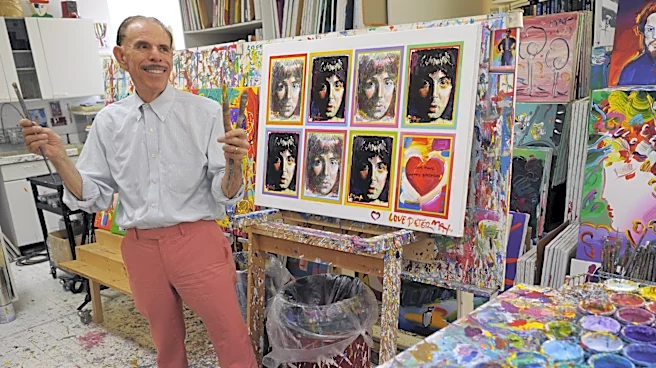
The German-born American artist became known for his brightly colored paintings and "Cosmic '60s" posters, eventually bringing his distinctive style to everything from postage stamps and airplanes to the Super Bowl, World Cup and Grammy Awards.
His work also became part of a major moment in Columbus history.
What was Peter Max's connection to Columbus?
Max designed the official poster for AmeriFlora '92, the international horticultural exhibition held at Franklin
Park Conservatory in Columbus from April through October 1992.
The brightly colored poster brought Max's distinctive artistic style to the months-long exposition, which transformed Franklin Park and drew visitors from around the world.
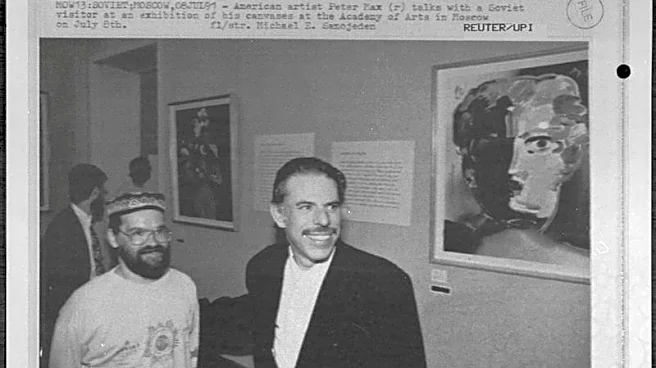
Max also visited AmeriFlora on July 17 and 18, 1992, where he displayed his work, participated in a media art tour and signed copies of the official poster he designed, according to Dispatch archives.
AmeriFlora ultimately played a major role in the development of Franklin Park Conservatory. A Conservatory spokesperson told The Dispatch that none of its current staff worked with Max because the Conservatory as it exists today took shape after AmeriFlora closed.
Who was Peter Max?
Max was born Peter Max Finkelstein in Berlin on Oct. 19, 1937.
His family fled Germany amid the rise of Nazism in 1939, eventually living in Shanghai; Haifa, Israel; and Paris before settling in the United States.
Those early experiences helped shape the artist he would become. Max drew inspiration from the bright colors of American comic books and Buddhist monasteries near his childhood home in Shanghai, according to USA TODAY. He later studied at the Louvre while his family lived briefly in Paris.
After moving to New York, Max graduated from Lafayette High School in Brooklyn and studied art at the Art Students League and School of Visual Arts.
His fascination with astrology and spirituality increasingly found its way into his work. Max later credited yoga guru Swami Satchidananda Saraswati with profoundly influencing his artistic approach.
By the late 1960s, Max's vivid colors, stars, planets and flowing imagery had become closely associated with the era's counterculture and "flower power" movement. He appeared on the cover of Life magazine in 1969 and became one of the country's most recognizable commercial artists.
His work would eventually appear on a Continental Airlines Boeing 777, a Norwegian Cruise Line ship, U.S. postage stamps and promotional materials for major events including the Super Bowl and World Cup.
Max also created artwork for the Grammy Awards and contributed to MTV's imagery during the 1980s.

Peter Max stepped away from the spotlight
Despite his commercial success, Max largely retreated from public life beginning in the 1970s.
In a 1992 interview with The New York Times, Max said he spent 17 years focused on contemplation and meditation while continuing to work on his craft.
His health declined later in life, and Max lived with dementia for at least a decade. His condition became public amid legal disputes involving his family and control of his artwork and business.
Max is survived by his son, Adam, and daughter, Libra, from his marriage to his first wife, Elizabeth Nance.
Trending reporter Amani Bayo can be reached at abayo@dispatch.com.
This article originally appeared on The Columbus Dispatch: Peter Max, psychedelic artist who designed AmeriFlora '92 poster, dies at 88