






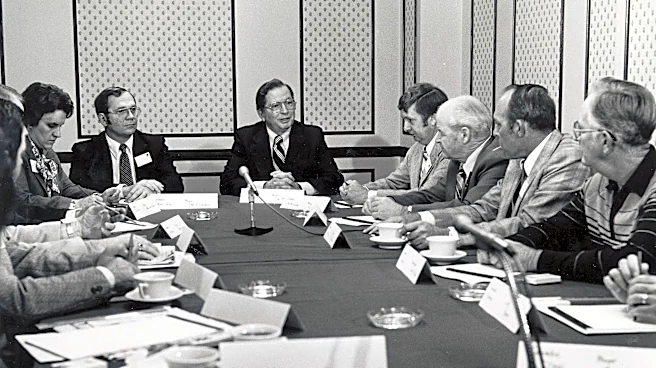

Just three years ago, Columbus City Council expanded to nine members and implemented a new district system where council members are required to reside in their respective districts but the whole city still votes in all nine races.
This hybrid system was OK'd by voters in 2018 as a compromise after failed reform campaigns and is almost unheard of across the country. Even a sitting council member has called the current system confusing and stupid.
This November, city voters will decider whether to again overhaul the system, implement district-only council elections for the first time in over a century and possibly expand the number of seats. Voters will weigh in on two charter amendments: Issue 8 brought by a grassroots coalition called Our City
Our Say and Issue 9, introduced by City Council. The issues appear similar on their face but differ in key ways and the council-led issue could supersede the other.
The resident-led Issue 8 converts the existing city council districts into voting districts. Issue 9, introduced by City Council in response, sets up nine voting districts but adds four more council seats elected citywide. Issue 9 also includes reforms like redrawing the district boundaries, which were never intended as voting districts.

Proponents of district-only representation say the barrier to entry will be lowered, allowing outsider candidates without the backing of the establishment or county party to gain a foothold.
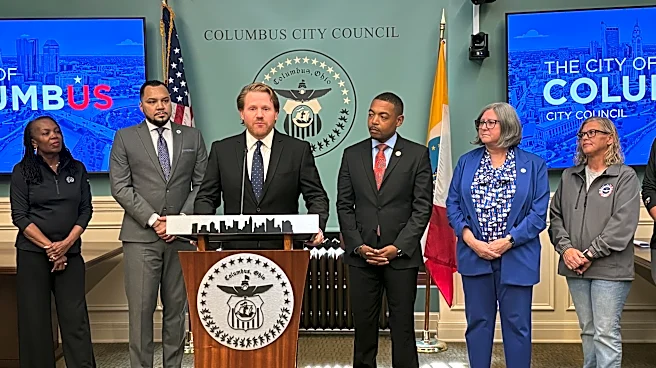
Meanwhile, Columbus City Council President Pro Tempore Rob Dorans and others have argued for preserving some at-large seats so there is a voice for issues that cross district boundaries like constructing more housing.
Columbus is currently the most populous U.S. city with no district or ward-only representation on its city council.
Here's what to know about issues 8 and 9.
What happens if both Columbus issues pass?
If both charter amendments pass, Columbus City Council is the arbiter of any conflicts between the two. Thus, if council-led Issue 9 passes, it does not matter whether resident-led Issue 8 passed, because council will let its plan be implemented.
Dorans, who introduced the charter amendment council put on the ballot, says the two issues do not conflict. Council leaders argue Issue 9 incorporates the core elements of Issue 8, but council's critics say the addition of at-large seats undercuts their goal for district-only representation.
The Franklin County Democratic Party has endorsed both issues.
What would Issue 9 do
If council-led Issue 9 passes, even if it gets fewer votes than Issue 8, Columbus will implement a system with nine district-elected members and four members elected citywide. The four at-large seats will be phased in over two election cycles: 2027 and 2029. This means the full 13 members would be seated for the first time in 2030.
Expanding Columbus City Council does not come without a cost.Council members each get paid a nearly $100,000 salary in 2026 and each member gets two dedicated full-time staff members. Plus, there's office costs. Dorans said phasing new members in over time will help the city absorb the new costs.
Issue 9 would also establish a citizen commission to redraw the district maps ahead of the 2029 council elections. Dorans said it is not feasible to redraw the map ahead of the 2027 council election, when some seats will be up. Some Black activists in Columbus have criticized using the existing districts for voting as they were not made for that and there is currently no majority Black council district in the city.
Issue 9 takes up much more space on the ballot than Issue 8 and would also addresses other complementing reforms. Among the reforms, Issue 9 would:
- Give the city more flexibility to draw districts and keep neighborhoods together. When the current map was drawn, the commission was held to creating districts with a population variance of just 1%. This amendment would raise the allowable population variance to 7.5%.
- Lower the number of signatures a candidate needs to get on the ballot for a district seat from 250 to 150 signatures. At-large candidates would still need at least 250 signatures.
- Allow members whose districts are redrawn but who still have time in their term to serve the remainder of their term representing a newly drawn district.
- Allow for a recall of a district council member to be initiated with a petition containing signatures equal to 15% of the votes cast within the district. Current law requires signatures equal to 15% of the votes of the entire city, as councilmembers are voted citywide. This is also in Issue 8.
What happens if Columbus Issue 8 passes and Issue 9 doesn't
If the resident-led Issue 8 passes and council-led Issue 9 does not pass, the city will keep its current district map but only each district will vote on its representative.
If only Issue 8 passes, the city's district map is scheduled to get redrawn next in 2031, after the next Census in 2030.
What if neither issue passes?
If neither Issue 8 nor Issue 9 passes, Columbus will keep its current system and continue electing Council members at-large but with a residency requirement.
This article originally appeared on The Columbus Dispatch: Columbus issues 8 and 9 offer competing plans to overhaul City Council