







Editor’s note: Once a month, OSU Extension Master Gardener Volunteers in Franklin County profile a plant that occurs naturally in central Ohio.
Dalea purpurea, commonly known as purple prairie clover, is an easy-to-establish workhorse in the landscape, requiring very little care from the home gardener while providing numerous benefits.
A prairie plant that once ranged from southern Canada to northern Mexico and from Pennsylvania to the Rockies, Dalea purpurea is today considered extinct in Ohio, although it is easy to grow from seed sown in the fall or spring. While the seeds do not require a period of winter dormancy to germinate, they should be scarified before they are planted.
Those who plant purple prairie clover will be rewarded with long-lived
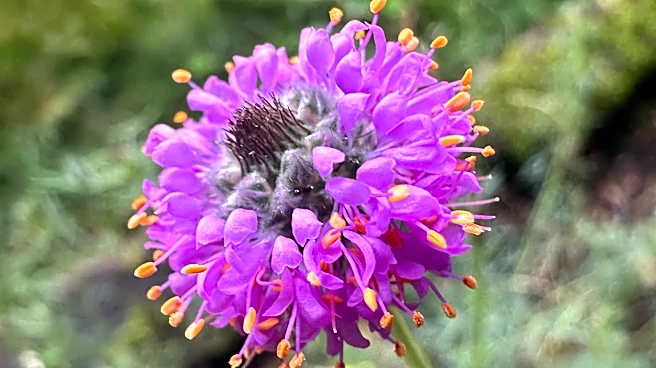
plants sporting fuchsia flower spikes up to 2 inches long, which bloom from bottom to top and resemble pointy thimbles “ringed by a tutu of purple petals,” in the words of Alan Branhagen, author of "Native Plants of the Midwest."
The tiny fuchsia flowers on each spike are accented by bright-orange anthers. These showy spikes top strong stems of thready foliage which give the plant a delicate, wispy look and make it a superb garden companion to more well-known wildflowers such as butterfly weed, purple coneflower, black-eyed Susan and beebalm. It also pairs well with native grasses such as big and little bluestem and prairie dropseed, among which it is often found growing in the grasslands of the Great Plains.
Dalea purpurea thrives in full sun and in dry-to-medium soil. It does best in sandy, rocky or poor soils, but can adapt to well-drained loams. It blooms for roughly six weeks from June to August. Continuous blooms can be encouraged and bloom time extended by regular deadheading.
Full-grown plants are 2 to 3 feet tall and 18 to 24 inches across. They are good neighbors, as they do not readily self-seed and spread very slowly. They are also nitrogen fixers, enhancing the fertility of the soil around them. Their tap roots, which can extend as deeply as 6 feet, stabilize the soil in which they grow, making them valuable in erosion control and land-reclamation projects.

While Dalea purpurea doesn’t have a noticeable scent, it attracts a wide range of pollinators and is an essential food source to some. It is a host plant for the caterpillars of the Reakirt's blue, marine blue, southern dogface and California dogface butterflies, and its nectar and pollen are considered superfoods for the federally endangered rusty patched bumble bee.
Native Americans boiled the leaves of purple prairie clover for food, chewed its root as we might chew candy or gum, dried its leaves for tea and made brooms from its stems. They also made poultices for wound dressings from boiled leaves.
Home gardeners would do well to consider adding this long-lived, eye-catching, low-maintenance, winter-hardy, well-behaved plant to their landscape. It would be at home in prairie, rock, native plant or pollinator gardens or could be used in a border or a naturalized planting.
Growing conditions
Hardiness zones: 3-8
Sun: full sun
Water: drought tolerant
Soil: sandy, rocky, poor, adaptable to many types if well-drained
Maintenance: low, easy to grow and maintain
Propagation: seed
Pests and diseases: no serious insect or disease problems
This article originally appeared on The Columbus Dispatch: Purple prairie clover is a garden workhorse