





Cathy Cowan Becker is board president of Save Ohio Parks.
The United Nations on Sept. 3 issued a bleak report concluding that humanity has lost its chance to prevent some of the worst impacts of climate change.
Earth is speeding past the safe temperature threshold of 2.7°F agreed on by every nation in the world at the Paris climate conference, due to burning coal, oil and gas.
The result will be even more extreme weather disasters like the Nepal glacier collapse that killed at least 1,300 people, Canadian wildfires that burned a landmass equal to 39% of Ohio and even the recent storms, derechos and tornadoesthat knocked out power, downed trees and flooded basements across our region.
Yet in Ohio, AI companies such as Meta are building new fossil
gas plants as fast as they can – in the process subjecting our state parks and public lands, and the poorest region of our state, to toxic fossil fuel extraction and waste disposal.
If anything exemplifies environmental injustice – in which the people and wildlife least responsible for driving the climate crisis are suffering from it the most while the profits go to billionaires at the top – it’s this.
That’s why I have to push back on Chad Zamarin’s August guest columnbragging about how fast his company, Williams, built the Socrates South gas plant – one of four totaling 1150 megawatts to power Meta’s Prometheus data center in New Albany.
Socrates South was approved through an accelerated review made possible by last year’s House Bill 15. There was no public information session, no public hearing, and no evidentiary hearing. How could local residents comment if they didn’t know it was happening?
Massive plants, massive health problems?

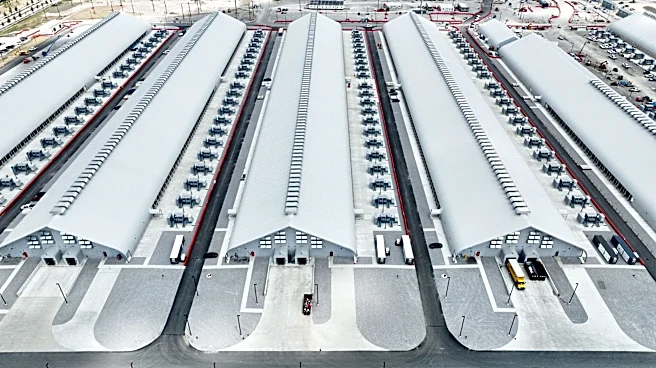
Williams is building four gas plants to power Meta’s Prometheus data center – Socrates South (200 MW), Socrates North (200 MW), Socrates the Younger (250 MW), and Neo Power Generation Facility (500 MW), which will have a public hearing on October 6.
All four burn gas in simple cycle turbines and reciprocating internal combustion engines – like your gas car engine but much larger. Simple cycle turbines are the least efficient, expelling pollution at 1,000 degrees instead of reusing the waste heat to generate more energy.
According to their Ohio EPA air permit applications, together these four gas plants could create as much as 8,325,125 million tons of additional greenhouse gas pollution each year – about as much as the country of Rwanda.
Worse for human health is the 482 million tons of Particulate Matter 2.5 these four plants could release each year. At 30 times smaller than a human hair, PM 2.5 is breathed deep into the lungs where it enters the bloodstream, triggering inflammation throughout the body.
A large body of scientific evidence links PM 2.5 with asthma, heart disease, strokes, cognitive decline, cancer, and premature death. It accounts for most of the 8 million deaths caused by air pollution worldwide each year.
An EmPower Analytics Group and commissioned by The Piedmont Environmental Councilstudy of a 96 MW gas plant powering a data center in Virginia estimated it will cause $53 million to $99 million per year in health damages to the surrounding community each year.
Meta’s four gas plants in New Albany will be almost 12 times larger than the gas plant in Virginia.
Ohioans won't escape the health consequences
Where will the gas to supply these gas plants come from? Zamarin said it himself – eastern Ohio, part of Appalachia, the poorest region of the state. This includes Ohio’s public lands.
So far in 2026, almost three times as many acres of Ohio’s parks and wildlife areas have been approved for fracking as during the previous three years combined.
Hardest hit are Egypt Valley Wildlife Area – virtually all its 18,000 acres are being leased for fracking – and Salt Fork State Park, where Infinity Natural Resources is fracking over 6,100 acres.
Reams of evidence show the health consequences of fracking, including a Yale study that found children living near fracking sites are two to three times more likely to develop leukemia. Public records show that from 2015 to 2023 the oil and gas industry in Ohio experienced almost 2,000 accidents and incidents – one every 1.5 days.
Each frack pad converts up to 60 million gallons of fresh water from Ohio’s lakes and streams into toxic radioactive waste. This fluid must be disposed of in injection wells, where it has migrated into orphan wells and production wells, and now threatens Marietta’s drinking water.
Yet in economics parlance, all this damage to our health and environment is simply an externalized cost, not figured into what Meta or Williams has to pay. If they did have to pay these costs, they could not build these gas plants.
The impacts of fracking and gas on our health and environment need to be part of the conversation – and big tech companies need to do better.
Google is building new solar, wind, and battery storage to power data centers in Minnesota, Texas, Virginia – as well as a virtual power plant that will aggregate distributed energy from residential, commercial, and industrial customers in the PJM grid.
If Google can power its data centers with clean energy, why can’t Meta?

Cathy Cowan Becker is board president of Save Ohio Parks, a statewide citizens group dedicated to protecting Ohio’s state parks and public lands from oil and gas extraction.
This article originally appeared on The Columbus Dispatch: Meta's massive plants may spell massive health problems for Columbus area | Opinion