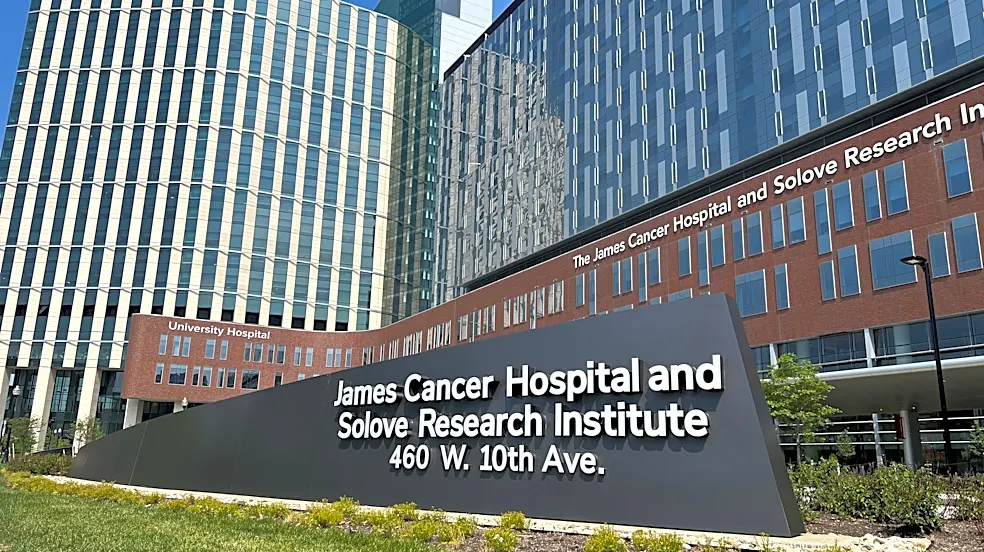





The U.S. Department of Justice accused Ohio State University's College of Medicine of violating federal law and a Supreme Court decision by "intentionally" discriminating against students during the admission's process – a determination the university said it disagrees with.
In March, Assistant Attorney General for the DOJ's Civil Rights Division Harmeet Dhillon opened investigations into Ohio State, Stanford University and the University of California, San Diego, to see if there was possible race discrimination in their medical school admissions.
According to an Oct. 21 press release, the Justice Department said Ohio State "discriminated against White and Asian students in granting admission to its 2023, 2024, and 2025 incoming classes," violating
Title VI of the Civil Rights Act of 1964, which prohibits discrimination based on race or color, and the U.S. Supreme Court’s 2023 decision in Students for Fair Admissions v. Harvard, which banned race discrimination in admissions,
Ohio State, according to the press release, was admonished for using a "holistic approach" in its admissions process, a common strategy used in undergraduate and graduate admissions.
According to a letter from Dhillon to the university, Ohio State's College of Medicine used "two principal pathways of discrimination."
The Justice Department said Ohio State used admissions department "Super Screeners" to score applicants on categories like attributes, experiences and metrics, and candidates would also be interviewed. Black applicants who were screened and considered for an interview by the committee were "about 2.8 times as likely to be admitted than Asian applicants with equal credentials," according to the letter.
The DOJ said that Ohio State also "operates a 'side door' to admit students who do not receive either a screener score or an interview." Black applicants were four times more likely to be admitted than White applicants in 2024 and 2025 combined, and no Asian applicants were admitted using this pathway, according to the letter.
In addition, the Justice Department said "OSU Medicine admissions officers discussed the use of race proxies, particularly based on socioeconomic disadvantage."
“Despite SFFA, OSU Med allows some applicants to bypass its own screening process and skip interviews solely because of the color of their skin,” Dhillon said in a statement. “A university’s admissions process, and all its stages, should apply equally to all applicants regardless of race. The use of a separate admissions process based on race is plainly illegal under federal law, and this Department will not allow these appalling practices to continue at OSU Med or any other federally funded higher ed institution.”
In a statement, Ohio State spokesperson Ben Johnson said the university "strongly disagrees with the findings."
"The university is in full compliance with the Supreme Court's ruling and all federal and state laws and regulations regarding admissions," Johnson said. "The College of Medicine does not consider race, ethnicity or any other protected class during the admissions process. Ohio State follows the law and will contest these findings."
Ohio State is the seventh medical school found to have violated civil-rights law this year, according to Justice Department public announcements. The others included Duke University, George Washington University, the Universities of California at Los Angeles, San Francisco, and San Diego; and Yale University.
Higher education reporter Sheridan Hendrix can be reached at shendrix@dispatch.com and on Signal at @sheridan.120. You can follow her on Instagram at @sheridanwrites.
This article originally appeared on The Columbus Dispatch: Trump's DOJ accuses Ohio State med school of admissions discrimination