



After months of unsubtle hints, Columbus City Council President Shannon Hardin has launched his mayoral campaign to challenge fellow Democrat and incumbent Mayor Andrew Ginther in 2027.
Hardin − who has been on council for nearly 12 years, more than eight years as president − said he's heard from Columbus residents who say they are feeling priced out and pushed out by the city's growth.

"They're asking, 'Do I still have a place in this Columbus?'" Hardin told The Dispatch. "So I came back here to Southfield, to continue to listen, but also to announce that I'm a candidate for mayor of Columbus in 2027 because this is a city that is desperate for change, desperate for a new day and desperate for the energy that we think that this campaign can bring."
Hardin said too many residents feel left behind, and they shouldn't settle for a fourth four-year term of status quo under Ginther.
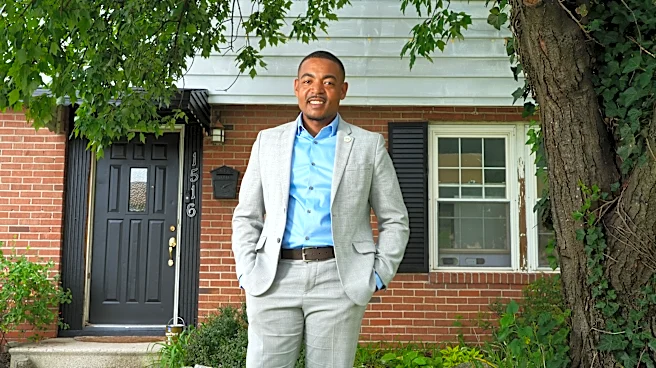
Besides billing himself as an agent for change, Hardin, 39, is leaning into his South Side roots and spoke with The Dispatch outside his mother's home, where he grew up. He announced his candidacy during interviews with The Dispatch and its news partner, NBC4 (WCMH-TV), and plans to formally kick off his campaign the morning of Aug. 20 in front of his childhood home.
Hardin said he chose the date because it's back-to-school for Columbus City Schools. "What better time than now to recommit ourselves to change?" he said.
He isn't rolling out a policy platform yet, but he said his top priority as mayor will be defending and improving Columbus City Schools.
The race between Hardin and Ginther, who were once close political allies, will likely divide the local Democratic Party and could be the most competitive Columbus mayoral contest in decades. Ginther, 51, hasn't faced a well-connected challenger since he was first elected in 2015 over then-Franklin County Sheriff Zach Scott. A Columbus mayoral contest has not been decided by fewer than 18 points since 1991.
Hardin's council seat is also on the 2027 ballot, so he's running this race without a safety net.

Ginther told The Dispatch in a statement that he welcomes Hardin's entry to the race.
"A healthy democracy is built on people stepping forward to serve and giving voters choices. From making Columbus a national leader in affordable housing, attaining the fastest growing wages in the Midwest, and reducing violent crime to the lowest rate in nearly two decades, I'm proud of what I've accomplished and look forward to presenting my positive vision for the work still ahead," Ginther said. "Until then, my focus remains where it should be: serving the people of Columbus by tackling the issues families care about most and doing everything I can to help Amy Acton and Sherrod Brown win this November."
Ginther, who has long enjoyed strong support from the Columbus business community, has already built a large money advantage with $1.7 million in campaign cash on hand compared to Hardin's $425,000.
Hardin said Ginther may be betting on deep-pocketed funders, but he is betting on the people of Columbus being hungry for a change in the mayor's office.
City Hall insider and progressive challenger
Political observers from outside Columbus might jump to include this race in the civil war playing out between progressive Democrats and moderate Democrats across the country. Hardin describes himself as a "pragmatic progressive," but he's also a City Hall insider who has received campaign contributions from wealthy business interests. He's far from ready to break with the mainstream party and declare himself a Democratic Socialist, for example.
When asked to compare his politics to Ginther, Hardin pointed out he views himself as a "kid from Southfield, an openly gay, Black kid who had an opportunity, who had proximity, because my mom was a front desk clerk at City Hall." If elected, Hardin would be the first openly gay mayor of Columbus.
"I believe that I am a fighter for affordability," Hardin said. "I am a progressive candidate that believes that everybody has to be cut in on the deal, not just the folks Downtown or the folks that donate to certain campaigns, but that everybody has a voice and a seat at the table. And so, if that's progressivism, then count me in."
For years on council, Hardin has voted to pass much of the Ginther administration's agenda, and he told The Dispatch he's proud of much of the work he and Ginther have done together over the years. In 2025, though, Hardin began pushing back against the mayor on issues like giving public money to private women's sports team owners and cutting funding for homeless shelters and the Columbus Promise.
Hardin told The Dispatch he regrets not speaking up more before.
"The way that we have operated as a city, where we solve all of our disagreements behind closed doors, where City Hall talked to just a small group of folks and didn't welcome more people in, it made people distrustful of the system," Hardin said. "It made people feel like they were being left out and left behind."
Both candidates are proteges of former Mayor Michael B. Coleman, and whether he will endorse one of them looms over the race. Coleman endorsed Ginther to become his successor in 2015, and that was key to securing the coveted endorsement from the Franklin County Democratic Party.
However, Coleman is closer with Hardin. They've known each other since Hardin's mother worked at City Hall answering phones and Hardin was a young child running around the mayor's office. Coleman gave Hardin his first job out of college at City Hall and then helped secure Hardin's appointment to council.
What comes next for Hardin?
Hardin has at least two big public events planned in the coming days: a happy hour for the LGBTQ+ community at Slammers on Aug. 21 and his 12th annual fish fry fundraiser on Aug. 23.
Though Hardin doesn't yet have a policy platform he's ready to announce, he said he's excited to roll out big policies going forward and teased that schools are his top priority.
"I can tell you one thing that I heard in my dinner series is that today, first day of school, 47,000 of our babies will start the school year in a under-supported, underperforming school district or a failing charter school," Hardin said. "And what I heard all the time is – not that the folks didn't know that the City Hall isn't in charge of the schools − was that they're tired of silly jurisdictional differences. They wanted anybody and somebody to fight for their babies."
Hardin went to Columbus City Schools and graduated from Columbus Alternative High School. His son starts kindergarten at CCS this school year.
The mayor doesn't directly control the schools but the mayor's choices affect them. City Hall's frequent use of property tax abatements to incentivize jobs and housing construction has caught flak from the Columbus Education Association for how they affect the school district's tax revenue.
Hardin said tax abatements have been a tool to address one of the city's biggest issues, housing affordability, but when the state is taking away $50 million from the district, Hardin said, "we have to make sure we are part of the solution, not part of the problem."
Government and politics reporter Jordan Laird can be reached at jlaird@dispatch.com. Follow her on X, Instagram and Bluesky at @LairdWrites.
This article originally appeared on The Columbus Dispatch: Hardin officially enters Columbus mayor's race against fellow Democrat Ginther