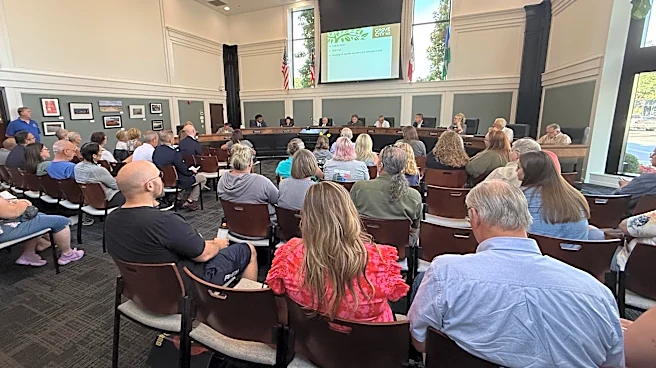









Grove City Council has voted unanimously to put a city charter amendment that would require citywide votes on data centers and other large development projects on the November ballot, after voting down a new, shorter version of the amendment sought by the business community.
The vote was held at a special meeting Sept. 3 held in order to meet Ohio's Sept. 4 deadline to get charter amendment referendums on the Nov. 3 general election ballot.
Council's vote also sets up a contentious campaign season for the city. On one side is the city administration, led by Mayor Ike Stage, and several business organizations like One Columbus, The Columbus Partnership and the Grove City Chamber of Commerce, who opposed the amendment. On the other is anti-data
center group Protect Grove City and citizen supporters of the amendment.
Before the vote, several council members, including Council president Ted Berry, voiced their opposition to the amendment, but said they would put it on the ballot because they are legally required to do so. Under Ohio law, city officials must vote to put citizen-led charter amendments on the ballot if they are certified by their county Board of Elections as meeting the state's signature and legal requirements – which the Grove City amendment did.
"I'm not going to cut off the economic development in this city and hurt our trade unions and our people and our citizens like this. But of course, I have to vote for this and I will," Berry said.
The meeting became adversarial at times, with members of the audience yelling at the council. At one point, Council member Randy Holt, who led the meeting, threatened to throw audience members out of council chambers if they would not be quiet.

Shortly after putting the amendment on the ballot, the council unanimously approved a resolution opposing the amendment and encouraging Grove City voters to read the amendment, the city's legal analysis of the legislation, and consider its implications before voting.
Council also considered at the Sept. 3 meeting a compromise version of the amendment that Council member Mohamed Omar and Protect Grove City drafted through weeks of discussions.
Council voted 4-3 to waive council's rules for the compromise amendment so that it could take effect before Ohio's Sept. 4 deadline. But the vote was one shy of the five needed for a supermajority to waive council's rules. After the vote failed, the council unanimously approved a motion introduced by Omar to withdraw the compromise amendment. Protect Grove City would have withdrawn the original amendment if council put the compromise amendment on the ballot.
Grove City resident Allison Chester, who supports a charter amendment to protect against data centers in the city, told council that if they opposed the original amendment, they should have voted to put the compromise amendment, which addressed the business community's concerns, on the ballot.
"The people of Grove are really sick and tired of not feeling like they're heard. Many, many people in this community understand that there's a need for development to grow, but don't agree with where the city is going," she said.
What would the community consent amendment do?
The citizen-led charter amendment, if approved by votes Nov. 3, would require a voter referendum on any development project that occupies 50 or more acres, draws or is designed to draw more than 20 megawatts of power at peak capacity, or consumes or is designed to consume more than 500,000 gallons of water a day.
If voters approve one of these developments – called heavy industrial developments in the amendment – via a majority vote in the referendum, the developers would then have to navigate the city's normal zoning and permitting process, The Dispatch previously reported.
Developers would also have to pay for all of Grove City's and Franklin County's costs to put the referendum on the ballot, and they would have to pay for independent studies, baseline measurements of their property and a 15% administrative reserve fee. The amendment also adds inspection and reporting requirements; noise, light, sound and vibration standards, and potential fines for heavy industrial developments.
Current Grove City businesses considering a heavy industrial development under the amendment could apply for an exemption to the referendum requirement. Any substantial expansion to the business would trigger a referendum. Grove City's existing heavy industrial developments would also be subject to all of the inspection and reporting requirements and potential fines included in the amendment.
The rejected compromise amendment would not have subjected existing Grove City businesses to many of the original amendment's requirements.
Reporter Nathan Hart can be reached at NHart@dispatch.com, @NathanRHart on X and nathanhart.dispatch.com on Bluesky.
This article originally appeared on The Columbus Dispatch: Grove City Council puts charter amendment from anti-data center group on Nov. 3 ballot