




Thomas Suddes is a former legislative reporter and writes from Ohio University.
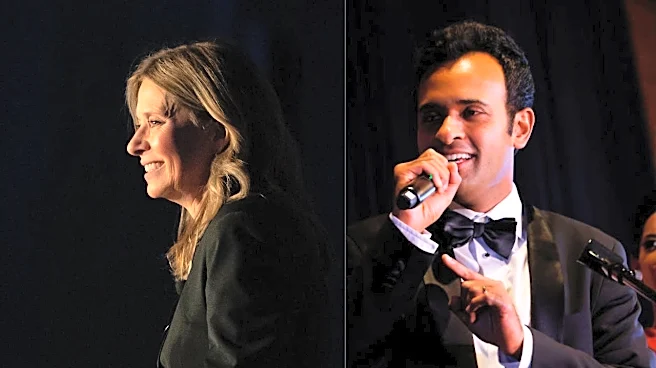
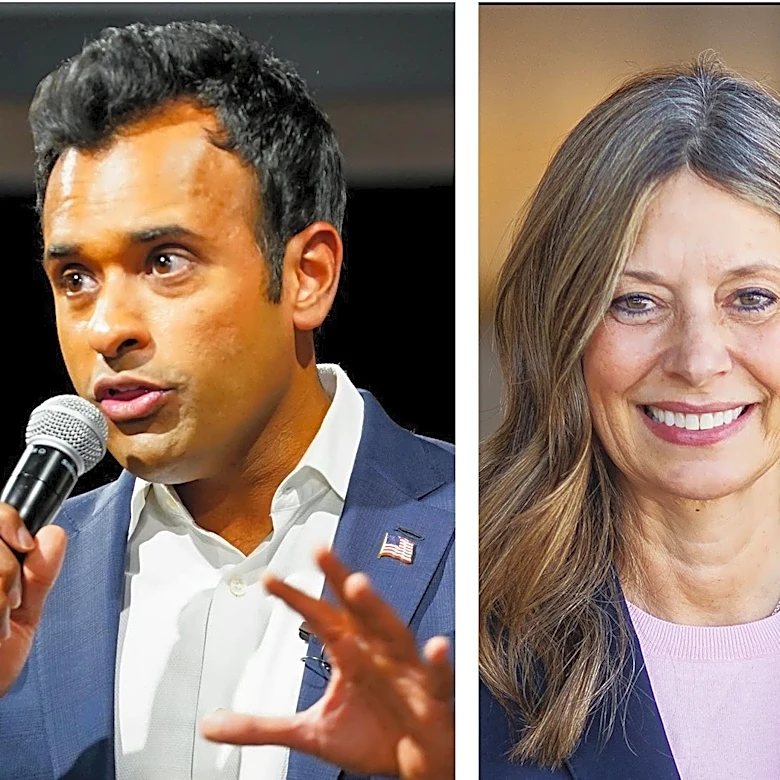
The key unknown in Ohio’s governorship race is how and if Democrat Dr. Amy Acton, of Bexley, will pull ahead of GOP entrepreneur Vivek Ramaswamy, of Upper Arlington, in what, at this writing, is seemingly a neck-and-neck race.
But the BGSU Poll, based at Bowling Green State University, reported last week that a survey of 1,000 likely Ohio voters showed 48% supported Acton, 45% supported Ramaswamy.
The Nov. 3 general election is only about six weeks off, and early in-person voting starts Oct. 6.
For Acton to pull ahead, Ramaswamy – granted, no slouch at gaffes – needs to make a couple of big ones.
History suggests that’s by no means unlikely, but the offset is that Ramaswamy’s
crew is surely aware of the risks of loose lips and sunk ships.
In voters’ eyes, one distinction has to be that Ramaswamy’s airborne campaign is literally above it all in private jets, while Acton and her crew’s canvassing is far more face-to-face and community-event-oriented.
That shows effort, and voters like to see effort.

Musical chairs
Moreover, Acton’s running mate, Cincinnati’s David Pepper, the Ohio Democrats’ former chair, is campaigning here, there and everywhere.
In contrast, Ramaswamy’s running mate, Senate President Rob McColley, of Napoleon, seems less visible than Pepper.
The upside, for Ramaswamy’s purposes, is that McColley knows the General Assembly. Given Ramaswamy’s newness to Ohio politics, that’s a campaign-trail plus.
The other statewide elected executive offices are also in play, notably the attorney generalship, for which State Auditor Keith Faber, a Celina Republican, and prominent Upper Arlington lawyer John Kulewicz, a Democrat, are competing.
(In the last 100 years, four of Ohio’s Republican attorneys general have become governors, including incumbent Gov. Mike DeWine, of Cedarville, and four Democratic attorneys general sought the governorship, though unsuccessfully.)
This year’s other major-party nominees for Ohio’s statewide elected executive offices are: for state auditor, Maple Heights Mayor Annette Blackwell and Republican Secretary of State Frank LaRose, of Upper Arlington; for secretary of state, state Rep. Allison Russo, an Upper Arlington Democrat, and State Treasurer Robert Sprague, a Findlay Republican; and for state treasurer, former state Rep. Jay Edwards, a Nelsonville Republican, once chair of the budget-writing Ohio House Finance Committee, and Cincinnati City Council member Seth Walsh, a Democrat.
The musical chairs match being played among candidates for statewide executive offices (and for General Assembly seats) is due to the lunacy of Ohio term limits, in which voters handcuffed themselves in the name of democracy.
The impact of data centers
Also at the polls, voters in 18 Ohio localities will decide whether and how to fetter the construction of massive data centers inside their boundaries, Ohio Capital Journal reports.
At least five of those communities are in the Columbus region: Grove City, Ashville, Sunbury, Granville and Pataskala.
Odds are that voters will approve most, likely all, 18 ballot issues. Americans love overnight delivery of merchandise plus the new gadgets everyone talks about.
But they also want their countryside to look like a Grandma Moses painting. And voters don’t like reminders of their shopping mania and its visible environmental costs, such as sprawling data centers that are switchboards for a zillion orders and shipments every day.
It’s called having your cake and eating it too – but somehow never gaining weight. Bodies don’t work that way; neither does a transnational economy shipping all China’s exports around the world. (Here in the USA, which used to make things sold everywhere, we now shuffle stocks, bonds and mortgages, and call that an economy.)
And to keep things in perspective – after all, what do the voters know compared to the philosopher-kings of Silicon Valley? – Big Data and Big Computer lobbyists swarm the Statehouse.
Given General Assembly Republicans’ habit of overriding local-government home rule, don’t be surprised if legislators try to override anti-data center voters.
Democratic gubernatorial candidate Acton supports a conditional moratorium on data centers in Ohio.
Republican candidate Ramaswamy says he’ll “issue an executive order on my first day in office to immediately halt the approval of any new data center project announcements in Ohio, until [pro-consumer and pro-environment] data center legislation takes effect.”
Either way, Big Data will flood the courts with lawsuits, and the General Assembly with even more lobbyists than the dozen-plus now prowling the Statehouse and Capitol Square – strictly in the public interest, you understand.

Thomas Suddes is a former legislative reporter and writes from Ohio University.
This article originally appeared on The Columbus Dispatch: Loose lips may decide Acton beats Ramaswamy and becomes Ohio governor | Opinion