





Michael P. Donnellyserved as an Ohio Supreme Court justice from 2019 to 2024.
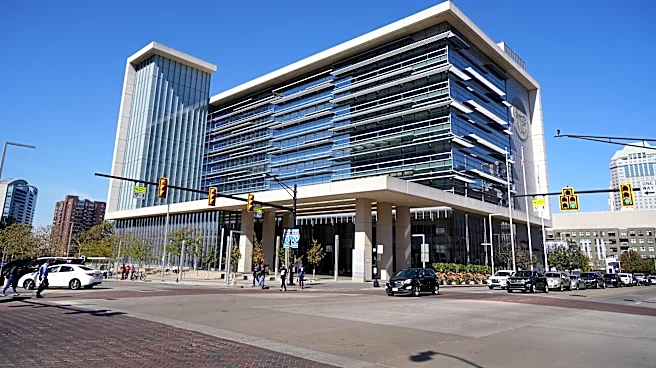
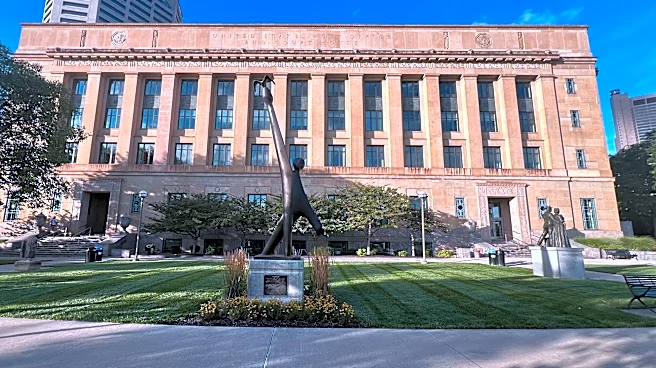
The United States Department of Justicesued the Franklin County Municipal Court in Augustover a rule generally prohibiting civil arrestsof people who enter the courthouse to attend proceedings or conduct lawful court business unless officers possess a judicial warrant.
The Justice Department has now moved to dismiss the action without prejudice, saying it believes it can obtain complete relief without involving the Municipal Court or its security director.
The motion removes the immediate confrontation, but it does not settle the issue. Because the dismissal would be without prejudice, the Justice Department could revive its challenge.
And the broader threat posed by civil
immigration arrests in and around courthouses remains.
The threat to justice hasn't ended
The federal government unquestionably possesses broad authority to enforce the nation's immigration laws. State courts cannot create immunity from federal law, nor should judges interfere with the execution of valid criminal warrants. But the underlying dispute implicates another essential principle: the ability of state courts to administer justice without intimidation or interference.
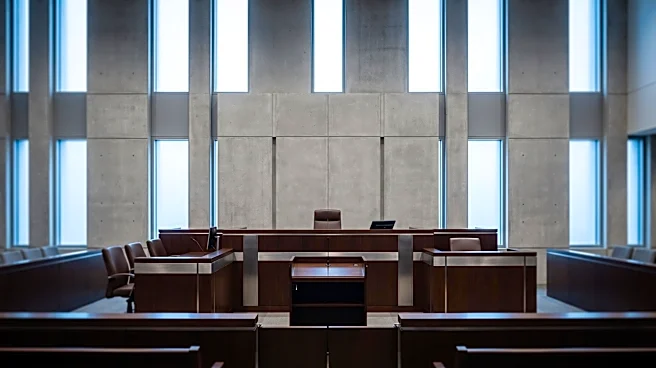
A courthouse is not an ordinary government building. It is a place where the government requires people to appear and where the justice system depends upon others appearing voluntarily. Victims seek protection. Witnesses provide testimony. Defendants answer charges. Families resolve disputes. Citizens report for jury duty.
A matter of convenience?
During my 14 years as a trial judge and six years on the Supreme Court of Ohio, I saw daily how completely the justice system depends upon people entering a courthouse and telling the truth. If a courthouse becomes a predictable location for unrelated civil arrests, word will spread quickly. Witnesses will stay home. Victims will hesitate to seek help. Defendants may fail to appear. Cases will be delayed or dismissed.
The Justice Department argues that courthouses are safer places to make arrests because visitors have been screened for weapons. Viewed one arrest at a time, that contention has some force. But public safety cannot be measured solely by the tactical convenience of a particular arrest. It must also address cases in which prosecution is not possible because witnesses are unwilling to testify or victims who remain at risk are reluctant to enter a courthouse.
This is not a new concern created by modern immigration politics. For centuries, the common law protected parties and witnesses from civil arrest while attending court. That protection existed not merely for their benefit, but to preserve the authority and functioning of the courts themselves.
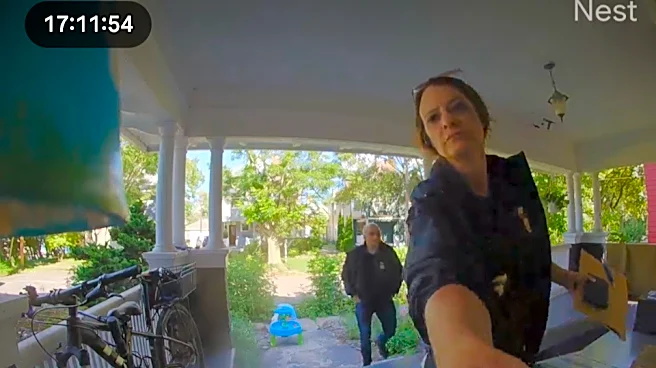
Nor does the Franklin County rule make the courthouse a sanctuary from law. It applies to civil arrests and contains an exception for judicial warrants. Criminal warrants remain unaffected. There is also an important difference between coordinating with federal authorities concerning someone already held in custody and using a court summons, subpoena or scheduled hearing as an opportunity for an unrelated civil arrest.
The lawsuit may be ending, but the problem that prompted Franklin County’s rule remains.
The federal government has given no indication that it will stop making civil immigration arrests at courthouses, and the dismissal leaves the Justice Department free to renew its challenge.
If victims, witnesses, defendants and family members fear that entering a courthouse could lead to an unrelated civil arrest, some will stay away. When that happens, the administration of justice suffers.
A courthouse cannot become a trap for those summoned to appear or seeking justice.
It is not a sanctuary from the law. It must remain a sanctuary for the law. Respect for the rule of law requires both effective federal enforcement and independent state courts capable of performing their constitutional responsibilities. Neither principle should be allowed to consume the other.
Michael P. Donnelly served as an Ohio Supreme Court justice from 2019 to 2024.

This article originally appeared on The Columbus Dispatch: The DOJ's threat to Franklin County Court over ICE arrests is far from over | Opinion