









Early Columbus was plagued by, well, plagues.
Cholera epidemics were a periodic hazard, and Dr. Herbert Platter described a series of diseases he worked to treat in Columbus in the late 1800s and early 1900s, including epidemics of smallpox, meningitis, scarlet fever, and typhoid, which killed many residents over those years.
Modern medicine, public health workers, and hygienic drinking water helped solve many of our more virulent health problems, but one – tuberculosis (TB) – required its own specialized care.

In 1909, a state law went into effect in Ohio that prohibited TB patients from using county infirmaries, so new hospitals were required across the state.
Franklin County had already sprung into action thanks to Carrie Nelson Black and the
tireless work of the Columbus Society for the Prevention and Cure of Tuberculosis, now known as The Breathing Association. Because 1 in 6 deaths in Columbus were caused by TB, they had already persuaded the county of the need for a dedicated hospital for those afflicted.

A TB hospital was built on the county infirmary grounds in 1909, with an updated, larger hospital completed two years later. A children’s department was added shortly after.

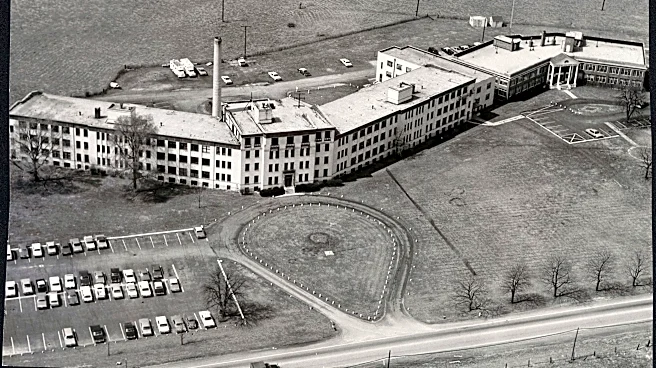
The last specialty hospital, later known as the Benjamin Franklin Tuberculosis Hospital, was completed in 1937, allowing Franklin County to serve those suffering from TB.
Into the late 1940s, TB patients in Columbus would often end up in the hospital for months, with hundreds of patients in the TB hospital at any given time. Doctors advised new arrivals that “time means nothing” to prepare them for their lengthy stays. Before being released, a patient needed to get three negative tests – which at that time were done on live guinea pigs.

Because TB was such a threat, participation by those with severe cases was not optional. The courts could send patients to the hospital if they refused to stay home, and for those who didn’t want to stay home or in the hospital, there was a ward with iron bars and other security precautions at the hospital to keep them in treatment.
As if from a prison movie, in 1949 a patient’s friend attached a chain to a barred window from his car, and then pulled it from the building. That allowed patient Harold Brofford, who was suffering a severe and dangerous case of TB, to make a run for it. And he wasn’t the only one. Just a few months later, four more patients escaped, including Paul Thiel, who had already come and gone seven times.

But for most patients at that time, aside from the mortal danger, isolation, and weakness from the disease, being in the hospital wasn’t that bad. There was a one-to-one ratio between staff and patients, so care was readily available, and it was free for most patients.
The hospital had its own radio station: WSAN was broadcast on hospital grounds only, and patients operated the station, from script writing to disc jockeying, providing regular daily programs that the patients also performed. Other available activities included sewing and shop, and there was a library. The hope was that improved morale and occupational therapy would help patients heal faster.

Just a few decades later, thanks to X-rays and treatment, TB was largely under control in Columbus. In 1972, with only 29 hospitalized patients, the decision was made to close the Benjamin Franklin Tuberculosis Hospital and transfer these patients to general hospitals instead. Similar actions occurred across the country, as public health workers helped bring the disease under control.
After decreasing for decades, tuberculosis cases in the U.S. increased from 2020-2024 in the wake of the COVID pandemic, the Centers for Disease Control and Prevention reported. But in 2025, TB cases began to decrease again, with 10,260 cases nationwide provisionally reported.
Megan Sheeran is a Librarian with the Columbus Metropolitan Library.
This article originally appeared on The Columbus Dispatch: Tuberculosis care in Columbus evolved from an open-air camp to hospitals