








Non-tenure-track faculty make up about a third of Ohio State University's instructional workforce. More than 1,000 faculty members – with job titles like adjunct professor, clinical professor, professor of practice, professor of teaching and lecturer – carry much of the load in delivering courses for undergraduates.
But many of these instructors also see lower wages, fewer job protections and don't always have a seat with their peers at the table, factors that they say makes them feel undervalued and vulnerable, according to a new report from Ohio State's American Association of University Professors chapter.
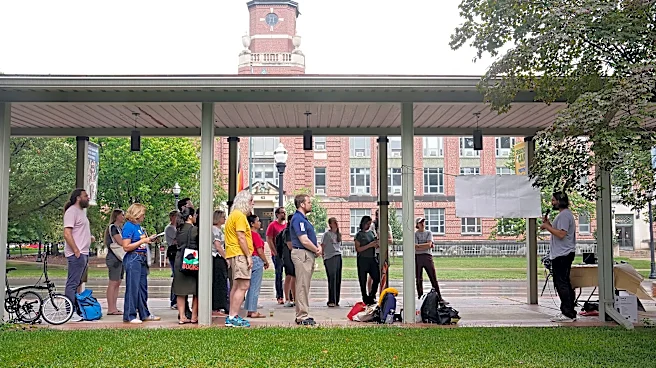
The Sept. 4 report was paired with a on-campus rally hosted by the AAUP chapter and a petition campaign demanding that Ohio State administrators
improve non-tenure-track faculty working conditions.
"It is the elephant in the room of how the work of this university is being done by people who feel unsupported," said Richard Finlay Fletcher, an associate professor of arts administration, education and policy, at the afternoon rally.
Ohio State officials had not responded to The Dispatch's request for comment as of the morning of Sept. 5.
The group's demands include:
- Implement a university-wide salary floor of $65,000 for all full-time faculty.
- Guarantee merit pay eligibility for all faculty ranks.
- Reduce faculty 100% teaching load to a maximum of 21 credit hours per nine-month appointment.
- Establish a policy mandating notice of non-reappointment or contract reduction at least 60 days prior to the end of a faculty member’s contract.
- Establish, with limited specific exceptions, a university-wide contract minimum of one year for all full-time faculty and a contract minimum of three years for faculty with at least five years of service.
- Institute a university-wide policy that welcomes and extends the right to all faculty to attend and participate in and, when appropriate, vote at faculty meetings at the disciplinary, departmental, programmatic, divisional and college levels.
- Call for a vote of the Arts & Sciences College tenure-track faculty to propose eligibility of its clinical/teaching/practice faculty for election to the University Senate.
Pranav Jani, an associate professor of English and past president of the AAUP chapter, said non-tenure faculty led the effort with support from tenured professors.
"The graduate students we are teaching at the next level of non-tenure-track faculty," Jani said, adding that supporting all levels of faculty benefits the whole university.
Faculty members who spoke at the rally said that non-tenure-track faculty often have the same work expectations as their tenure-track colleagues but do not have the same kinds of protections or pay. Non-tenured faculty focus primarily on teaching, with a teaching workload of 65 to 100% depending on their appointment. Tenure-track faculty typically teach about 40% of the time and dedicate the rest of their workload to research.
Of the non-tenure faculty analyzed by the AAUP report, a majority of respondents had the title lecturer (31%), senior lecturer (29%) and assistant professor (23%). Just 5% of non-tenure faculty held the title of full professor.

Non-tenure professors said they carry a large and growing share of the university’s undergraduate instruction, but their workload is not reflected in their pay or job security.
According to the AAUP report, median salaries for full-time non-tenure employees ranged from less than $54,000 for lecturers to about $151,500 for full professors.
Most non-tenure faculty are contract employees. The terms of those contracts, however, vary widely. Many faculty, particularly lecturers, say they are on one-year or shorter contracts, and the turnaround time to sign a new contract is often inconsistent. Some faculty members reported they had minimal notice that their contracts would be renewed before the start of the new academic year, leading them to wonder if they would even have a job.
Austin McCabe Juhnke, an assistant teaching professor of musicology, said universities used to hire non-tenure-track faculty for a couple of years before those instructors moved on to tenure-track appointments. Post-pandemic, he said, that's not really happening anymore.
"There is no tradition of making an investment in these careers," McCabe Juhnke said.
Faculty members and supporters said the working conditions don't just affect professors. They also affect students sitting in their classrooms.
"Teaching conditions and working conditions are learning conditions," Ohio Federation of Teachers President Melissa Cropper said at the event.
Once the AAUP chapter reaches its signature goal, the chapter will deliver its demands to university leadership.
Higher education reporter Sheridan Hendrix can be reached at shendrix@dispatch.com and on Signal at @sheridan.120. You can follow her on Instagram at @sheridanwrites.
This article originally appeared on The Columbus Dispatch: Ohio State non-tenure faculty demand higher pay, job protections