






Washington County resident George Banzigeris a former professor and academic dean at four colleges, two in Ohio, and has studied, spoken and written on environmental issues for more than 10 years.
State representatives Kevin Ritter, R-Marietta, and Justin Pizzulli, R-Scioto Valley, say people living in areas impacted by data centers should be measurably better off economically once they are built.
If data centers − which exploit local natural resources with minimal benefit to communities − are like other natural resources extracted from Appalachian areas, there will be minimal benefit accruing to local communities.
The representatives' Aug. 28 Dispatch guest column, “A data center in Appalachia should help Appalachia,"is full of other claims about
data centers that ignore actual facts.
It’s well documented that the natural gas boom, which started in Ohio in 2008, did little to improve the local economy, raise employment levels or increase income levels of the average person living in southeast Ohio, according to “Frackalachia,” a comprehensive study by the Ohio River Valley Institute, a nonpartisan think tank analyzing those three factors in 30 fracked counties in Ohio, Pennsylvania and West Virginia.
Stephen Stoll, in his book "Ramp Hollow,"chronicles in detail the long history of exploitation of the Appalachian region, starting with George Washington surveying the area for the Virginia elite, followed by its exploitation for timber, then coal, then natural gas – all for the benefit of outsiders.
And now we have data centers.
Data centers have come with a mountain of secrecy
Ritter and Pizzulli also claim decisions determining data centers “closest to home should be made closest to home.”
Non-disclosure agreements, such as those developed in Ritter’s 94th District involving the Waterford community of Washington County, do nothing to bring data center decisions “closest” to home. In fact, the secrecy involved with NDAs is a major reason many locals are suspicious of them.
Additionally, in the rural Waterford community, before a data center was proposed there, farmland sold at $3,000 to $5,000 per acre.
Now data center developers are offering up to $35,000 an acreto use agricultural land to build hyperscale data centers.
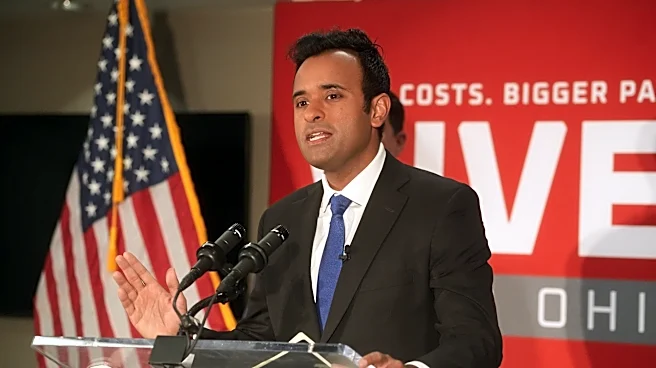
This upsets the local economy and drives local people away who have lived here for generations and may wish to pursue much-needed agricultural pursuits. Republican gubernatorial candidate Vivek Ramaswamy himself has said that data centers should be built on industrial sites, not farmland.
Data centers don't have to do so much harm
There are ways data centers could be built to ensure positive outcomes for local communities.
One way is the development of community benefit agreements, which ensure that local workers are hired for long-term employment at livable wages; greenspace is provided to local communities; funded apprenticeships leading to permanent jobs are arranged; annual reports of water and energy use are provided; and long-term studies of public health in the impacted areas are conducted.
Data center developers may tell communities they will create hundreds of local permanent jobs, but the reality is that they lead to no more than a few dozen on average per data center, which is almost equivalent to the number of employees at one high school in our area.
The track record for data center developers on telling the truth is not good and should not give any comfort to the people of Appalachia Ohio.
Often, data centers are developed with no public notice, no public information sessions and no public hearings.
Of great concern is the rise in electric utility costs for residents, extreme water use and greenhouse gas emissions that cause respiratory disease, asthma, COPD and other health issues, in addition to heating our already-burning planet.
Perhaps data centers would be more welcome in Appalachia and in Ohio if electric energy to power these centers relied more on renewable energy rather than just natural gas, a policy that the Ohio General Assembly follows that I would characterize as a war on renewables.
According to the website Heatmap, 25 data center projects were canceled in 2025, and 60 local governments declared a moratorium on the development of data centers.
Recent national polls have shown that fully 75% of Americans are opposed to data centers in their communities. This lack of popularity is shared by those in Appalachia and will continue as long as the historical exploitation of this region continues.
Clearly, Ramaswamy is getting the people’s message on data centers when he says that there should be a moratorium on data center development until there is comprehensive data center regulation. As Ohio legislators, do Ritter and Pizzulli support Ramaswamy on this issue of a comprehensive regulation plan?

George Banziger, Ph.D., of Marietta, has lived in Washington County, which is among the 32 Ohio counties in the federally designated region of Appalachia, for nearly 50 years. He is a former professor and academic dean at four colleges, two in Ohio, and has studied, spoken and written on environmental issues, including gas and oil injection wells, for more than 10 years. He is a member of the Washington County for Safe Drinking Water and Save Ohio Parks citizen advocacy groups.
This article originally appeared on The Columbus Dispatch: Ohioans should be leery of data centers and secrecy they come with | Opinion