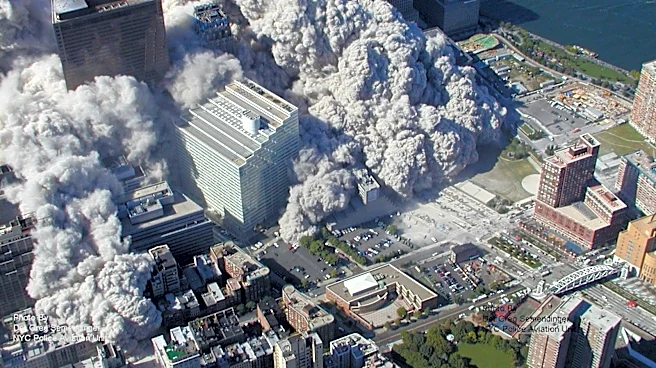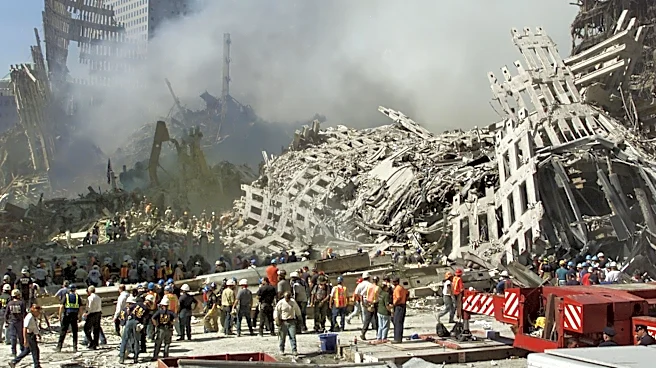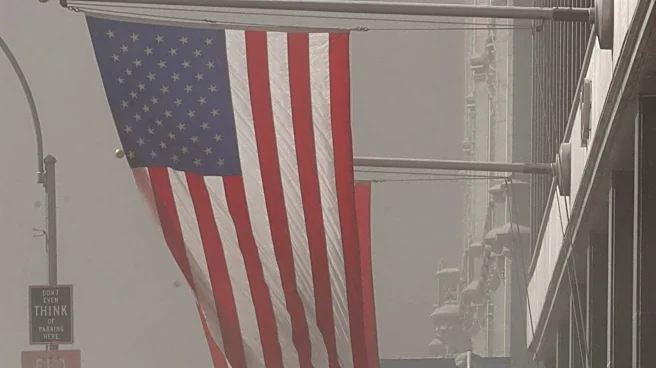





When Ohio first responders arrived at Ground Zero the day after terrorist attacks destroyed the World Trade Center, dust and bits of tattered paper were still falling to the ground like an unseasonable snow.
New York City cleared inches of the dust from the streets with snowplows. Officials directing search and rescue teams at the site of the disaster told the members of Ohio Task Force 1 that the dust "wasn't unsafe," said Jack Reall, then a Columbus firefighter and a member of the statewide urban search and rescue team. He would later testify to Congress about that statement.
“There was about 10 inches of fine powder and ground up paper, like a snow had gone through and settled on ledges and tops of cars,” said Bill Vedra, another member of the task
force.
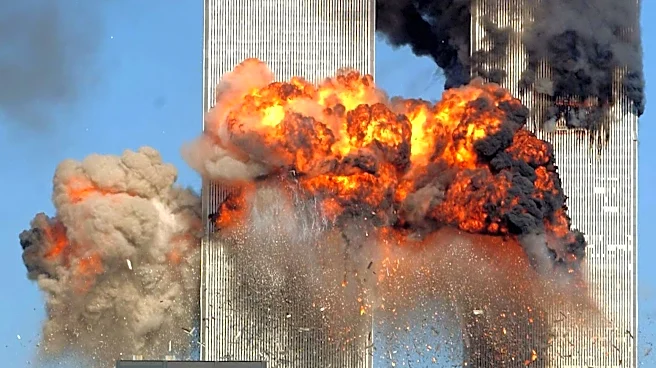
Almost 3,000 people died in the Sept. 11, 2001, attacks on the World Trade Center and the Pentagon, a series of suicide attacks using commercial flights orchestrated by the Islamic terrorist organization al-Qaida. The attacks destroyed the two towers, a large section of lower Manhattan and part of the Pentagon building.

By 2023, over 5,000 first responders and survivors had died from health problems connected to the emergency response. Many more continue to live with the fallout 25 years later.
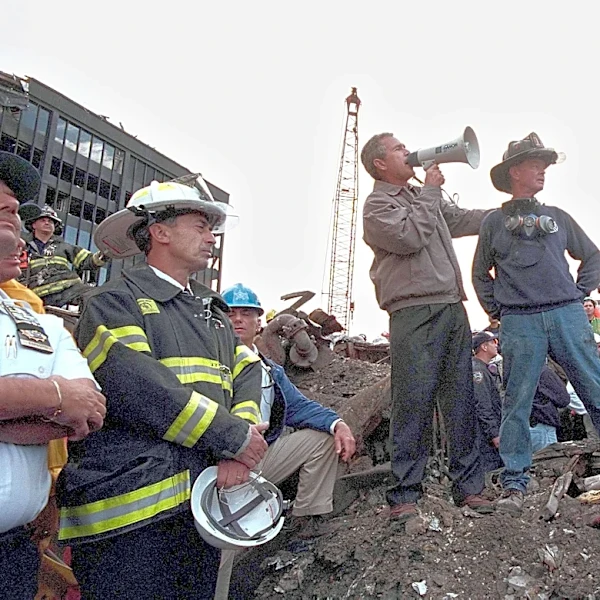
Tens of thousands of workers assisted in search and rescue, recovery and cleanup efforts at the disaster site in the days and months after the attacks. Central Ohioans who spoke to the Dispatch said they knew they risked injury or even death but were eager to serve their country in the aftermath of the devastating attacks.
Reall and over 70 other members of Ohio Task Force 1, based in the Dayton area, arrived in New York the day after the attacks. The team, made up of firefighters from fire departments around the state, helped dig through the rubble for ten days. Several were from central Ohio.
Jason Thomas of Whitehall, then a Marine living in New York, ran toward the smoke plume and helped rescue two police officers trapped in the rubble. Mike Haley, a retired Clinton Township police chief, provided peer support to police officers at Ground Zero in the weeks after the attack.
Now the first responders participate in regular health checks. Some already face long-term health issues. They said helping at Ground Zero was their honor and duty, despite the risks.

Health effects linger after 9/11
Local first responders said they returned from Ground Zero with coughs and sinus infections. Dan Kochensparger, an Upper Arlington firefighter and then-member of Task Force 1, said he had bronchitis and walking pneumonia.
"I think all of us developed something," Reall said.
It took years for the full health effects of 9/11 to come to light and gain recognition. The Centers for Disease Control and Prevention estimates over 400,000 people were exposed to dangerous contaminants, including concrete dust, jet fuel, insulation and pulverized plastic. Over 50 types of cancer have been connected to the attacks.
In 2010, Congress established the World Trade Center Health Program, which provides screening and medical benefits to certain people impacted by the attacks.
As of March 2026, over 152,000 people were enrolled in the World Trade Center Health Program, including people who were near Ground Zero during and after the attack and over 94,500 first responders. As of 2023, 7,000 people in the program had died, including from causes unrelated to 9/11.
Of members of the World Trade Center program, 67% have had at least one health condition believed to be related to the attacks, including cancer, respiratory conditions, mental health conditions or acute injuries like muscle sprains.
Some members of Ohio Task Force 1 are part of the World Trade Center health program and receive thorough annual health checks. Reall said he braces himself at every screening.
“Every time I go to a physical or something like that, I expect them to at some point say, we have something that we were concerned about,” Reall said. “I expect that at some point in my life that I will be diagnosed with a cancer related to that event.”

Haley said he was diagnosed with cancer in 2017, and has had colon, lung and thyroid cancers. He has been through radiation therapy and said the colon and thyroid cancers were controlled, but some of the cancer in his chest recently redeveloped. He said it’s not known whether the cancer came from the World Trade Center.
Neither Haley nor any of the other of the first responders interviewed for this article said they regretted going to New York after 9/11.
“I felt like we were given the ultimate opportunity to go and help a community in need and country in need,” Reall said. “We did that and we did it without hesitation, and I feel like there were a lot of people that would have loved to have that opportunity.”
Ohio search and rescue team deployed to search Ground Zero
For almost two weeks after the attacks, Ohio Task Force 1 was based in the Javits Center, a New York convention center that became the main staging area for first responders. Vedra said it looked like furniture and convention exhibits had been cleared with bulldozers for their arrival.
The team slept on the floor in tents and sleeping bags. They worked in two shifts out of a bank near Ground Zero.
The last of just 18 survivors pulled from the rubble, a Port Authority office worker named Genelle Guzman-McMillan, was found alive at 12:30 p.m. Sept. 12.
Ohio Task Force 1 did not find any survivors. Members said they recovered personal effects, office equipment, gear from first responders and even parts of the planes that struck the towers.
Most of the items in the rubble were difficult to recognize. They were coated with dust or twisted out of shape.

Kochensparger remembered the moment searchers recovered the body of a New York firefighter. They put the firefighter in a rescue basket, and a chain of people maneuvered him over the uneven terrain of Ground Zero. Kochensparger was one member of the chain.
“In emergency situations, you somehow have yourself trained to get the job done and focus on what needs to happen … I know this is a terrible thing, but I also know that I have one little job to do here, which is to make sure that I physically pass that on to the next person that's going to grab it,” Kochensparger said. “But it didn't escape me that this was a powerful moment.”
The firefighters passed crowds of people who cheered and held signs of gratitude as they entered Ground Zero. Crowds of people tried to hand flyers to first responders with information about missing loved ones, Reall said.
Reall said at the time, it was hard not to feel numb because of the sheer number of people who were begging for help.
“You go back and wonder, did that person ever find their loved one?” Reall said. “Were they alive? Were they not? Did they ever get closure?”

Retired police chief provided support to officers at Ground Zero
Haley, then working with the national Fraternal Order of Police, was an expert in critical incident stress management, a sort of psychological first aid that aims to decrease the effects of post-traumatic stress disorder after traumatic incidents. He went to New York to help immediately after the attacks and returned several times in the months after.
While officers dug through the debris at Ground Zero or rested or ate meals nearby – still coated in dust – Haley would try to talk to them. He was there to talk to officers, but he talked to firefighters, too, and anyone else who could use the help.
The first responders were sad, angry, and sometimes became disoriented. They worked like machines, Haley said.
“They were like zombies sometimes,” Haley said. “They had worked so much.”
At Ground Zero, officers found the twisted vehicles of other first responders in the rubble. They dug up boots and police badges.

At the Fresh Kills landfill in Staten Island, officers worked at two conveyer belts to sort through debris from the World Trade Center for remains and personal effects. The conveyor belts ran 24 hours a day for weeks, and officers worked there for days on end.
Haley said he once saw a severed arm came down the belt. Officers somberly loaded it into a box, placing a flag over the top.
When he talked to officers working in these conditions, Haley knew better than to ask them how they were doing.
Asking how they were doing would only bring the emotions to the forefront and hamper their work. Haley said the goal was to listen to whatever they had to say, allow them to vent, and to let them know that what they were feeling was normal.
Many of the conditions covered by the World Trade Center Health Program are mental health issues like depression, anxiety and PTSD. Up to 20% of adults with experiences related to the disaster had PTSD symptoms five years later.
Some members of Ohio Task Force 1 said an impromptu speaking tour they undertook after coming home may have helped them avoid some of the long-term mental health effects of working at ground zero. It gave them a chance to share their experiences with the central Ohio communities they serve, and an opportunity to pause and reflect.
Reall said an older fire chief told the returning firefighters it was their duty to share their stories, and he took the advice to heart.

"When we got back, he said, 'OK, you have a responsibility now, and your responsibility is talking to people about what happened there,'" Reall said. "I felt like that was probably most significant thing that came out of that. That was a piece of advice that I've lived with since then."
Thomas said he has not suffered any lasting physical health effects from the attacks, but he did struggle emotionally.
At first, Thomas didn’t talk about rescuing two Port Authority officers. He said he told his wife parts of the story, but for the most part, he kept the experiences to himself.
“I think it was the PTSD,” Thomas said. “The minute you start talking about it, the more it comes back.”
He also didn’t know that anyone wanted to hear about it, he said. Many people in New York had similar experiences.
Thomas said he still experiences flashbacks. Recently, a burning smell from the grill brought him back to Ground Zero, he said.
Thomas is now a motivational speaker who discusses his experience on 9/11 with a variety of offices. He said he came to appreciate the benefits of talking about his experience.
“I’ve realized that the more I share my story, it feels therapeutic to me,” Thomas said.
Public safety and breaking news reporter Bailey Gallion can be reached at bagallion@dispatch.com.


This article originally appeared on The Columbus Dispatch: Ohio first responders dug through the rubble at Ground Zero after 9/11. Hear their stories