




Just days after unveiling a historically large capital budget proposal, Mayor Andrew Ginther is taking his pitch directly to council members' districts and publicly calling on them to pass it.
Ginther pitched a $2.8 billion capital budget on Sept. 11. It includes record investment in Division of Fire apparatus, plus money for parks, recreation centers, roads, sidewalks, bike lanes and water infrastructure. Not every council member has been briefed on the budget, the customary public hearing hasn't been scheduled yet and City Auditor Jacquelin Lewis said her office hasn't been briefed on the proposal. Still, Ginther is already pushing back on calls to scale back capital spending from City Council President Shannon Hardin, his opponent in the 2027
mayoral race.
Hardin and Ginther have disagreed about the health of the city's finances as Ginther taps into the city's debt services fund, the Income Tax Set-Aside Fund (ITSA), to balance the city's operating budget this year. Ginther says the city remains on solid financial footing and officials in his administration have told The Dispatch they are taking steps to avoid relying on ITSA in the future. Hardin says Ginther is robbing the capital budget to cover payroll.
Lewis said she cannot weigh in on a budget she hasn't been briefed on yet but she also said "it would make a lot of sense to place some guardrails around ITSA."
"My concern is that there's a lack of coordination between the various parties," Lewis said. "Something's got to give. If operating expenses need more support, we probably need to reduce our capital expenditures."
Mayor takes budget debate directly to council members
On Sept. 16, Ginther visited two council members' districts in the same day to highlight capital investments and called on Councilmembers Tiara Ross and Lourdes Barroso de Padilla to vote for his 2026 capital budget.
Barroso de Padilla has endorsed Hardin. Ross has not formally endorsed but has attended events supporting Hardin's campaign.
"I hope this district council member, Councilmember Ross, will see the life-saving value of these important projects and proceed with my budget that focuses on neighborhoods, fire, safety, all the critical things to our neighborhoods and community throughout the city," Ginther said at a morning groundbreaking for a road safety project in the King-Lincoln Bronzeville neighborhood.
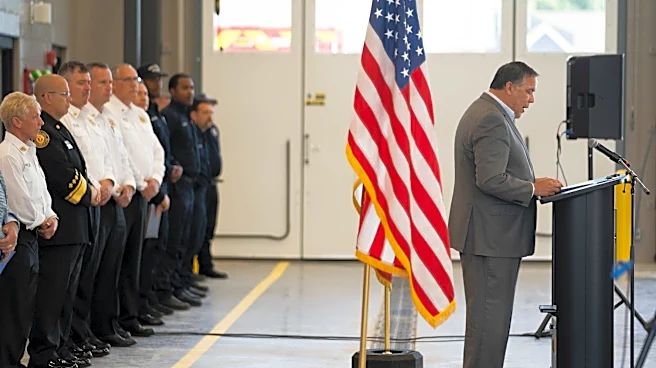
In the afternoon, Ginther held media availability at Fire Station 23 on the East Side to discuss the importance of investing in the Division of Fire's aging fleet, something council members have also previously expressed support for. The station received one of the city's newest engines over the summer to the tune of over $1 million. Ginther is proposing $21 million for new fire apparatus in his capital budget.
"Columbus deserves a capital budget that reflects their values and priorities, and clearly, that's public safety," Ginther told reporters. "We're here in Councilmember Lourdes Barroso de Padilla's district. The people of this district deserve investments in their neighborhood, deserve fire apparatus that will better serve the people of this district and throughout the city."
Barroso de Padilla told The Dispatch a day later that implying council members don't want to invest in the Division of Fire is "bananas."
"It's disingenuous for us to say we wouldn't be in favor of fire investments," Barroso de Padilla told The Dispatch. "There's a disingenuousness to trying to campaign for us to agree to something when you've just given it to us and we haven't been able to do our due diligence yet."
Ross called Ginther's namecheck unnecessary.
"I think that is very unfair, particularly because I had no idea about what would be in the budget until a few days ago," Ross told The Dispatch. "I will say there are large buckets of investment in places we've been fighting all year long to have, particularly around the fire apparatus, capital budget for [recreation] and parks and infrastructure in regard to transportation."
Ross echoed Hardin's concerns about where the city will get the money for the capital budget Ginther is proposing.
Earlier in the summer, City Council delayed voting to authorize bond sales to fund the 2025 capital budget. The city is about a year behind on bond sales since the COVID-19 pandemic delayed a sale for a year.
Hardin said there is no urgency to passing a 2026 capital budget and that "it would be irresponsible to rush another $2 billion in debt-financed capital spending while we are still asking questions about this year's operating budget."
He said he continues to be concerned about Ginther tapping into ITSA.
"We will do our part. Everything is not a gotcha," Hardin said. "We want to be governing partners. We want the briefings that we need. We would usually get a heads up and engagement on the capital budget before the press conference. That did not happen this time and that is fine. We will have those conversations and we will move forward to make sure that Columbus invests in safety, infrastructure, water and all of those things."
Hardin added he would welcome the mayor visiting his district, District 9, to discuss capital improvements.
Auditor calls for collaboration on budget
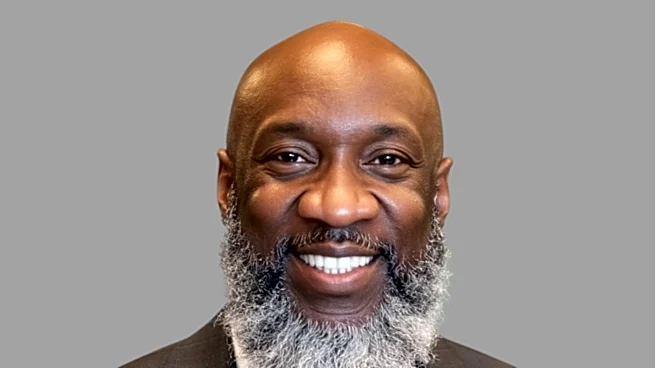
Lewis, who council appointed earlier this year to replace former Auditor Megan Kilgore, told The Dispatch she isn't interested in politics but would like more collaboration in the future.
"It's hard to opine on this budget without any analysis or a briefing," Lewis said. "I would think if they're putting together a capital budget and then announcing that, I would think the auditor would get a pass at that and make sure it aligns with assumptions around interest rates and maturities."
She said former Mayor Michael Coleman and Auditor Hugh Dorrian worked together but Ginther's administration has not collaborated as much with the auditor's office.
Right now the city sets aside 25% of income tax revenue into the Income Tax Set-Aside fund to repay debt for capital projects. Lewis said City Hall needs to consider setting aside a smaller share for capital projects instead of continuing to dip into ITSA. The most important thing to show the agencies that determine the city's bond rating − which determines the interest rate the city pays on debt − is that the pots of money for debt service and operating expenses remain segregated, Lewis said.
Government and politics reporter Jordan Laird can be reached at jlaird@dispatch.com. Follow her on X, Instagram and Bluesky at @LairdWrites.
This article originally appeared on The Columbus Dispatch: Ginther presses council to pass his capital budget on their home turf