



It's difficult to talk about Marietta without using the word "historic."
The southeastern Ohio city of more than 13,000 residents sits at the confluence of the Muskingum and Ohio rivers, along the West Virginia border. It is home to the largest burial site of Revolutionary War soldiers in a single graveyard, ancient Indigenous archaeological sites dating to about 100 BCE, is recognized as Ohio's first permanent American settlement in 1788, and the first organized seat of government for the Northwest Territory from which Ohio was formed.
But the community is now dealing with a modern threat they fear could define the city's future.

Since 2025, residents, activists and local organizers have sounded the alarm about the possibility that toxic, radioactive
wastewater stored thousands of feet underground could migrate into the region's drinking water. They warn that contamination could trigger an environmental disaster.
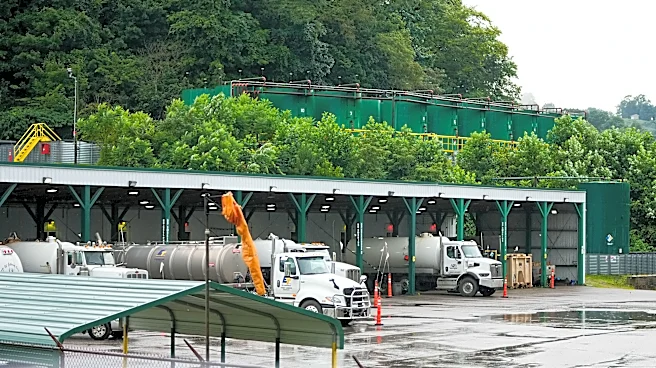
For years, trucks from neighboring Pennsylvania and West Virginia have crossed into Ohio to dump billions of gallons of radioactive wastewater known as brine – the chemical waste from fracking for oil and gas – thousands of feet underground through injection wells near Marietta's water supply. The brine is stored deep underground between porous rock formations that, in theory, are supposed to contain the waste and prevent it from resurfacing through oil and gas wells, according to the U.S. Environmental Protection Agency.
Evidence of contamination hasn't yet emerged, but local activists worry it's just a matter of time in a county that is the epicenter of fracking waste disposal in Ohio.
Between 2010 and 2025, nearly 20 billion gallons of fracking wastewater have been stored underground through injection wells in Ohio, according Ohio Department of Natural Resources data obtained by the Buckeye Environmental Network (BEN), an environmental advocacy, justice, and awareness organization that has been vocal about injection wells and the risks they pose to communities in Ohio.
In that time, the data show none of Ohio's 88 counties has absorbed more fracking waste than Washington County. More than 3 billion gallons of fracking waste has been injected underground there since 2010, representing almost 16% of the statewide total. That's enough wastewater to fill 4,313 Olympic swimming pools.

Washington County has 19 permitted injection wells, according to data from ODNR. The number of permitted injection wells in Ohio dwarfs neighboring Pennsylvania and West Virginia. Ohio has more than 200 Class II injection wells throughout the state, compared with 30 in West Virginia and 19 in Pennsylvania, according to 2024 data from the U.S. EPA.
Susan Vessels, president of Marietta City Council, has worked with BEN, Washington County for Safe Drinking Waterand other Marietta residents and activists, to raise the alarm about brine being injected underground near the city's drinking water.
"We're being forced into a game of Russian roulette," Vessels said. Vessels penned a letter in 2025 with support from Marietta City Council demanding that the Ohio Department of Natural Resources, the body that oversees permits for injection wells, deny a permit for a fifth permit for DeepRock Disposal Solutions LLC, a waste disposal company with several injection wells throughout Washington County.

The letter argues, among other things, that ODNR used old Ohio regulations that are less stringent when it considered the approval for another waste injection site sought by DeepRock. Regulations that took effect in January 2022, the city argued, are more protective for Ohioans because they require baseline water testing and provide more transparency with nearby landowners and public officials when a permit is being considered.
The letter also says there is evidence of brine finding its way back to the surface and ruining privately owned oil and gas wells in Washington County, as well as in neighboring Noble and Athens counties.
In August 2025, ODNR issued the drilling permit for that injection well despite the new regulations because DeepRock applied before the rules changed. That brought the total number of permitted Class II injection wells near Marietta up to six. Four of the injection wells are within a couple of miles of the aquifer where the city gets its water supply, and the fifth injection well that ODNR approved a permit for will also be in that same cluster. A sixth injection well that ODNR issued a permit for in March 2025 that has not been drilled yet will be two miles from the city's drinking water source, according to ODNR records and documents submitted to ODNR by the Marietta City Council.
All six of the permitted injection wells are owned by DeepRock Disposal Solutions LLC, formerly run by Ohio Sen. Brian Chavez, (R-Marietta), before he resigned in 2023 after taking elected office.

Marietta residents, including Vessels, have clashed with Chavez over what they say appears to be a conflict-of-interest because Chavez chairs the Senate Energy Committee. John Fortney, a spokesperson for Chavez, called the criticisms a "publicity stunt and smear campaign pushed by a privately funded anti-oil and gas group that fell flat and was deemed meritless."
"Their goal is simply to drive division in the community through scare tactic and false information promoted on social media," Fortney said.
'They were wrong': Experts warn of risk of storing fracking waste underground
Brine is the salty wastewater produced by hydraulic fracturing, also known as fracking. Brine contains salts, heavy metals, and radioactive materials, according to the U.S. EPA. Ohio has more than 200 Class II injection wells used to dispose of fracking waste, according to U.S. EPA data.
For decades, the oil and gas industry has disposed of fracking wastewater by injecting it thousands of feet underground, but researchers and industry experts have long warned the practice is unsustainable and poses risks to water supplies and geological formations.
At a 1971 conference in Houston sponsored by the U.S. Geological Survey and the American Association of Petroleum Geologists,scientists warned that injected wastewater could migrate into water-bearing formations and potentially trigger earthquakes by altering pressure on existing faults. Researchers at that conference predicted that underground waste injection would be a "temporary means of ultimate disposal" that would likely be discontinued when safer alternatives are discovered.
Underground waste injection became federally regulated in 1974 with the passage of the Safe Drinking Water Act. Ohio, however, is one of a handful of states with "primacy" over their underground injection program, meaning regulatory authority for injection wells rests with ODNR rather than the U.S. EPA.
The U.S. oil and gas industry produces just over 1 trillion gallons of wastewater each year from fracking operations, according to the USGS. For comparison, that's enough to fill 1.5 million Olympic-sized swimming pools. Nationally, around 95% of brine is disposed of by injecting it back underground, according to the National Resources Defense Council.

David Jeffery, a professor of geology at Marietta College and a former petroleum geologist at BP, said Marietta's underground geological formation isn't conducive to storing fracking waste, and that it's just a matter of time before the waste migrates to the city's aquifer along natural fractures already located underground.
These natural fractures give brine a path back to the surface, Jeffery explained. The rock formations have a poor storage capacity and offer no way to actually trap the waste, Jeffery said.
"It's indisputable that the brine is moving up through these fractures and is already showing up here," Jeffery said.
Oil and gas well owners in Washington County are already experiencing "tremendous financial losses" due to the migration of brine through their oil and gas wells, according to Vessels and Jeffery. It's estimated to cost tens of thousands of dollars to plug wells that are inoperable, according to Jeffery.
“They told us that it would be impossible for any oil or gas or water, any of the injected fluids, to come up through the Ohio shale," said Jeffery. "They were wrong.”
In a statement to The Dispatch on Aug. 17, ODNR said complaints from Washington County oil and gas producers about brine migration date back to late 2019. A state investigation concluded that wastewater injected into one of the disposal wells traveled through naturally occurring fractures underground and entered 28 production wells. Following those findings, regulators in 2020 restricted the well to a deeper injection zone. ODNR said subsequent inspections indicated the impacts were diminishing and affected wells were returning to normal conditions.
ODNR also said it is "unlikely that wastewater will migrate farther, including into underground sources of drinking water, due to the composition of the rock layers and other factors."
The agency said it began receiving a new round of complaints from oil and gas well owners in October 2025. Inspectors found elevated pressure and fluids in production wells and ultimately determined that the impacts to the wells "could only be caused by nearby injection wells," according to the statement. ODNR began drafting suspension orders in June 2026 for four injection wells, including one operated by DeepRock.

The four wells were voluntarily shut down in early July, ODNR said. The agency has since installed continuous pressure-monitoring equipment on several affected production wells to determine whether conditions improve while the injection wells remain offline.
ODNR emphasized that previous investigations found no impacts to private water wells and reiterated that contamination of drinking water sources is considered unlikely. The agency said it will commission an independent study of private water wells near the affected area to determine whether any contamination has occurred. A contractor has not yet been selected.
Rob Brundrett, president of the Ohio Oil & Gas Association, told The Dispatch they were "aware of concerns in Washington County" pertaining to oil and gas well owners and said the "appropriate course was to allow [ODNR] to complete its work and follow the technical evidence wherever it leads."
"At the end of the day, no one benefits from operational disruptions, and Ohio's regulatory framework is designed to identify concerns, address them, and protect both the public and the industries that operate in the state,” Brundrett said.
Residents frustrated with lack of response from elected officials, ODNR
Marietta residents, activists, and organizers have expressed frustration over the response from elected officials who represent Marietta to Gov. Mike DeWine.
DeWine's office deferred comment to ODNR but provided a November 2025 letter from the agency written in response to the concerns of Marietta City Council members.
The letter states that ODNR inspections of oil and gas production wells located near injection wells in Washington County "showed no evidence of new impacts from injection wells to known production wells." It states that "misinformation and inaccurate information" was being spread regarding injection wells.
Jessica Archer, a volunteer organizer with Washington County for Safe Drinking Water, criticized the response from elected officials, including State Rep. Kevin Ritter, who represents Washington and Meigs counties for Ohio's 94th House District.

"[Ritter] has not stood by us. He has deferred over and over again to whatever ODNR says," Archer said.
In an emailed statement to The Dispatch, Ritter said he "repeatedly" raised issues with injection wells with ODNR and industry experts when he served as a Washington County Commissioner. He also said he takes residents' concerns about fracking waste "very seriously."
“Since I first reported local concern to ODNR over six years ago, I have personally met with numerous concerned citizens, three former heads of the Petroleum engineering department at Marietta College, environmentalists and industry experts to hear concerns, ask questions, and better understand this issue," Ritter said in an email to The Dispatch.
Ritter also said the rules governing injection wells that took effect in January 2022 "effectively served as a moratorium" on injection well applications because "no new permits have been applied for under those new rules." Permits approved since 2022 were for applications prior to the new rules taking effect.
Jeffery, the Marietta College professor, also accused ODNR of essentially rubber-stamping permits for injection wells for waste disposal companies without conducting their own research or analyses to determine whether the underground geological formations of Marietta can handle the injection of fracking waste.
"[ODNR] is negligent," said Jeffery. "Anybody in this state can walk up and fill out that application and get a permit to do one of these wells."
Bipartisan effort against injection wells in Marietta
Community education efforts and grassroots organizing against injection wells in Marietta have attracted bipartisan support, drawing residents from across the political spectrum into a campaign for a moratorium on new permits. Opponents are urging ODNR to halt approvals until it conducts additional research on the practice's potential impacts in Marietta and Washington County.
Similar cross-partisan coalitions have emerged in debates over data centers and Flock license plate reader cameras,reflecting what activists describe as a growing frustration among communities that feel their concerns are being overlooked by local and state leaders.
"It's been eye-opening so far," said Archer with Washington County for Safe Drinking Water. "It's showed us there are people who will stand up for what's right and stand up for their community, regardless of whether or not their political party is on board."

"This is a clean water issue," said Dee Arnold, a Marietta resident whose family roots in the community stretch back to before the Civil War. "It has nothing to do with whether you're a Democrat or a Republican."
Dee and her husband, Steve, both 75-year-old retired educators, began getting involved with Washington County for Safe Drinking Water more than a year ago after attending public meetings and learning more about the issue.
"It's an East Palestine ready to happen," said Steve, referring to the East Palestine train derailment in 2023that saw toxic chemicals released into the atmosphere. Both Steve and Dee emphasized that they don't oppose the oil and gas industry, but said that not placing fracking waste near water sources is "not too much to ask."

The Arnolds, along with organizers and residents, said that Marietta residents are tired of the oil and gas industry treating southeastern Ohio as a "dumping ground" and that it's part of a historical pattern of the industry taking advantage of those who live in Appalachia.
"Large companies and people that have lots of money come in and do this," Dee said. "It's not right."
Reporter Shahid Meighan can be reached at smeighan@dispatch.com, at ShahidMeighan on X, and at shahidthereporter.dispatch.com on Bluesky.
This article originally appeared on The Columbus Dispatch: Marietta residents fight fracking brine disposal, call it 'Russian roulette'