






After persistent claims from supporters that data centers don't increase residential electric bills, utility giant AEP Ohio and data center companies are teaming up to help lower them.
AEP Ohio, alongside Meta, QTS, Amazon, Softbank Energy and Google announced a pledge of more than $18 million in funding on Aug. 18, what AEP Ohio called a "first-of-its-kind effort."
AEP Ohio said in a press release that the funds will support the utility company's Neighbor to Neighbor program. The program provides grants on a first-come, first-serve basis to cover electricity bills for those who can't afford to pay them.
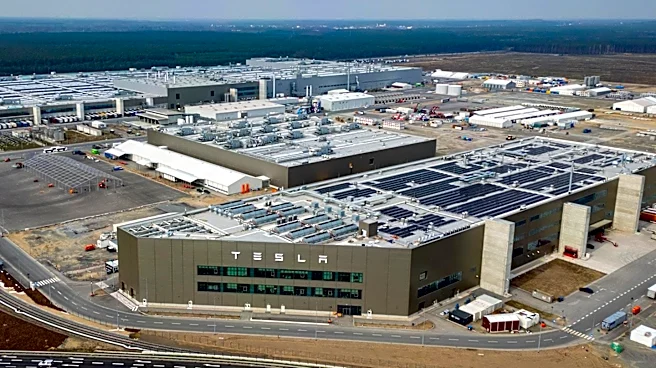
Each company partnering with AEP Ohio has contributed to Ohio's data center boom, as the Buckeye State has risen to one of the top states for
such growth. Data centers have been linked to higher electric bills as grids struggle to keep up with demand. Central Ohio alone has more than 130 data centers, with more planned.
And Ohioans are feeling the growth at home. From May 2025 to May 2026, Ohioans' electricity bills rose 22%, according to data from the U.S. Energy Information Administration. That's second in the nation only to Hawaii, and higher than Virginia, which is considered one of the data center capitals of the world.
"These additional funds are a significant infusion for a program that helps Ohioans in need," AEP Ohio President Marc Reitter said in a press release. "This fund has always been about neighbors helping neighbors and we are happy that our data center customers are a part of it."
AEP Ohio will contribute an additional $1 million to the fund in 2026, according to a press release. The breakdown of other donations includes:
- Meta: $2 million per year over five years, for a $10 million total donation
- QTS:$1 million per year over three years, for a $3 million total donation
- Amazon: $2.5 million in 2026
- SoftBank Energy: $1 million in 2026
- Google: $500,000 to Neighbor to Neighbor and $500,000 to support energy efficiency upgrades for low-income households, for a $1 million total donation
“We've been proud to call Ohio home since 2017, and we're committed to being a good neighbor," Chris Rinkus, Meta’s public policy director for Ohio, said in an emailed statement. "That means investing in the communities we're part of and paying the full cost of the energy our data centers use — so others are not negatively impacted."
The fund is administered by Dollar Energy Fund, a nonprofit organization that manages utility assistance programs across the country.
"What makes today's announcement different is that this isn't just a talking point — these companies are supporting Ohio families right now, with real commitments," Chad Quinn, Dollar Energy Fund CEO, said in AEP Ohio's prepared press release. "...We hope it sets a new bar for how this industry shows up for the communities and grids it depends on."
Funds comes even as supporters said data centers aren't to blame
The funding announcement appears to contradict what some industry supporters have maintained: that data centers don't increase consumer electric bills.
The Data Center coalition frequently points to a study commissioned by the Virginia legislature to tout benefits of data centers, such as jobs and tax revenue. The study acknowledges that data centers "consume substantially more energy than other types of commercial or industrial operations," but claims that at the time of the study, data centers were paying their fair share of energy costs in Virginia.
The Ohio Manufacturer's Association, or OMA, has been a stalwart defender of the data center growth in central Ohio, . The association has called data centers "scapegoats," asserting that inflated energy load forecasts from utilities and regulators are really to blame for higher electric bills.
Despite their exponential growth, data centers have seen serious pushback from Ohio residents in the places they've already built or are planning to build in. Rising electric bills have been a top concern, along with water use, tax abatements and environmental impacts.
Data centers are also a hot button issue leading up to the November election in the highly contentious Ohio governor and U.S. Senate races.
Some communities in Ohio have enacted moratoriums on new data center construction. Just earlier this month, Plain City Village announced a one-year data center development ban.
Business and consumer issues reporter Samantha Hendrickson can be reached at shendrickson@dispatch.com
This article originally appeared on The Columbus Dispatch: AEP Ohio teams up with data centers to pay for spiking electric bills