
Editor’s note: Throughout the growing season, Mike Hogan, OSU Extension educator for Agriculture and Natural Resources in Franklin County, will answer gardening and home landscape questions submitted by
Dispatch readers. Send your questions to hogan.1@osu.edu.
Question: Over the past 15 years, a large maple tree in our yard has grown to be huge. While the stand of grass under this tree used to be thick, it is now sparse and bare, and the roots have grown above ground and are taller than the grass. It is very difficult to mow over the bumpy roots. Would it harm the tree to add 6 inches of top soil to cover these roots and plant new grass?
Answer: Roots need oxygen to survive and a 6-inch layer of top soil will block necessary exchange of oxygen and water. Burying these roots could also damage the bark, which has developed on these above-ground roots, and cause them to rot. Maples tend to have a shallow root system with a fair amount of above-ground roots when the tree matures.
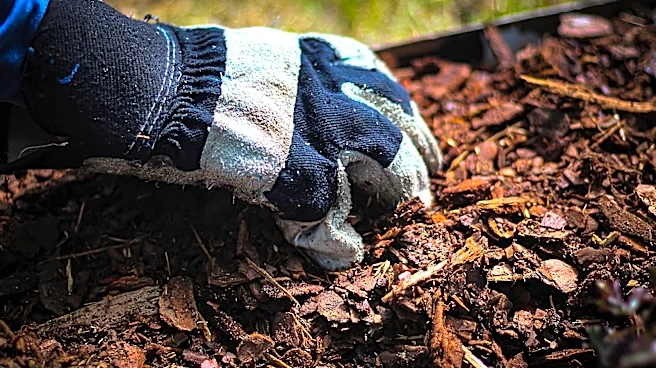
A better alternative is to spread a 2- to 3-inch layer of hardwood mulch over the root zone of the tree. Then you won’t have to mow over the roots, and the area will look neat and tidy. If you do this, keep the mulch 2 inches away from the main trunk and root flare of the tree. There are other benefits of adding a layer of hardwood mulch, including weed control and moisture retention for the tree’s root system.
Another option would be to plant a shade-loving ground cover over the root zone of the tree, but planting among a mass of above-ground roots can be tricky, and the ground cover plants will compete with the tree for soil moisture.
Whatever you do, don’t attempt to cut or grind down these above-ground roots, as they are often the most vigorous and form the main framework and support to anchor a tree.

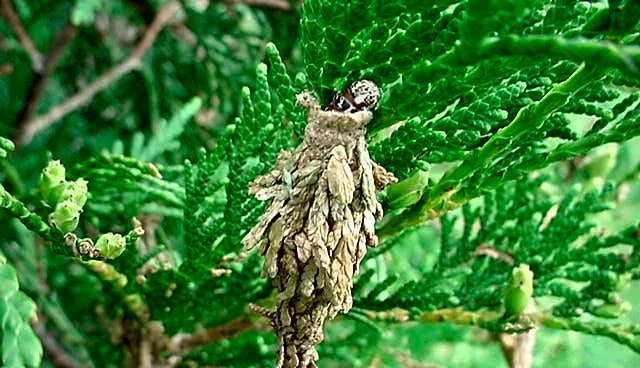
Q: I noticed recently that the line of arborvitaes at the back of our property had a light brown coloring on some branches, and after a close inspection, I see that there are many bagwormnests hanging from these branches. Is there an insecticide that will kill these insects so that they do not spread next spring?
A: Bagworms have stopped actively feeding on foliage for the season and have “tied off” their bags. While there are several insecticides which will kill bagworms, the problem is that after they tie off their bags, it is very difficult for pesticides to penetrate the bags.
At this point in the season, the most effective control measure is to remove the bags by hand and dispose of them in household trash. The bags are tied to the foliage with a strong silk and many times cannot simply be removed by tugging. It is best to use hand pruners to cut the bags from the foliage.
Be sure to scout the arborvitae and other evergreens for evidence of bagworm feeding in August next year, as it is fairly easy to kill them while they are in the feeding stage.
This article originally appeared on The Columbus Dispatch: Expert tips for tree roots and bagworm control