





Denis Smith is a retired school administrator and served as a consultant in the Ohio Department of Education's charter school office.
In a reaction worthy of Casablanca Police CaptainLouis Renault, Columbus Dispatch readers were shocked, shocked to learn that another charter school scandal in Ohio has occurred.
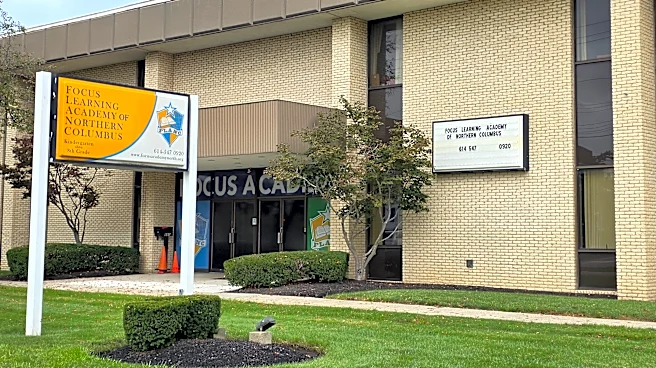
It’s been reported thatAbdirizak Farah,the founder and head of Focus Learning Academy of North Columbus, leveraged state education funds in the school’s accounts to facilitate the purchase of his New Albany home.
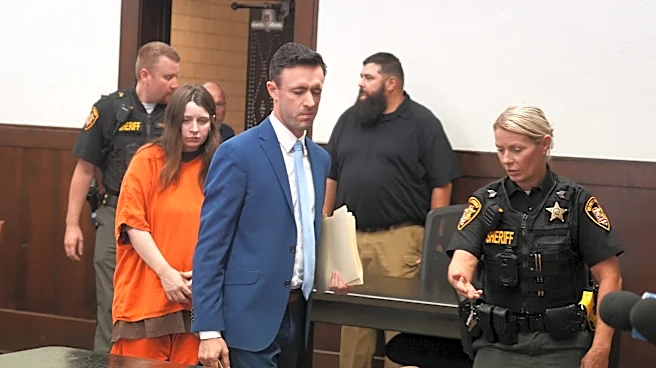
The charter school leader had previously pleaded guilty in July 2024 toconspiring to commit bank fraud. He was sentenced to probation along with the payment of a fine and restitution.
This deft move of creative accounting with school
funds provides the perfect snapshot of what is wrong with the very concept and design of these taxpayer-funded and privately operated schools. Moreover, while the operator has pleaded guilty to fraud-related charges and bears the stigma related to that act, he is still in place as the school administrator.
Exempt from responsibility
What follows is only a short list of the shortcomings of these entities that are underregulated and largely immune to transparency and accountability requirements. In fact, charters are exempt from about 150 sections of the Ohio Revised Code that school districts must comply with under law. Consider these concerns:
- Controls. What internal controls were missing that allowed the school head to access school funds without prior authorization or approval as a check and balance? Where was the school treasurer or financial officer in this situation, and was that person aware of this move by the administrator?
- Governing Board Oversight. What was the school’s governing board doing in the last two years while this situation played out till sentencing? Unlike public schools, charter boards are not elected by the public but are usually handpicked by the school developer. That is one of the major design flaws of charters and why they are not really public schools. Note also that there is no contact information listed on the school website on how to reach a board member. In contrast, note how school board member contact information is treated by Columbus City Schools, a public school district.
- Role of the School Authorizer. Charter schools operate under the auspices of an authorizer, or sponsor as they are called in Ohio. The school authorizer, the North Central Ohio Education Service Center, has its main office in Tiffin, with other offices in Mansfield and Marion. The public needs to be informed about any intervention or correction plan applied by the Education Service Center due to the act of bank fraud-related guilty plea and any intensive monitoring of the school during the last 26 months since the court action. If there was no corrective action by the sponsor, that should raise even more concerns. Charter school authorizers receive up to 3% of the school’s total operating funds, so there may be a built-in incentive for charter school authorizers to keep some marginal schools open. This is a concept or design flaw of the charter school industry that was alluded to earlier.
- Role of the State. A statement from the Ohio Department of Education on the matter asserted that the state "does not have statutory authority to approve, remove, or otherwise regulate charter school operators in Ohio." Again, Dispatch readers might be shocked, shocked to learn that the state seemingly has no role in applying oversight and accountability to an entity that operates on the basis of state funds. We all need to read that statement again and contact our representatives and ask why this is the case. Or is that condition another example of deregulation, of cutting “gov’mint red tape”?

Once again, the questions raised here are only the short list of what’s inherently wrong with charter schools, by concept, design and practice. When it comes to charters, will there be one mega scandal that serves as the wake-up call?
Even Andrew Brenner, chair of the Senate Education Committee and longtime enabler of these less-than-transparent schools, expressed some concern about how a charter school head can continue to serve after a plea of bank fraud involving state funds.
It’s past time to get to work to clean up the charter school industry. What are we waiting for, another scandal?

Denis Smith is a retired school administrator and served as a consultant in the Ohio Department of Education's charter school office. He has also worked in association management as an executive with a national professional society. Mr. Smith is a member of the board of Public Education.
This article originally appeared on The Columbus Dispatch: Charter school head's 'shocking' conviction more proof system is broken | Opinion