






The Enquirer recently reported the formal end of the federal prosecution of former Cincinnati City Councilman P.G. Sittenfeld. Following his presidential pardon and the Supreme Court’s decision to vacate the appellate judgment, a federal judge dismissed the indictment with prejudice and ordered the government to return the $40,000 Sittenfeld had paid as part of his sentence.
Few political dramas in Hamilton County history have attracted as much attention or produced as much polarization.
Sittenfeld accepted contributions to his political action committee from undercover agents posing as investors in a development project and told them, "I can deliver the votes." His defenders
saw ordinary political fundraising. Others saw blatant bribery: Give money to my PAC, and I will produce the votes needed for your development.
The legal line is more difficult than either side sometimes acknowledged.
Federal law sets a difficult standard
In McCormick v. United States, the Supreme Court held that when money is given as a campaign contribution, a federal extortion conviction requires proof that it was given in return for an explicit promise to perform − or refrain from performing − a specific official act.
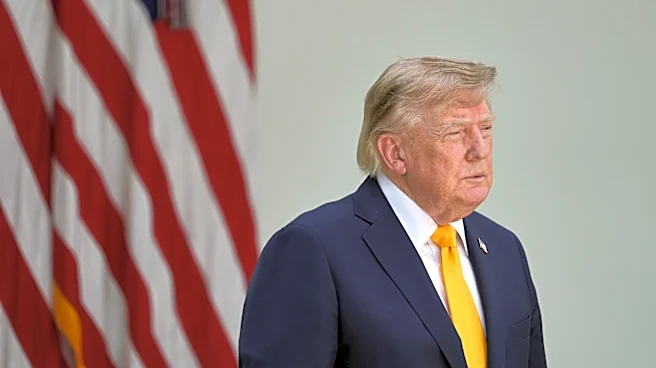
A jury convicted Sittenfeld, and a divided federal appeals court upheld the conviction. The Supreme Court did not ultimately decide whether the evidence satisfied McCormick. It cleared the way for dismissal after President Donald Trump pardoned him.
McCormick’s demanding standard recognizes a political reality. A person may genuinely support a candidate’s positions while also having business before the government on which that candidate serves. A contribution followed by a favorable vote may reflect those shared views rather than an illegal bargain.
But Cincinnati need not let the situation reach that point. If you are seeking approval of a project and know an elected official may influence that decision, you should not contribute to that official while the project is being negotiated or considered. The official should not solicit or accept the contribution. A clear prohibition protects both parties − and the public − without requiring anyone to prove what was privately intended.
The lesson of the Sittenfeld case is not to relitigate whether his conduct violated federal criminal law. It is that Cincinnati’s ethics laws should prevent campaign contributions from becoming intertwined with city business in the first place.
Cincinnati's ethics law has a loophole

Following the 2020 arrests of three City Council members on federal corruption charges, Cincinnati adopted rules covering developers and others seeking certain city contracts and approvals. The city identifies the "financially interested persons" connected to significant development incentives, property transactions and zoning changes.
But the contribution prohibition has a huge loophole. It generally applies only while legislation is formally under review by City Council, a period that frequently lasts just one to three weeks.
The months of negotiations preceding the filing of an ordinance are not covered. Contributions may therefore be accepted throughout the negotiations and prohibited only after the resulting legislation reaches Council − often after the project’s key terms have been settled.
A stronger restriction would not amount to the "criminalization of politics." Federal law has long prohibited federal contractors from contributing while negotiating or performing government contracts, and a unanimous federal appeals court upheld that restriction.
City Council should adopt the same basic principle. The prohibition should begin when an applicant seeks a covered city contract, development agreement, subsidy, property transfer or zoning approval. It should apply to the applicant and the "financially interested persons" already specifically defined in Cincinnati law and continue for six months after final city action.
Make violations actually hurt
The law also needs consequences proportionate to the value of the city business being sought. The current penalty is generally a $500 civil fine, and a campaign can cure the violation by returning the contribution. That is not meaningful deterrence when a project may be worth millions.
Both parties to a knowing violation should suffer. Compliance with the contribution ban should be a condition of eligibility for every covered city contract, development agreement, subsidy, property transfer, or zoning approval. A knowing violation discovered before final action should disqualify the applicant.
If a violation is discovered afterward, the remedy should fit the transaction. The city should be permitted to terminate a contract or recover a subsidy where legally possible. For zoning and other approvals that cannot simply be rescinded, the applicant should face a substantial civil penalty and temporary disqualification from seeking additional city business.
An elected official who knowingly solicits or accepts a contribution from a covered person during the expanded prohibition period should be required to return it, withdraw from the matter, and face a substantial personal fine and formal ethics proceedings.
The principle is straightforward: the developer should not retain the city contract, and the politician should not retain the money or participate in the decision.
The Sittenfeld case demonstrated how difficult it can be to distinguish legitimate fundraising from criminal bribery after the money has changed hands. City Council should close the loophole by prohibiting these contributions throughout the negotiation and approval process.

Dennis Doyle lives in Anderson Township and is a member of the Enquirer Board of Contributors.
This article originally appeared on Cincinnati Enquirer: Sittenfeld case exposes a loophole City Council must close | Opinion