




Nothing quite stings like criticism from your own.
I know that as a journalist. I know it as a Black man. And after nearly 30 years as a Black journalist, I know what it feels like when those two worlds collide.
I’ve been fortunate to receive accolades and awards from both the journalism profession and the Black community. I’m grateful for them. But funny thing about praise: You can receive 1,000 compliments, and somehow it’s the one piece of criticism that follows you home.
Especially when it comes from people you respect.
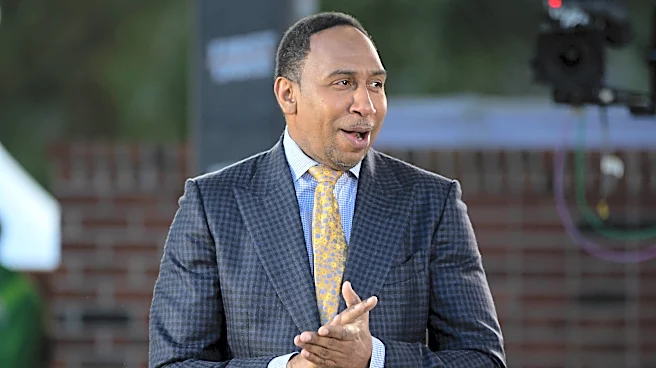
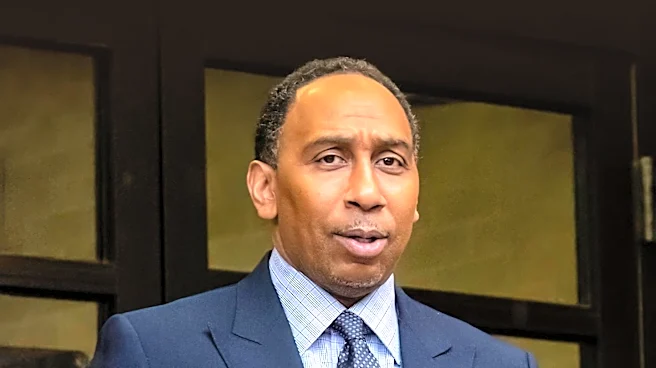
That’s why I had some strong feelings when the National Association of Black Journalists gave ESPN personality and political commentator Stephen A. Smith one of its 2026 Thumbs Down Awards. NABJ says the award is intended for
an individual or organization responsible for "especially insensitive, racist or stereotypical" coverage or commentary about the Black community, or practices contrary to the organization’s goals.
NABJ accused Smith of a recurring pattern of disparaging commentary toward prominent Black women in politics, sports and media. For example, Smith drew criticism after saying U.S. Rep. Jasmine Crockett, whom he called an "educated, brilliant Black woman," was engaging in "verbiage and rhetoric for the streets" − language he later apologized for.
I think NABJ went too far. But I also think Smith is making a mistake if that’s the only message he takes from this.
Stephen A. Smith doesn’t belong in this category
Let’s start with what shouldn’t be controversial: Stephen A. Smith is one of the most successful Black journalists and media personalities in America.
You don’t have to like him. You don’t have to agree with him. Lord knows I don’t always agree with him, particularly when he ventures from sports into politics.
But you can’t deny what he’s accomplished.
Smith has reached the top of an industry where Black journalists historically had to fight just to get into the room. He has also helped create opportunities for younger Black journalists and supported NABJ, including bringing ESPN’s highly rated "First Take" to its annual convention.
That context matters when you’re handing somebody a Thumbs Down Award.
NABJ’s own description says the distinction is intended to call attention to racist or stereotypical journalism and conduct contrary to the organization’s mission. Previous recipients have included news organizations criticized for newsroom cuts that disproportionately affected journalists of color.
That’s serious territory.
Smith can be bombastic. He can be abrasive. He can be over the top. That’s practically the business model. But treating him as though his body of work represents some fundamental betrayal of Black journalism doesn’t sit right with me.
Criticize the commentary? Absolutely.
Challenge his tone? Fair game.
Call out specific statements that NABJ believes unfairly demean Black women? Do it.
But there is a difference between holding one of our own accountable and branding him as an enemy of the values Black journalists have spent generations fighting to uphold.
I believe NABJ crossed that line.
I understand why Smith is angry. I’ve been there.
Smith didn’t exactly take the criticism quietly.
On his "Straight Shooter" show, he blasted NABJ’s leadership and questioned why nobody contacted him before publicly accusing him of disparaging Black women. He later took his grievances to Sean Hannity’s Fox News program, where he insisted he wouldn’t back down.
Not the route I would have taken. But I understand the emotion behind it. Getting slapped down by people you thought were down with you hurts differently. I learned that early in my career.
I participated in an Enquirer project that enraged parts of Cincinnati’s Black community. The criticism came hard and fast. I was accustomed to being the journalist who asked uncomfortable questions, put public officials in the hot seat, and demanded that others explain themselves. Suddenly, I was the one sweating beneath the interrogation lights.
And my first instinct? Defend myself.
Defend the story. Defend the decisions. Defend the journalism. Explain what people misunderstood. Explain what I intended. Basically, do everything except fully absorb what people were trying to tell me.
A mentor of mine who wasn’t a journalist finally cut through all of my explanations. “You messed up,” he told me. “You’ve got to live with that and do better.”
Ouch.
But I needed to hear it. It forced me to confront something journalists sometimes forget: Intent doesn’t erase impact.
I may not have intended to hurt or offend people. I may have believed the journalism was defensible. But if people in my own community were telling me that my work had harmed them, I owed them more than an argument. I owed them a listen. That lesson has stayed with me ever since.
Which brings me back to Stephen A. Smith.
Calling it like you see it doesn’t excuse how you say it
Smith says he’s heard NABJ’s criticism. The more important question is whether he’s actually listening.
Smith’s initial response has sounded much more like the younger version of me − busy defending himself, his intentions and his record − than someone seriously wrestling with what his peers are trying to tell him. That’s understandable. It’s also potentially a missed opportunity.
I make my living offering opinions. I understand the bullseye that comes with that. I frequently tell people that when I criticize a politician, public official, business leader, or community institution, it isn’t personal to me.
But I’ve learned something else over the years: It may not be personal to me. It’s usually personal to them.
I’m talking about their job performance. Their business. Their organization. Their reputation. Sometimes their family or people they love.
Words have weight. That’s especially true when you have a microphone as large as Stephen A. Smith’s.
No public figure should be immune from fair criticism because she’s a Black woman. Not Joy Reid. Not Michelle Obama. Not Jasmine Crockett. Not Kamala Harris.
And certainly not Stephen A. Smith. Or me.
Journalists and commentators aren’t supposed to make friends. As Stephen A. Smith said, we’re supposed to call balls and strikes as we see them. But that doesn’t absolve us from examining how we call them.
We can be tough without being demeaning. We can be provocative without being reckless. We can challenge someone’s ideas without diminishing the person. And when people whose judgment we respect tell us we’ve crossed that line, we should at least be willing to consider that they might see something we don’t.
Sometimes a thumbs down is an invitation to look inward
Today’s media landscape makes all of this harder. The lines separating journalism, opinion and entertainment have become increasingly blurred. Few people walk that line more visibly − or profitably − than Stephen A. Smith.
His job rewards volume. Conflict gets clicks. Outrage travels faster than nuance. The hotter the take, the farther it travels.
But I don’t believe Stephen A. Smith deserves to be treated as an enemy of Black journalism. And my disagreement with NABJ on this doesn’t diminish what the organization has meant to thousands of other Black journalists or me.
Organizations we value can get things wrong. So can journalists we respect.
Stephen A. Smith doesn’t have to agree with NABJ. He doesn’t have to apologize for opinions he still believes are right. And he certainly doesn’t have to stop calling it as he sees it.
But before he makes another television appearance explaining why everybody else is wrong, maybe he should consider the possibility that the people criticizing him aren’t trying to destroy him. Maybe they’re trying to tell him something.
I once had someone who cared enough about me to put it much more simply: You messed up. Live with it. Do better.
Sometimes the people closest to us deliver the criticism that stings the most. And sometimes that’s precisely why we need to listen.

Opinion and Engagement Editor Kevin S. Aldridge can be reached at kaldridge@enquirer.com. On X: @kevaldrid.
This article originally appeared on Cincinnati Enquirer: NABJ went too far on Stephen A. Smith. He should still listen | Opinion