








Measles cases in Ohio continue to climb as the state battles its third outbreak of 2026.
Health officials warn measles is one of the world's most contagious diseases. The virus spreads easily among unvaccinated people and can cause serious complications, especially in young children, according to the Centers for Disease Control and Prevention.
Ohio has reported more than 200 cases across 20 counties this year, according to the Ohio Department of Health. Here's what to know about the outbreak, why cases are rising, how measles spreads and why Ohio could continue to see cases rise.
How fast measles is spreading in Ohio
Ohio's case count has risen rapidly in recent months, growing from 45 cases reported Aug. 6 to 206 cases reported Oct. 1, the most recent ODH numbers show. The 206 cases in the Buckeye
State so far in 2026 are already a 348% increase from the 46 cases in all of 2025.
Measles cases continue to rise nationwide, with 3,887 infections reported this year, according to the CDC.
Measles isn't spreading evenly across the country. Some states have reported no cases, while others have seen outbreaks, defined as three or more linked cases in a particular area. In 2026, 42 outbreaks have been recorded so far, representing about 95% of all reported infections, according to the CDC. Ohio has seen three outbreaks this year.
Health officials say outbreaks are more common in communities with lower measles vaccination rates, where the virus can spread more easily in densely populated areas once it is introduced. So far this year, three states have reported more than 500 measles cases: Pennsylvania, South Carolina and Utah.
Why Ohio could be at risk for more measles cases
Most measles cases reported in Ohio this year have been among people who were not vaccinated, according to state health officials.
"It's unfortunate that these outbreaks have become more common in Ohio over the past few years, because this disease is preventable," Dr. Bruce Vanderhoff, ODH director, said a July 30 statement. "This serves to emphasize the importance of being fully vaccinated. I strongly encourage you to protect yourselves and your children by getting vaccinated."
Measles has a hard time spreading when nearly everyone in a community is vaccinated. When vaccination coverage exceeds 95% in a community, herd immunity helps protect most residents from measles, according to CDC data. However, 18 states, including Ohio, had MMR vaccination rates below 90% during the 2025-2026 school year.
About 88% of Ohio kindergarten students were vaccinated against measles during the 2025-26 school year.
The CDC says maintaining high vaccination coverage is essential to containing measles outbreaks and safeguarding vulnerable populations, especially infants, who face a higher risk of serious complications from the disease.
The national measles outbreak keeps growing
According to Johns Hopkins University, which compiles its own data on measles cases, infections have surpassed 4,000 cases nationwide this year, and transmission is continuing across the country.
How easily does measles spread?
The CDC says nine in 10 unvaccinated people exposed to an infected person will catch the virus, and the World Health Organization estimates one case can infect up to 18 people.
Measles' R₀, or basic reproduction number, measures how many people one infected person is likely to infect in a population with no immunity. Measles has an R₀ of about 18, making it one of the most contagious diseases on Earth.
How serious is measles? Is it deadly?
Measles is an extremely infectious, and potentially severe rash illness, according to the CDC. It can be dangerous, especially for babies and young children.
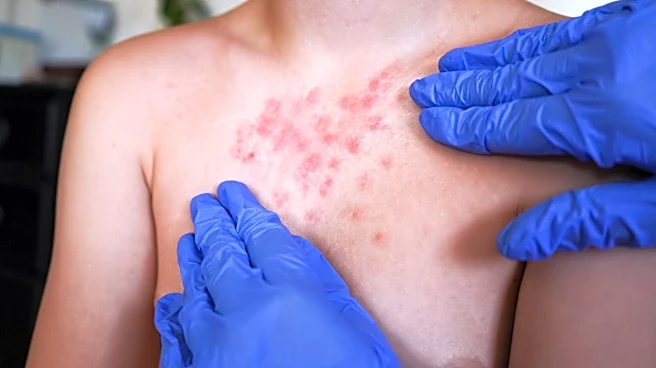
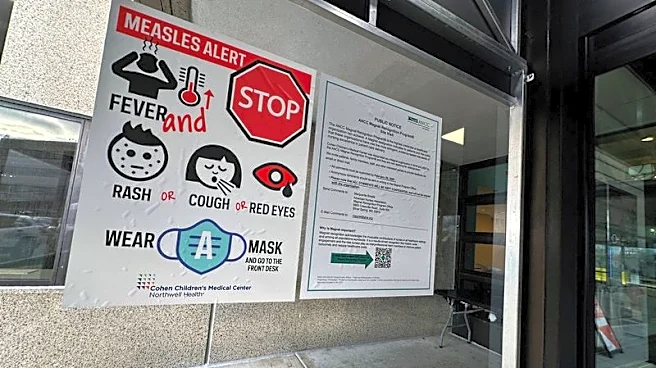
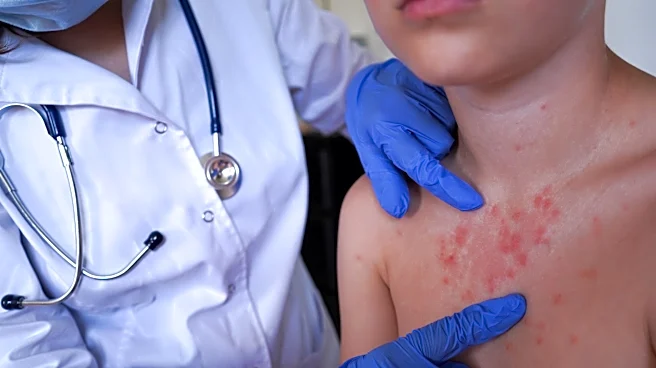
It usually begins with a fever, cough, runny nose and red eyes before a rash develops. The virus can lead to serious complications, including pneumonia and brain swelling, which could lead to hospitalization or death in extreme cases.
ODH states that complications from measles are more common among children younger than 5 years of age, adults older than 20 years of age, pregnant women, and people with compromised immune systems. As many as one out of every 20 children with measles gets pneumonia, the most common cause of death from measles in young children.
Before the measles vaccine was introduced, the CDC says an estimated 48,000 people were hospitalized and 400–500 people died in the United States each year.
How to lower your risk of measles
Both ODH and the CDC say the best way to protect yourself against measles is to be vaccinated.
How measles finds new opportunities to spread
Think of vaccination as a shield for the entire community. When most people are vaccinated, measles has a harder time finding new people to infect. That community-wide protection helps safeguard even those who aren't immune.
Herd immunity, also known as population immunity, happens when enough people in a community are protected against a disease through vaccination or previous infection. This makes it harder for the disease to spread from person to person, reducing the risk of outbreaks.
The bad news is that herd immunity isn't permanent. As long as a disease still exists somewhere in the world, there's a chance it can return. If someone without immunity becomes infected while traveling, they can bring the disease back and pass it on to others who are also unprotected, allowing new outbreaks to start.
Health officials say vaccination remains the best defense against measles and is especially important for protecting infants and others who are at greater risk for serious complications.
"The measles, mumps and rubella vaccine is the best protection — protecting nearly all people against disease who receive the recommended doses," said Dr. James McDonald, New York State's Department of Health commissioner.
This article originally appeared on USA TODAY: Why Ohio is at risk for more measles cases as 2026 outbreak grows