



Rodney Hinton Jr. knew what he was doing when he aimed his car at a Hamilton County sheriff's deputy and drove into him last year, prosecutors said during opening statements in his murder trial.
"He knew it was wrong. He just didn't care," Assistant Prosecutor Heidi Rosales said.
Hinton's mental state was the focus of opening statements, which took place Oct. 7 in Hamilton County Common Pleas Court before Judge Jody Luebbers. His attorneys are asking the jury to find him not guilty by reason of insanity.
But that is a legal determination, not a medical one, Rosales said. And even though Hinton has been diagnosed since the fatal crash with bipolar disorder and schizoaffective disorder, she said it is clear that Hinton knew right from wrong when
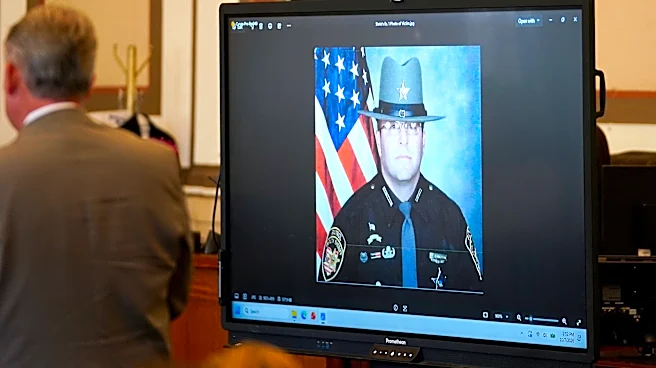
he struck and killed Deputy Larry Henderson.

Three psychologists who evaluated Hinton will testify, Rosales said. Two of them − one hired by prosecutors and another appointed by Luebbers − found that Hinton's mental condition does not meet Ohio's legal standard for insanity, she said.
The third, hired by Hinton's attorneys, found that he does meet the legal standard for a not guilty by reason of insanity finding.
Hinton, 40, is facing charges including aggravated murder, which carries a maximum sentence of life in prison without parole.
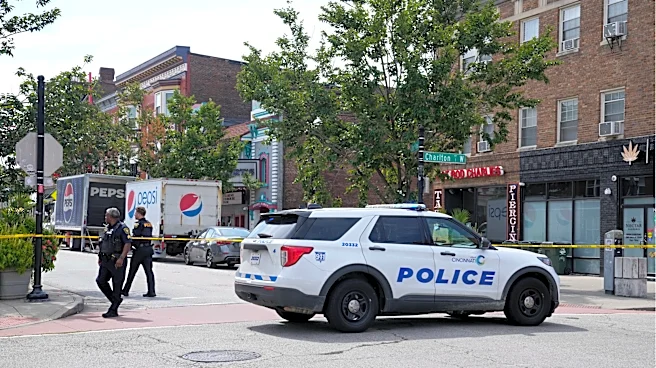
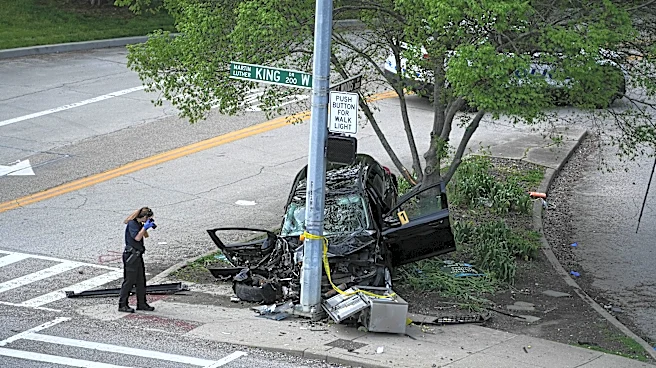
The crash happened May 2, 2025, on Martin Luther King Drive near the entrance to Burnet Woods. Henderson was working a special assignment that day, handling traffic control during University of Cincinnati graduation ceremonies.

Hours before, Hinton and other family members had gone to a Cincinnati police building to view body camera video of his 18-year-old son, Ryan, being fatally shot by a Cincinnati police officer.
The fatal shooting of Hinton's son, which happened the previous day, sent him into a mental and emotional tailspin, according to his attorneys.
One of Hinton's attorney, Clyde Bennett II, told jurors that Hinton's serious mental illness, along with extreme emotional distress, led to the killing.
Hinton, he said, had a "psychotic, delusional belief that what he was doing was right."
Rosales said Henderson happened to be the first law enforcement officer who "was visible and accessible" to Hinton.
Hinton diagnosed with 'atypical psychosis'
Bennett said Hinton's mental health issues first became apparent when he was a child and continued into adulthood.
In 2023, according to Bennett, as Hinton's second marriage was falling apart, he began having visual hallucinations.
By May of that year, Bennett said Hinton's mental condition had deteriorated, and he lost contact with reality. Hinton was seen in Middletown walking around completely naked.
He did that, Bennett said, because in his mind he was doing the right thing.
Hinton was ultimately treated at a hospital and diagnosed with several conditions, including "atypical psychosis," which Bennett said indicates he had psychotic symptoms that don't fit into a particular disorder.
That condition, he said, interfered with Hinton's judgment and affected his ability to distinguish between right and wrong.
Hinton was prescribed medication that eased his symptoms. But at some point he stopped taking it, according to Bennett. Days before the fatal crash, Hinton's wife took him to a doctor because he was showing "symptoms of severe mental illness."
Bennett said Hinton again was prescribed an antipsychotic medication but didn't take it.
When Hinton showed up at the Cincinnati police building on Linn Street to view the video, Bennett said, he was "an unmedicated, psychotic, mentally ill man experiencing extreme grief."
Testimony, which began Oct. 7 with the first three witnesses, will continue Oct. 8.
This article originally appeared on Cincinnati Enquirer: 'He knew it was wrong.' Prosecutors dispute Rodney Hinton's insanity claim