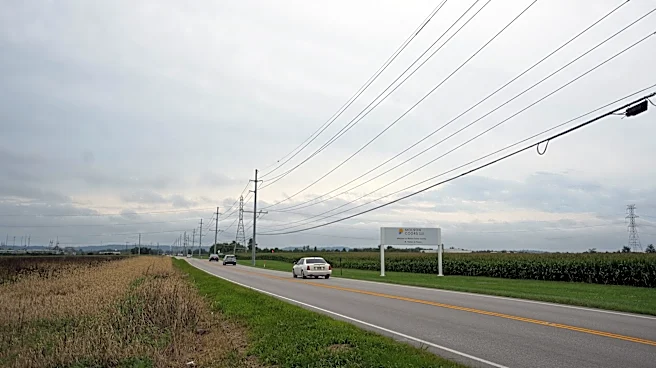









The Ohio Supreme Court ordered an Ohio city to let residents vote to ban data centers,after city officials "disregarded" the law and blocked such a vote.
Residents of Trenton had gathered signatures to put a charter amendment on the November ballot that would have blocked data centers, including two planned ones. But the Trenton City Council Aug. 3 voted not to certify the charter amendment petition.
In a decision issued Sept. 1, the court directed the Trenton City Council members and Trenton Mayor Ryan Perry to certify the petition and send it to the Butler County Board of Elections.
Because it's too late for it to appear on the November ballot, the court said in its decision that there must be a special election to allow voters to decide on the charter
amendment within 60-120 days of the council certifying the petition.
It's not immediately clear when the council will vote to certify the petition, though the council's next meeting is at 7:30 p.m. Sept. 3.
Court finds "council disregarded applicable law"
Trenton, about 38 miles north of Cincinnati, is home to two proposed data center projects. The California-based industrial real estate and logistics company Prologis Inc., is planning a 141-acre data center within Trenton. The Enquirer reported that Amazon is also negotiating with the city to erect an 18-building data center right outside the municipality's boundaries.
On July 8, a group of Trenton residents filed the petition with council. It would amend the city's charter to ban construction of new data centers. The petition included 336 valid signatures.
Then, during a special meeting Aug. 3, the Trenton City Council voted not to certify the petition, arguing that petitioners hadn't met the Ohio Constitution's requirement that the charter amendment have signatures from at least 10% of the city's "electors."
The dispute centered on how this 10% threshold is calculated. The group of residents believed the 10% should be calculated using the number of votes cast in Trenton's last general municipal election- meaning the threshold would be 128 signatures.
City officials, on the other hand, said the threshold should be calculated using the number of eligible voters in Trenton, which would raise the minimum number of signatures to 820.
In its decision Sept. 1, the court sided with the residents, finding that they did have the required number of signatures. The court also found that by not certifying the petition in the first place, there is "clear and convincing evidence that the council disregarded applicable law."
However, the court denied the residents' request for court costs and attorney fees, finding that there wasn't any evidence the council's actions "rose to the level of dishonest purpose or moral obliquity."
This article originally appeared on Cincinnati Enquirer: Court orders Trenton to allow residents to vote on data center ban