









As rising rents and a tight housing market continue to put homeownership beyond the reach of many working families, Habitat for Humanity of Greater Cincinnatiis reshaping how it delivers affordable housing.
For decades, the nonprofit has relied primarily on volunteer-driven construction to build homes for families with limited incomes.
Now, the organization is expanding its approach by partnering with outside general contractors to oversee larger developments and increase production.
The shift comes as demand for affordable housing continues to outpace supply throughout the Cincinnati region.
A new model in OTR
Habitat's newest project reflects that evolution.
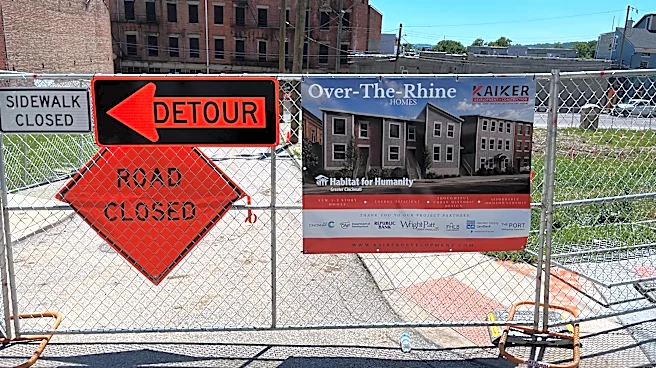
The nonprofit recently broke ground on an eight-home, income-restricted townhouse development in Over-the-Rhine's
historic Brewery District.
The $2.5 million Mohawk Street project, expected to be completed in late 2026, is the first Habitat development in Greater Cincinnati to be built under the direction of an outside contractor, Kaiker Development + Construction.
By working with experienced construction firms and focusing on higher-density developments, Habitat leaders say they can complete projects more efficiently and serve more families than under the traditional, volunteer-led model alone.
The strategy is already fueling ambitious growth plans.
Doubling production
Habitat for Humanity of Greater Cincinnati plans to complete 40 homes during its next fiscal year, which was set to begin July 1, or roughly double the number of homes the organization expected to finish this year.
"We intend to maintain that new level of performance every year going forward," said Joe Hansbauer, the organization's chief executive officer.
The increased pace is designed to help address a widening affordability gap as home prices and rental costs continue to climb.
At the same time, Habitat leaders say the expanded pipeline of projects creates greater flexibility for the families participating in the program.
Making sweat equity more accessible
Habitat's affordable homeownership model has long been tied to the concept of "sweat equity," requiring future homeowners to invest time and effort in the program before purchasing a home.
In Cincinnati, participants must complete 200 hours through activities such as working on construction sites, attending educational classes, volunteering in Habitat ReStores or assisting with community programs.
With more homes under construction simultaneously, participants have additional opportunities to complete those hours and are no longer limited to working on the home they will eventually occupy.
"It's always more interesting to be swinging a hammer on the home you're going to live in rather than someone else's home, but working on someone else's home gives them more options and more opportunities to get their hours in," Hansbauer said.
Removing barriers to homeownership
Habitat leaders view sweat equity as a cornerstone of the program because it helps foster pride, responsibility and a deeper connection to homeownership. Habitat's model of affordable homeownership is closely tied to the idea of “sweat equity."
Yet the requirement can also present challenges for families already balancing multiple jobs, child care responsibilities, transportation limitations and inflexible work schedules.
By increasing the number of active construction sites and volunteer opportunities, Habitat hopes to preserve the benefits of sweat equity while making participation more manageable for the working families the organization is designed to serve.
The organization's new construction model, leaders say, is ultimately about expanding access — creating more affordable homeownership opportunities while reducing obstacles that can prevent families from reaching them.
This article originally appeared on Cincinnati Enquirer: Habitat for Humanity reimagines its model to meet housing crisis