




Earlier this year, a friend of mine spent the morning in a Jewish cemetery here in Cincinnati, alongside 24 other men, placing Holocaust memorial markers and tending the ground around the headstones. Both of his parents were Holocaust survivors.
He was honoring people who came before him and helping make sure their memory remains visible to those who come after. I have thought about that morning a lot, because it offers one answer to a question I am carrying as this Jewish year comes to a close.
What do we want the next generation to see us do?
For many Jews, being openly Jewish has become a more complicated choice. In its 2025 national survey of American Jews, the American Jewish Committee (AJC) found that 55% avoided at least one behavior out
of fear of antisemitism, including publicly identifying as Jewish, going to certain places or events, or posting Jewish-identifying content online.
I understand those choices.
I do not want fear to be what our children learn from us. But I also do not want them to learn that when we feel threatened, our world gets smaller.
Jewish tradition asks us each year to take stock. How did we live? Where did we fall short? What needs repair? What do we want to do differently?
This year, at the dinner that opened the Jewish Federation of Cincinnati's year, there was a card at every place setting in a room of more than 200 people. Write down one thing you will do in the year ahead to live your values, help your community, or make something better. Then say it out loud.
One question from that evening has stayed with me. What can I do now?
With war, division, inequality, antisemitism, and rapid technological change around us, the problems can feel too large for any one person to affect. But our children are watching. They are watching whether we retreat or engage. Whether we speak when something is wrong. Whether we make room for someone new. Whether our concern extends beyond people who look like us, pray like us, or live like us.
They are learning from what we do.
Our board chair shared that years ago, someone invited her to get involved. Her commitment this year was simple: Invite one person in.
Most of what we pass on happens that way. One choice at a time.
On my own card, I wrote one word: pride.
I want our children to grow up around adults who are comfortable being who they are, openly and without apology. For me, that includes being visibly Jewish.
And I want them to see that being proud of who we are does not require pulling away from everyone else. Fear does not have to make our world smaller.
In its 2024 survey of U.S. adults, AJC found that nine in ten said antisemitism affects society as a whole and that everyone is responsible for combating it. Most people already agree. But it can take only a few voices to make someone wonder whether it is safer to hide who they are. The harder question is what each of us does about it.
Maybe it means being visible when it would feel easier to hide. Speaking when prejudice is directed at someone else. Staying connected when fear tells us to pull away.
Those are the choices our children see us make.
As Yom Kippur approaches, this is the question I am carrying into the new year. What kind of person do I want to be?
Write down one thing you will do. Say it out loud. Then do it.
And let someone younger see you live it. Because what the next generation learns from us is not only what we tell them.
It is what they watch us do.

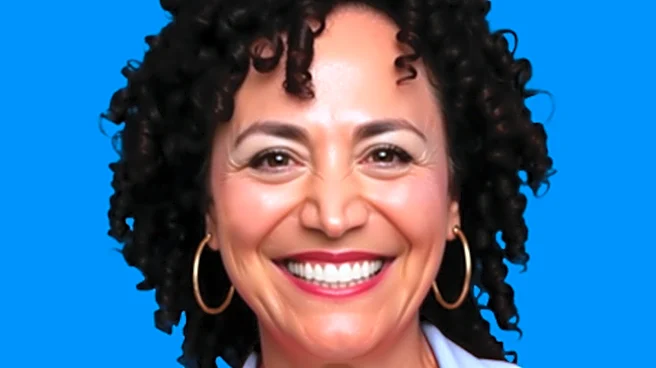
Danielle V. Minson is CEO of the Jewish Federation of Cincinnati.
This article originally appeared on Cincinnati Enquirer: Don't let fear teach Jewish children to hide | Opinion