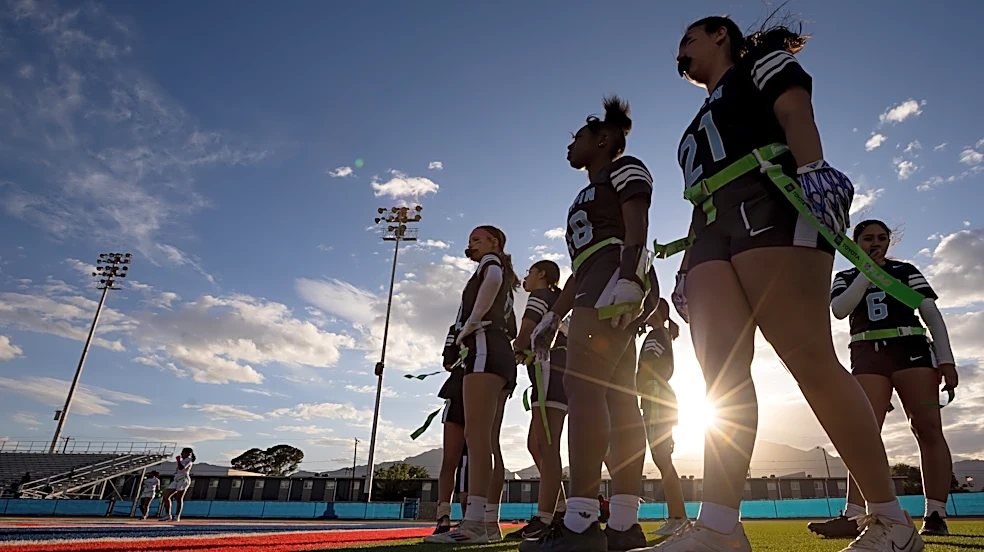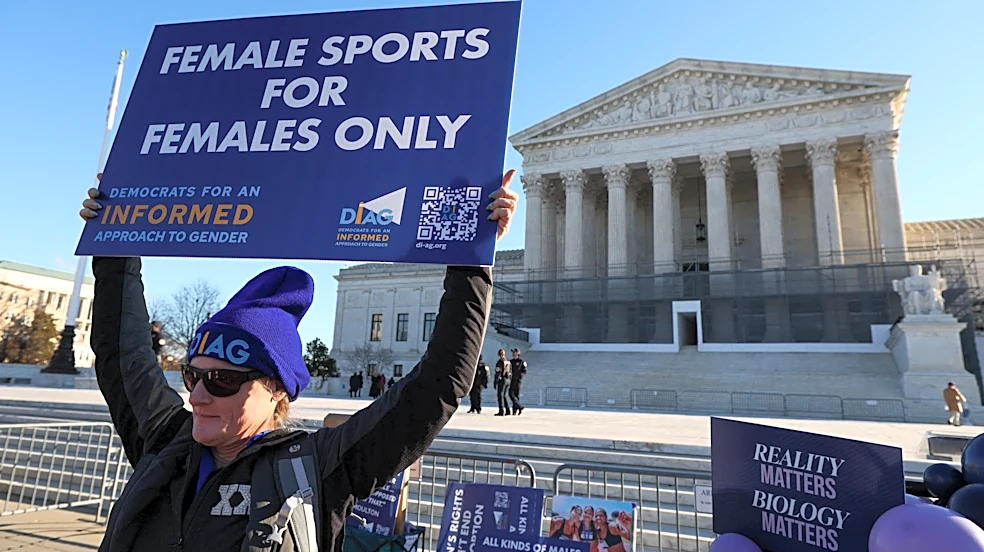








Politicians across the country are campaigning to prohibit transgender female athletes from competing in girls’ and women’s sports.
Twenty-nine states bar trans females from competing in girls’ sports. The NCAA has banned trans females from competing on women’s collegiate teams. Congress has proposed the Protection of Women and Girls in Sports Act
that would prohibit trans girls from participating in girls’ or women’s school sports.Yet research consistently concludes that there is not sufficient evidence to support these bans.
Banning trans athletes from sports robs them of the important mental, physical and social health benefits of sports participation. It also alters the experiences of all girls and women athletes. In contrast to “protecting”
girls and women in sport, banning a few trans female athletes jeopardizes all participants.
When female athletes don't look the way others expect

The political rhetoric about trans female athletes has increased discrimination and bullying of all female athletes. Being perceived as too strong, too muscular, or too aggressive leads to questioning athletes’ gender.
Because of her height (6’9”) and appearance, WNBA player Brittney Griner has been the target of cyberbullying and hateful media throughout her career. Highly skilled or short-haired female youth sports athletes have been singled out by opponents’ coaches or parents accusing them of being boys. A school board member in Utah posted a photo of a female athlete claiming the athlete was transgender because she was bigger than her peers. The post received a firestorm of hateful comments against an athlete someone thought didn’t look right. Adults tasked with safeguarding young athletes instead are causing harm.
This is not protecting girls and women.
Protecting girls shouldn't mean inspecting their bodies

Some proposed bills or policies leave the door open for physical inspection of girls. In 1966, all participants in women’s Olympic events had to endure a physical exam proving they were female. These adult athletes expressed humiliation and trauma, and medical professionals objected to the procedure. Now imagine being a 12-year-old who is told she needs to undress to prove she is a girl.
Most laws barring transgender athletes apply to schools. Potentially, kindergarten-aged girls could have their privacy violated.
This is not protecting girls in sports.
The quest to identify trans female athletes has heightened body surveillance of young girls and women. Being large or muscular leads to public shaming and cyberbullying, negatively affecting young athletes’ mental health. When body shape and size are publicly scrutinized, athletes are more likely to engage in unhealthy eating or develop eating disorders. Already, one in five female athletes engage in unhealthy eating or have an eating disorder, which are associated with increased rates of depression and suicidality.
Girls should be encouraged to build strength, not hide it

Further, when athletes want to avoid appearing too muscular, they limit strength training, increasing risk of injury. For example, risk factors for ACL/knee injuries in female athletes include lack of leg strength. Athletes who do not adequately strength train increase their likelihood of injury. Strength coaches who emphasize toning to avoid “bulking up” with female athletes are not protecting them. They, too, are increasing the likelihood of injury.
Sports should be a place where athletes can push their limits, test their skills, gain friendships and learn life lessons. Girl and women athletes should be able to develop strength and muscularity, and express themselves comfortably. Instead, transphobia in adults is creating an unsafe climate for all participants.
The call to protect girls and women by banning trans athletes creates a climate that escalates scrutiny of all female athletes, jeopardizing their mental and physical health. Claiming that trans girls and women make sports unsafe is a decoy harming all participants in girls’ and women’s sports.

Vikki Krane is a professor emeritus of Sport Management and Kinesiology at Bowling Green State University, specializing in sport psychology. Krane is co-editor of the books "Reimagining the Gendering of Sport (2025, Elgar); Sex, Gender, and Sexuality in Sport: Queer Inquiries" (2019, Routledge); and "Applied Sport Psychology: Personal Growth to Peak Performance" (McGraw-Hill, 2026).
This article originally appeared on Cincinnati Enquirer: Transgender athlete bans could harm the girls they aim to protect | Opinion