








With daylight saving time coming to an end, it may be surprising to know the "fall back" and "spring forward" dates are set ... for the next 10 years.
What?
Twice a year, the age-old practice of setting clocks back by one hour the Sunday after Halloween or forward by one hour on the second Sunday in March generates grumbles around the world − except for in areas, provinces, states or countries that do not observe daylight saving
time.Unless, of course, legislation with the long-running battle to "lock the clock" or the Sunshine Protection Act generates movement.
Daylight savings deals, products from Walmart
Nineteen states have laws on the books to make daylight saving
time permanent, but Congress needs to act for them to take effect. While Ohio isn't among them, state legislators have introduced resolutions urging Congress to make it permanent.
Below is information about daylight saving time, commonly referred to as "daylight savings," why we change clocks twice a year and a list of dates to fall back and spring forward from 2026 to 2036.
What is daylight saving time?
Daylight saving time is the period of the year when clocks are moved one hour ahead, or "spring forward," according to the National Institute of Standards and Technology, to create "more sunlit hours in the evening during months when the weather is the warmest." We move clocks back one hour or "fall back" when we return to standard time. "The transition from ST to DST (standard time to daylight saving time) effectively moves one hour of daylight from the evening to the morning," the NIST site explains.
Daylight saving time, commonly (and incorrectly) referred to as "daylight savings," was formally introduced in the U.S. in 1918.
Who's in charge of daylight saving time?
The U.S. Department of Transportation regulates daylight saving time and time zones. However, the National Institute of Standards and Technology, or NIST, acts as an official timekeeper for the U.S.
When does daylight saving time end in 2026? When is daylight savings in 2027?
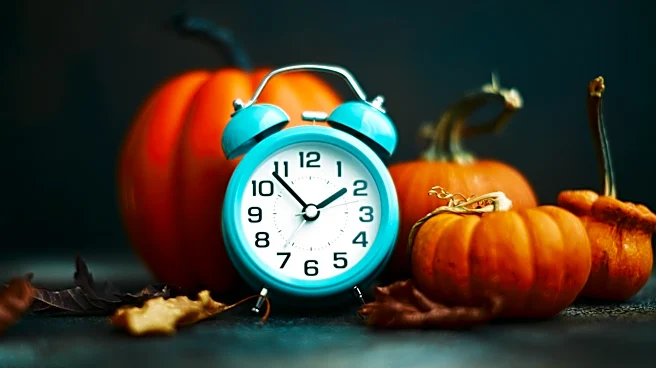
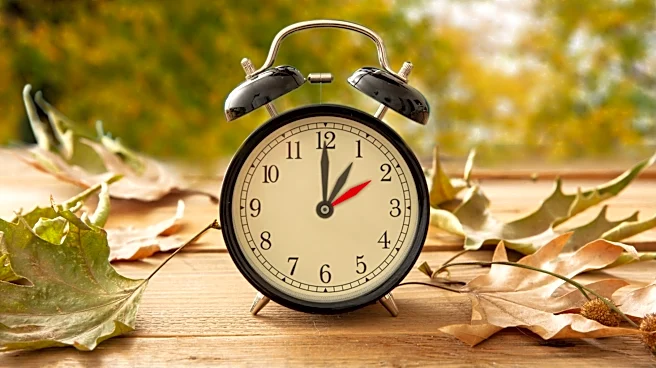
Daylight saving time "ends" at 2 a.m. ET Sunday, Nov. 1, 2026 (Halloween weekend!), for "fall back."
Daylight saving time starts (again) at 2 a.m. ET Sunday, March 14, 2027, for "spring forward."
Daylight saving time then "ends" at 2 a.m. ET Sunday, Nov. 7, 2027, for "fall back."
Daylight savings dates from 2026 to 2036
These dates list the end and start of daylight saving time through at least the year 2036, according to sites like timeanddate.com, time.is and calendar-12.com.
Daylight saving time 2026: DST ends at 2 a.m. ET Sunday, Nov. 1, 2026, the day after the Halloween holiday, for fall back.
Daylight saving time 2027: DST starts at 2 a.m. ET Sunday, March 14, 2027, for spring forward (the latest date possible). DST ends at 2 a.m. ET Sunday, Nov. 7, 2027, for fall back (the latest possible date to fall back).
Daylight saving time 2028: DST starts at 2 a.m. ET Sunday, March 12, 2028, for spring forward. DST ends at 2 a.m. ET Sunday, Nov. 5, 2028, for fall back.
Daylight saving time 2029: DST starts at 2 a.m. ET Sunday, March 11, 2029, for spring forward. DST ends at 2 a.m. ET Sunday, Nov. 4, 2029, for fall back.
Daylight saving time 2030: DST starts at 2 a.m. ET Sunday, March 10, 2030, for spring forward. DST ends at 2 a.m. ET Sunday, Nov. 3, 2030, for fall back.
Daylight saving time 2031: DST starts at 2 a.m. ET Sunday, March 9, 2031, for spring forward. DST ends at 2 a.m. ET Sunday, Nov. 2, 2031, for fall back.
Daylight saving time 2032: DST starts at 2 a.m. ET Sunday, March 14, 2032, for spring forward (the latest date possible). DST ends at 2 a.m. ET Sunday, Nov. 7, 2032, for fall back (also the latest possible date).
Daylight saving time 2033: DST starts at 2 a.m. ET Sunday, March 13, 2033, for spring forward. DST ends at 2 a.m. ET Sunday, Nov. 6, 2033, for fall back.
Daylight saving time 2034: DST starts at 2 a.m. ET Sunday, March 12, 2034, for spring forward. DST ends at 2 a.m. ET Sunday, Nov. 5, 2034, for fall back.
Daylight saving time 2035: DST starts at 2 a.m. ET Sunday, March 11, 2035, for spring forward. DST ends at 2 a.m. ET Sunday, Nov. 4, 2035, for fall back.
Daylight saving time 2036: DST starts at 2 a.m. ET Sunday, March 9, 2027, for spring forward. DST ends at 2 a.m. ET Sunday, Nov. 2, 2027, for fall back.
Why can't we end daylight saving time permanently? Did Sunshine Protection Act pass?
The Sunshine Protection Act would permanently extend daylight saving time from eight months of the year to the full 12 months. The bill was first introduced in March 2018 by then-Sen. Marco Rubio, R-Florida, now Secretary of State in the second Trump administration, and Rep. Vern Buchanan. The pair reintroduced the bill, along with other sponsors, in 2019, 2021 and 2023. However, the bills were never passed by the U.S. House of Representatives, and they have never been signed into law.
In January 2025, U.S. Sen. Rick Scott introduced the Sunshine Protection Act of 2025 to officially “lock the clock”, end the twice-yearly time change and make daylight saving time the national year-round standard across the U.S.
The measures introduced in 2018, 2019, 2021, 2023 and 2025 were not passed by the U.S. House of Representatives, nor were they signed into law by Trump during his first administration and by former President Biden.
- Click here to read the Sunshine Protection Act of 2018 bill from congress.gov.
- Click here to read the Sunshine Protection Act of 2019 bill.
- Click here to read the Sunshine Protection Act of 2021 bill.
- Click here to read the Sunshine Protection Act of 2023.
- Click here to read the Sunshine Protection Act of 2025.
In July 2026, the House of Representatives voted "yes" on the Sunshine Protection Act, which would leave it up to each state to decide whether to make daylight saving time permanent. However, there is no vote scheduled on it, and Senators won't have much time to take action, as lawmakers are scheduled to leave the Capitol on Oct. 5, 2026, for a break and will not return until after the time change, on Nov. 9, 2026.
Contributing: Lianna Norman, USA TODAY Network
This article originally appeared on Cincinnati Enquirer: Daylight saving time to end in Ohio. List of fall back dates till 2036
Our editors independently choose our recommendations. Some content is produced with paid support from a third party, however our editorial decisions remain independent. If you buy through our links, the USA TODAY Network may earn a commission. Prices and availability may change.