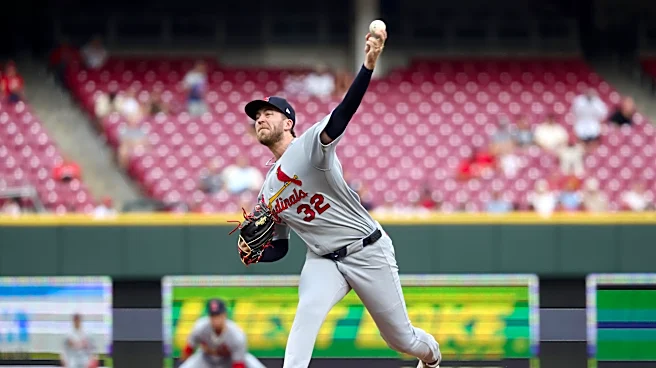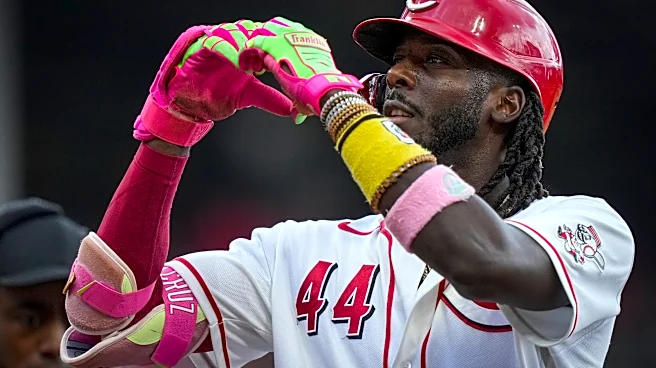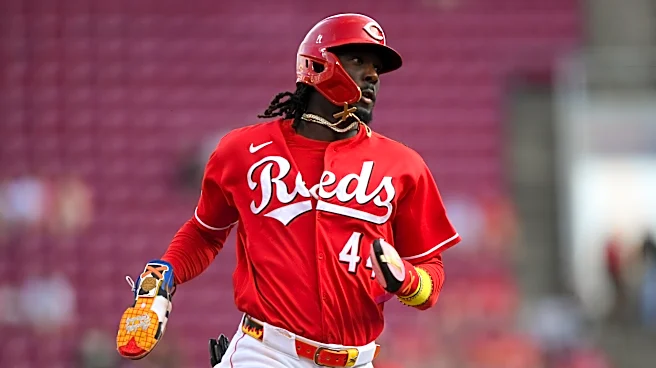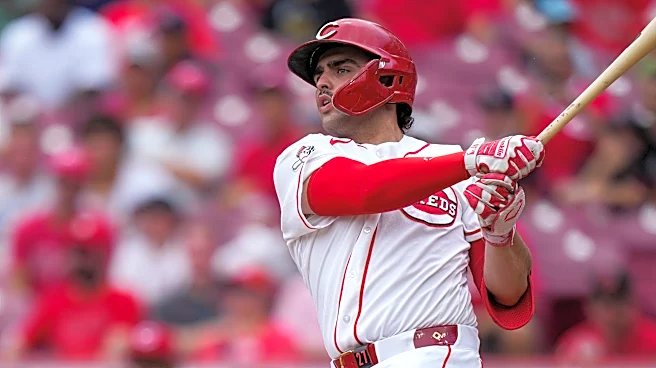





Sal Stewart struck a pose at home plate at Great American Ball Park and admired his work.
Stewart had just struck a ball well, and he knew it. His eyes darted from the ball in mid-flight to the possible landing sites in straightaway center field. It ended up smashing off batter's eye and was measured as having traveled 422 feet.
That three-run blast put Stewart's Cincinnati Reds up 3-2 against the visiting St. Louis Cardinals, making it a big hit in the context of the game, which the Reds later won 5-4.
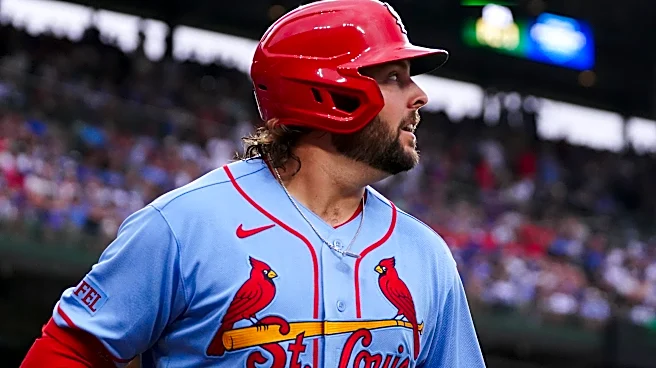
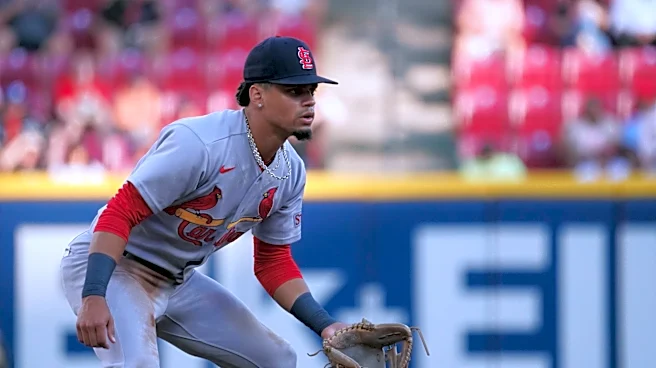
The homer might have also been a significant blast in the context of the National League Rookie of the Year race, which increasingly appears to be down to Stewart and Cardinals 23-year-old second baseman JJ Wetherholt.
Stewart's Rookie of the Year
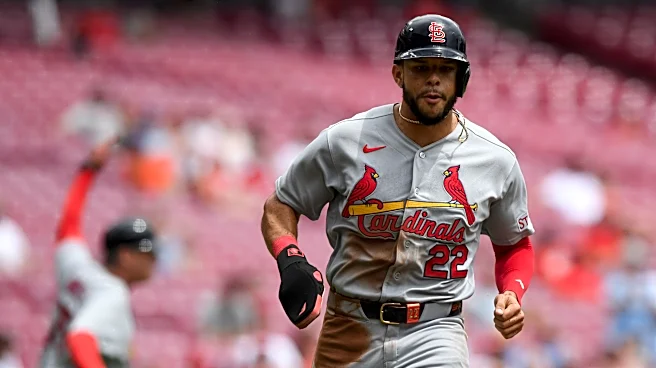
case is based on traditional counting stats. The home run he hit as Wetherholt looked on from the infield dirt was the 27th of the season for Stewart. That was the 14th-most in all of baseball. It also allowed Stewart to overtake Cardinals first baseman Alec Burleson for the most RBI in baseball with 94 to Burleson's 92.
While Stewart's proven himself to be an elite power hitter and run-producer, he hasn't been considered a runaway for Rookie of the Year. That's due in large part to the formidable Wetherholt, and a classic, potentially-polarizing baseball debate that's gathering steam around this Rookie of the Year race regarding the relative weight of traditional statistics and advanced metrics.

Defensive metrics favor Wetherholt. That's a driving factor behind him being considered the current, slight favorite for NL Rookie of the Year.
Generally speaking, Wetherholt's more than holding his own offensively, by the way. He has the second-most homers among NL rookies (16) and the fourth-most hits (115). Wetherholt also had one more steal than Stewart (13 versus 12) and a higher on-base percentage (.348 to Stewart's .334) after play concluded Aug. 19.
Here's where Wetherholt's case overtakes Stewart's as far as the metrics are concerned: Per Statcast, Wetherholt boasts a defensive run value of 21 vs. Stewart’s value of 1. Wetherholt's also played 119 of his 123 games at second base.
Not only do WAR (wins above replacement) calculations place a premium on the second-base position, Wetherholt is regarded as playing the position at an elite level. So, Wetherholt's 4.6 bWAR dwarfs that of Stewart (2.0).
That aspect of the debate could be the end of the conversation for some voters. The Baseball Writers Association of America votes annually on the Rookie of the Year awards.
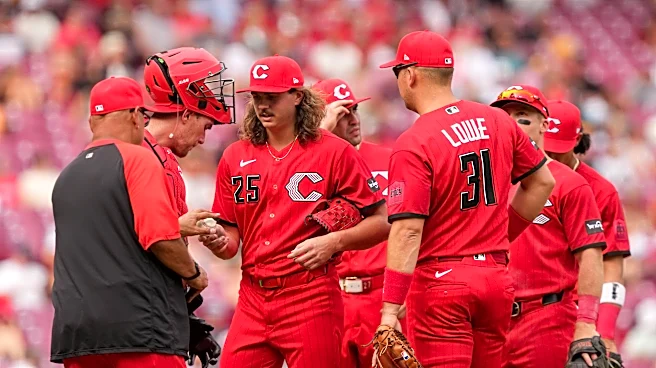
Stewart's no stiff defensively. The fact that he can play three positions − as of Aug. 19, he'd played 83 games at first base, 45 at third base and 11 at second base − has been an asset for Reds manager Terry Francona, although that versatility appears to be holding back his Rookie of the Year argument.
“It’s huge for us, and I don’t know where that goes in voting,” Francona said. “Nor do I − I care because I care about Sal, but it’s not my responsibility. We just try to do what we think is best for our team.”
That brings us back to the central point of the debate: Stewart has metrics-friendly power going for him, but his defensive versatility and RBI, seen by some as a statistic of opportunity rather than skill, don't carry as much weight. Meanwhile, Wetherholt has defensive prowess at a metrics-friendly position, plus a solid bat when compared to his peers even as his offensive stats generally lag behind Stewart's.
Ten-year MLB veteran and Reds closer Emilio Pagán said he didn't envy the choice voters will have to make when it came time to choose between Stewart and Wetherholt.
"Just taking this (Reds) locker room out of it and looking at it objectively, they’re both very good players," Pagán said. "It’s gonna be a great debate."
Stewart conceded that he aspired to win NL Rookie of the Year. His teammates are clearly aware of his push for the award, too. While Stewart spoke to media members after the Reds' 5-4 win over Wetherholt's Cardinals on Aug. 19, center fielder teammate Dane Myers could be heard in the background about yelling about Stewart's push for the honor.
"I think about it. It’s something I’m trying to achieve. Does it define my season? It doesn’t define my season," Stewart said. "But do I think about it? Yeah. Every competitor does. When you’re trying to get something that not many people have ever achieved, obviously you think about it. At the same time, my only concern is winning games. I’m just trying to go out there and play to the best of my abilities.
"When you’re in talks with great players like JJ, Konnor (Griffin), (Carson) Benge − I saw the other day he was throwing that ball like a pitcher out there. So, there's just a lot of good players out there. Do I think about it? I do, I think about it. I think everyone would, but at the same time, my job is to help this team win."
Wetherholt acknowledged being part of the award conversation, adding that it's not something he focuses on.
"You know about it but you just play your own game. Can’t control that stuff," Wetherholt said. "(Sal's) just a competitor. That’s the biggest thing about him. He plays the game fiery. Really passionate about what he does. He’s fun to watch, and obviously he’s a really good hitter."
Not surprisingly, opinions on which player was more deserving of the NL Rookie of the Year was divided along clubhouse lines during the Reds-Cardinals five-game series Aug. 17-20.
"Obviously, I'm gonna be very biased, as I should be," Francona said.
Pagán acknowledged the metrics deficit going against Stewart's case but still backed his teammate for the annual honor.
“The numbers are what they are. You can’t argue them,” Reds closer Emilio Pagán said. “JJ’s defensive WAR is higher, but a lot of that comes from him playing a more premium WAR defensive position.
"Now, saying that ‘I think Sal can do it’ and saying ‘JJ is doing it,’ I understand that there’s a gap there, but I think it’s safe to say – and fair to say, and with all due respect to Wetherholt – I don’t know if he’s just drastically a better defender than Sal. So, having said that, Sal’s willingness to move around the diamond, to me, you can’t measure that in WAR but that is adding WAR itself because it makes our team better.
“You add all that in with the offensive numbers, I think Sal should win the award, but that doesn’t take away from JJ.”
This article originally appeared on Cincinnati Enquirer: Sal Stewart vs. JJ Wetherholt | Inside NL Rookie of the Year debate