






With the autumnal equinox come changing leaves, longer nights — and bugs like stink bugs and boxelder bugs looking to get into your house before winter.
The moment you notice an invasion of brown marmorated stink bugs, you know it's fall. But boxelder bugs have been known to slink into homes in Ohio when the weather cools, according to Buckeye Yard and Garden Online.
Here’s what to know about the boxelder bug and other six-legged autumn invaders in Ohio.
What does a boxelder bug look like?

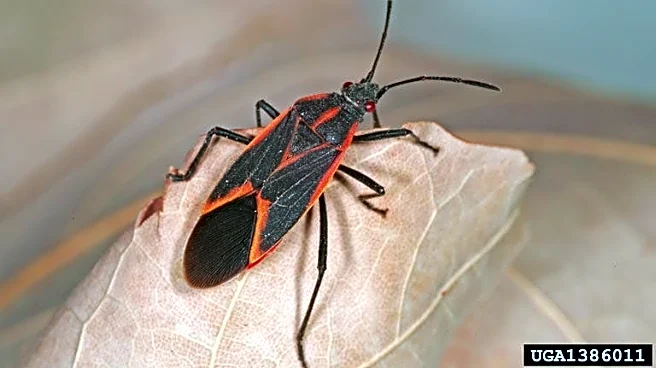
According to Ohioline OSU, the boxelder bug is an elongated, narrow-bodied insect with a flat back that is less than an inch long. They appear dark brownish-black with three red stripes behind the head.
Their abdomen is a bright red underneath, with reddish margins on the front of the wings.
Where are boxelder bugs found in Ohio?
The Boxelder bug is not new, and it’s not generally associated with fall. They have been found throughout Ohio, invading homes and trees, according to BYGL.
During the warmer days of autumn, these bugs tend to seek shelter before winter begins, often trying to find a way into houses and other buildings.
Like other bugs, boxelder bugs may fly into homes through open doors and windows, but they may also enter homes through cracks around doors, windows, and roof soffits.
Why are there so many boxelder bugs around my house?

Boxelder will try to find shelter from the cold temperatures during the fall, according to the University of Minnesota extension. They make their way into homes through open windows, gaps in door and window frames, cracks and crevices.
They do not reproduce in homes, according to the University of Minnesota. So, if they're already inside, they won't lay more eggs.
How to get rid of boxelder bugs?
If boxelder bugs enter your home, you might find them near houseplants as they look for water.
Once boxelder bugs are found inside the best option is to get rid of them with a vacuum or a broom and dust pan, according to the University of Minnesota. It is not practical to try to treat wall voids and other hiding places to prevent them from emerging, and insecticides are not recommended to fight them.
Why you shouldn't crush boxelder bugs if you see them in your house
Boxelder bugs can stain walls, curtains and other surfaces with their excrement, which is why vacuuming or sweeping them up is preferred over crushing them if you find them in your home.
Boxelder bugs are named after a tree that hosts them

Boxelder bugs have a favorite tree, and it’s called—you guessed it—the female boxelder tree.
Boxelder trees are common in Ohio and are found in rural bottomlands and neglected urban areas, according to the ODNR. Boxelder trees are known to be dioecious, meaning one tree produces male or female flowers, but not both.
Boxelder bugs are known to gather on female Boxelder trees (but not male). Boxelder bugs also live in other trees, as they are seed-feeders, using their piercing mouthparts to draw sap from trees.
Boxelder bugs have three generations each year
Boxelder bugs come in two different ages — nymphs and adults. Nymphs are smaller and bright red, acquiring their darker coloring as they age. They also cycle through three generations each year.
One generation of boxelder bugs lives in the winter, while two generations live in warmer temperatures, according to BYGL. Each season ends with a mix of nymphs and adults, but only adults make it through the winter.
Some boxelder nymphs resort to cannibalism to become adults and survive the winter
Some boxelder bug nymphs are born late in the season. In order to survive the winter, boxelder bug nymphs first need to make it to adulthood. They sometimes turn to cannibalism.
Older nymphs tend to attack and eat younger nymphs to attain the energy needed to develop and survive the winter.
Other fall insect invaders in Ohio
Stink bugs and boxelder bugs aren't the only insects that will annoy you while they look for shelter for the winter.
Other bugs, such as the western conifer seed bug, magnolia seed bug, and, of course, the Asian lady beetle, are known to seek shelter in homes to survive the winter.
This article originally appeared on Cincinnati Enquirer: Why you shouldn't crush boxelder bugs that invade your home this fall