







As Ohio’s gubernatorial campaign grows nastier, one attack against Amy Acton deserves more scrutiny. Ohio voters shouldn’t judge Acton by whether she sought therapy. Rather, we should judge those who consider seeking help, admitting vulnerability, or being transparent about changing course as political ammunition.
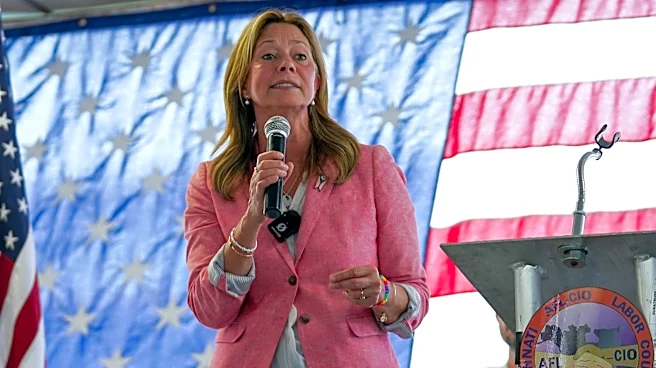
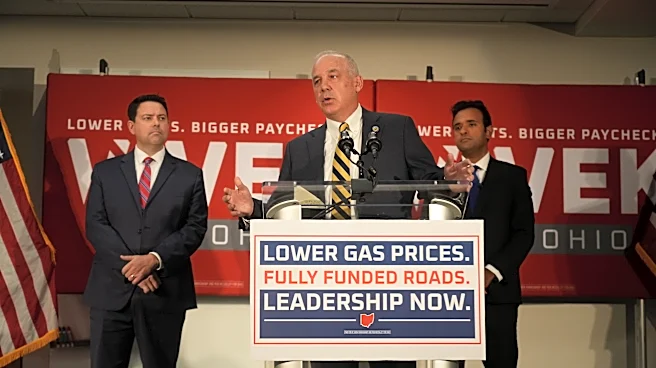
Here are the facts: A super PAC backing Ohio gubernatorial candidate Vivek Ramaswamy aired a television ad attacking his opponent, Dr. Amy Acton, for seeking therapy − presenting that decision as evidence that she is unfit to lead. Acton acknowledged on a 1994 medical licensing application that she had sought therapy after experiencing sexual abuse as a child. That question is no longer on the application because such questions were
found to discourage physicians from seeking needed treatment.
I see Acton’s decision quite differently. To me, it demonstrates something we should value in leaders: the self-awareness to recognize when help is needed and the courage to seek it.
What seeking help does − and doesn't − tell us

After decades of leading large organizational change and coaching executives, I’ve noticed a consistent pattern. The strongest leaders weren’t the ones who always had the answers. They were the ones who recognized when they needed another perspective − and were confident and secure enough to seek it.
I’ve come to believe something simple: Great leaders know how to lead themselves first.
Self-leadership begins with recognizing our own limitations, finding the right resources and having the courage to act on what we learn. Practicing those skills on ourselves makes us better able to use them when leading others.
Research backs that up. A study by Constantinos Coutifaris and Adam Grant found that CEOs who sought and shared feedback were associated with greater psychological safety within their executive teams. In a subsequent experiment, leaders who openly shared criticism they had received had teams with greater psychological safety even a year later.
Think about how we approach high-stakes decisions in almost every other arena. We expect CEOs to surround themselves with people who will challenge their thinking. We want presidents to have advisers willing to tell them uncomfortable truths. We expect physicians to seek second opinions when the stakes are high.
Yet consider what politics often teaches.
Politics can reward the wrong behavior

If acknowledging vulnerability can become an attack ad, politicians learn to conceal it. If changing your mind makes you a "flip-flopper," they learn to cling to positions. If seeking counsel suggests weakness, they learn to project certainty. If admitting a mistake becomes campaign ammunition, they learn not to admit mistakes.
As a result, we may inadvertently reward the very opposite of what effective leadership requires: ego-centered certainty over curiosity, image over honesty and stubbornness over self-awareness.
And that doesn’t stop in politics. The same message reaches the CEO reluctant to ask for advice, the manager afraid to admit a mistake, the parent who thinks asking for help signals failure, and the young person learning what strength is supposed to look like.
Help takes many forms. It might be therapy, a coach, mentor, expert, or trusted adviser. Sometimes it starts with coaching ourselves: What am I trying to accomplish? What’s really getting in my way? What don’t I know? What perspective am I missing? What will I do next? Those aren’t questions of weakness. They’re questions of self-awareness and accountability.
There is an important counterargument. Not every challenge requires therapy or professional coaching. Self-reliance matters. So does resilience. Some of life’s most lasting lessons come from struggling through a problem ourselves.
But resilience shouldn’t mean refusing help. Sometimes resilience is recognizing that we’ve reached the limits of what we can solve alone.
Perhaps we voters bear some responsibility, too. We say we want authentic leaders, then ridicule vulnerability. We say we want leaders who listen, then call changing one’s mind weakness. We demand accountability but sometimes punish the very admission that makes accountability possible.
Which brings me back to Amy Acton.
Judge the record

Seeking therapy after childhood trauma neither qualifies nor disqualifies Acton to be governor. Voters should judge her record, policies and judgment.
Maybe the question isn’t whether our leaders ever need help, make mistakes, or change their minds. It’s whether they know what to do when they do.
The qualities that make someone an effective leader of others − self-awareness, humility, discernment, curiosity and accountability − are first demonstrated in how they lead themselves.
Needing help is human. Recognizing it is self-awareness. Acting on it is self-leadership.
And that’s not a weakness in a leader. It’s a strength.

Sandra Hughes is a former Procter & Gamble executive with more than 35 years of leadership experience and nearly 15 years as a business and executive coach. She is the author of "ZST4LVG (Zest for Living): A Self-Coach Framework to Bust Barriers," written to make practical coaching tools accessible to people who may not have access to a professional coach.
This article originally appeared on Cincinnati Enquirer: Seeking therapy doesn't tell us whether Amy Acton can lead | Opinion